2026/06/09
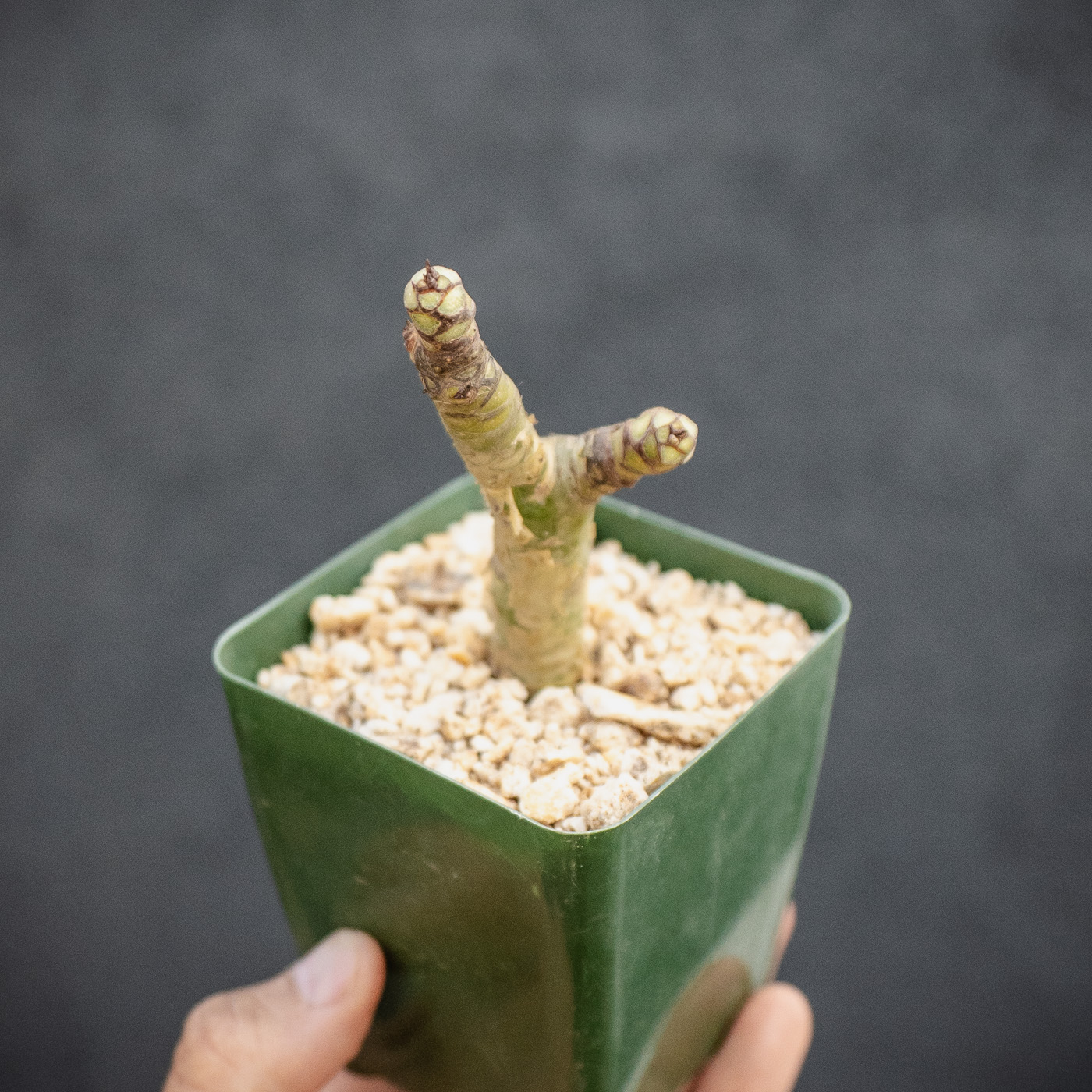
Tylecodon paniculatus f. Cape
Acquired3 months ago6/8/2026
Notes
This species is a strict, obligate winter grower, completely reversing the growth cycle of typical summer succulents. It wakes up in autumn, pushing out fresh green leaf clusters and driving its primary vegetative growth throughout the cool, wet winter months. As spring turns to summer, it sheds its leaves entirely to minimize water loss, entering a deep, defensive dormancy to survive the blistering, bone-dry summer heat. Once completely leafless in mid-to-late summer, it utilizes its residual energy reserves to push up large, branched, reddish inflorescences bearing clusters of tubular, pendulous orange-to-deep-red blossoms that are heavily pollinated by sunbirds. In cultivation, it requires an exceptionally coarse, sharp-draining mineral substrate (such as 80% to 90% pumice and gritty sand) and must be watered reliably only during the cool winter months when nights are crisp. It requires a completely dry rest in a well-ventilated, shaded spot during the summer dormancy, as any moisture applied while it is leafless can cause the entire root system and caudex to rapidly melt into rot.
Origin
South Africa. This striking pachycaul (thick-stemmed) succulent is native to the winter-rainfall regions of the Western and Eastern Cape provinces, thriving on dry, rocky sandstone slopes, granite hills, and quartz outcrops. The "Cape" form is highly distinguished by its robust, tree-like architecture, developing a massive, swollen caudex and thick, contorted branches covered in a smooth, translucent, yellowish-green bark that peels away in papery flakes to expose green, photosynthetic tissue beneath. During its active period, it produces clusters of large, fleshy, obovate bright green leaves at the branch tips. This form stands out from its northern, more arid Richtersveld counterparts by growing into a much larger, highly branched shrub or small tree up to two meters tall, completely dominating the rocky Fynbos and Renosterveld scrub landscape.
Note: Coordinates indicate a general region for educational purposes and are not exact locations. Please do not use them for collection or poaching.