2026/07/31
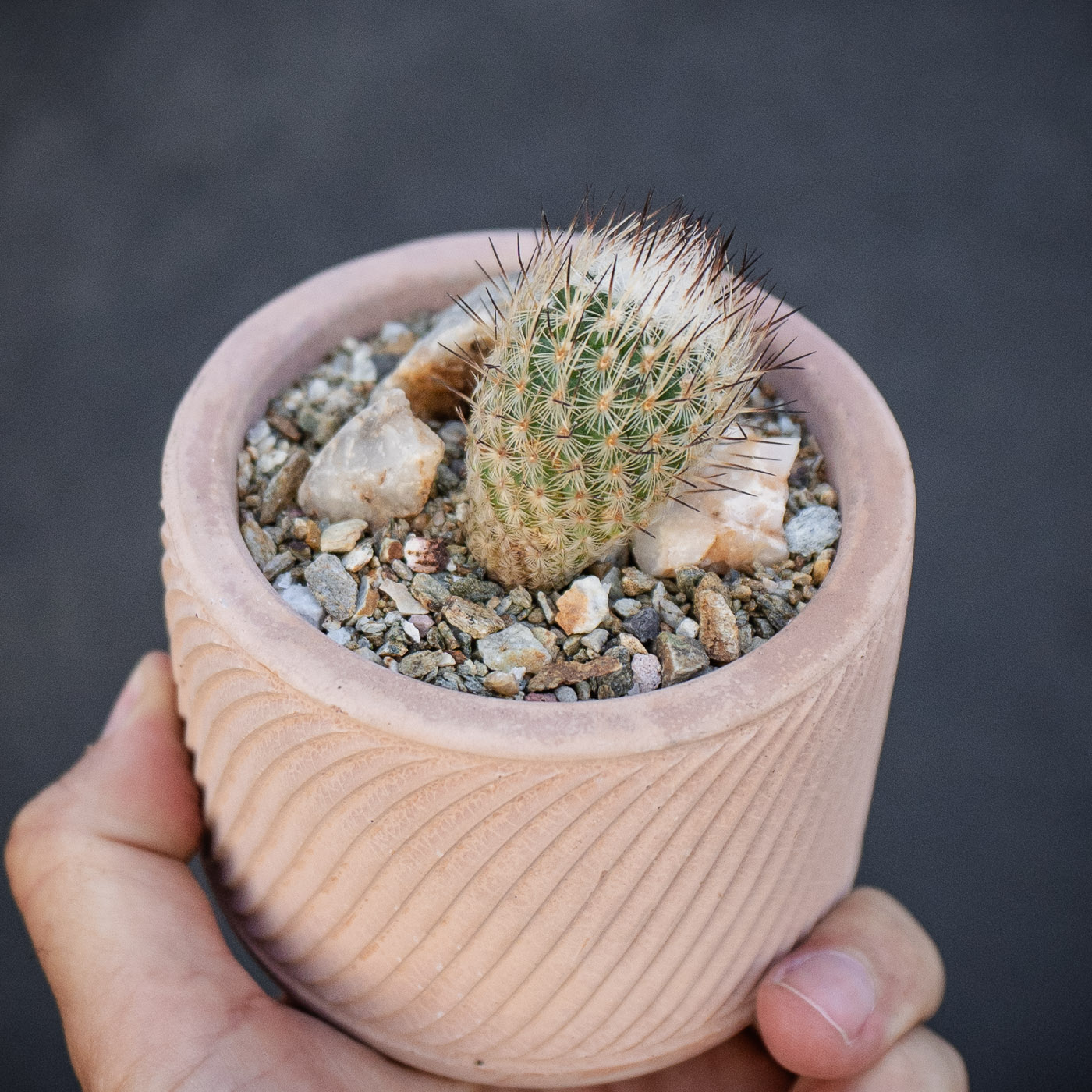
Turbinicarpus zaragosae
Acquiredabout 2 months ago7/31/2026
PotterPrickly Point
Notes
Endemic to severe limestone slopes, this species survives by funneling moisture into a massive, fleshy underground taproot and focusing its active growth during the warm, bright days of early summer. In cultivation, it requires an uncompromisingly fast-draining, highly alkaline mineral substrate—an 80% to 90% blend of crushed limestone, gypsum grit, and premium volcanic pumice is ideal. It demands intense light to maintain its compact geometry, but watering must be done deeply and infrequently only when temperatures are high, followed by a completely dry, cold-protected rest throughout the winter to prevent its taproot from rotting.
Origin
Mexico. This spectacular, miniature geophytic cactus is highly localized to the harsh, exposed gypsum and limestone hills surrounding General Zaragoza in Nuevo León. Growing at elevations between 1,400 and 1,600 meters, it anchors deep into fractured rock crevices, maintaining a solitary, globose to cylindrical stem rarely exceeding 5 cm in diameter. Its glaucous, powdery bluish-green epidermis is broken into prominent conical tubercles rather than continuous ribs, shielded by a dense armor of glassy-white radial spines and thicker, dark-tipped centrals. The apex is crowned with a tuft of white wool, from which it pushes pale yellow to creamy white flowers with distinct pinkish-magenta midstripes.
Note: Coordinates indicate a general region for educational purposes and are not exact locations. Please do not use them for collection or poaching.