2026/06/09
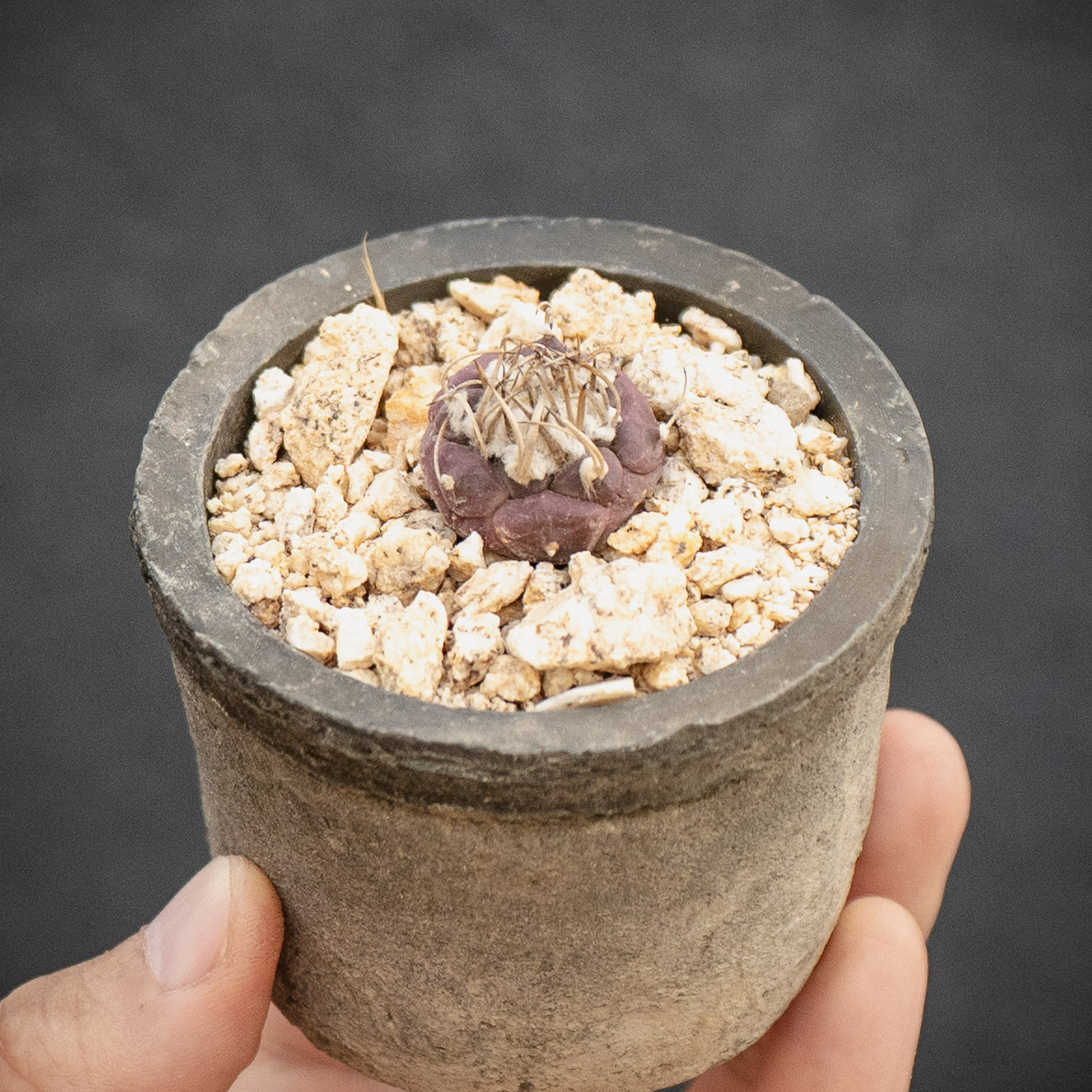
Turbinicarpus schmiedickeanus var. polaskii
Acquired3 months ago6/8/2026
Notes
Operating as a dedicated summer grower, this species concentrates its vegetative growth, cellular expansion, and extensive taproot development during the high-heat months and seasonal summer monsoons of central Mexico. It kicks off an opportunistic reproductive cycle in early spring and continues blooming intermittently through late summer, pushing relatively large, satiny white-to-pale-pink flowers with a darker brownish-red midstripe directly out of the densely woolly apex. As autumn cooling hits, it enters a deep, defensive winter dormancy where its thick, fleshy napiform taproot contracts significantly, pulling the small stem body down into the dry limestone grit to ride out freezing night temperatures. In cultivation, it has zero tolerance for wet feet; it demands an exceptionally porous, alkaline, strictly mineral substrate (such as 85% to 90% pumice, crushed limestone, and granite grit) and must be watered with extreme restraint only during warm, active months when the substrate is bone-dry.
Origin
Mexico. This highly localized miniature cactus is endemic to a very restricted geographic range in the state of San Luis Potosí, primarily found nestled around the municipality of La Bonita. In its natural habitat, it is an obligate geophyte that grows nearly flush with the ground, heavily camouflaged among limestone gravel, alluvial clay debris, and silt plains. The plant body is solitary, subglobose, and slightly flattened at the apex, featuring a distinct dull grey-green to olive epidermis broken into low, rounded tubercles. It is heavily characterized by its minimal spination—typically bearing just a single, soft, papery, or spongy spine per areole that arches inward over the apex, an evolutionary trait to shield the sensitive growth point from direct radiation without wasting precious resources on dense defense.
Note: Coordinates indicate a general region for educational purposes and are not exact locations. Please do not use them for collection or poaching.