2026/09/16
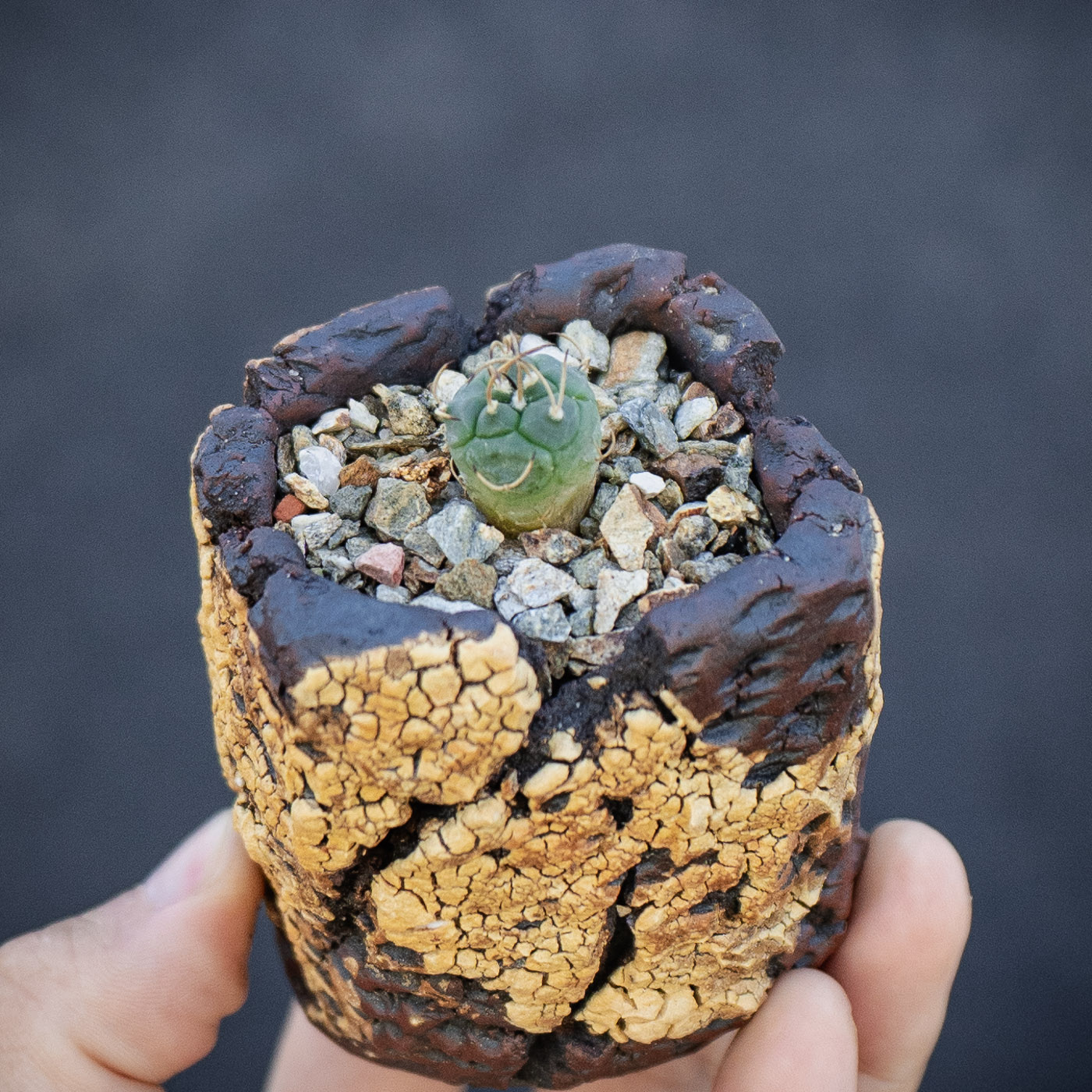
Turbinicarpus schmiedickeanus subs. macrochele
Acquiredabout 18 hours ago9/16/2026
PotterGV Succulents
Field Data
Field NumberMZ 706
Recorded ByMilan Zachar
LocalitySan Luis Potosi, Mexico, Mexico
Field data provided by rarecactus.com
Notes
Adapted to the high-altitude Chihuahuan Desert—which experiences distinct summer rainfall and cool, dry winters—this miniature species drives its primary growth and flowering during the warmer months. Because of its massive, water-storing taproot, it is exceptionally prone to rot if subjected to lingering moisture. In a coastal Zone 10b environment, it thrives when cultivated in a highly porous, alkaline-leaning mineral substrate, making an 80% premium pumice blend cut with crushed limestone and coarse sand ideal. Housing the plant in a deep, breathable raw cement pot helps accommodate the extensive taproot while rapidly wicking away excess moisture from the root zone. It must be protected from cold, stagnant winter rains beneath a polycarbonate roof, and it appreciates bright, slightly diffused light during the summer to prevent the stem from etiolating and losing its natural, flattened shape.
Origin
Mexico. This specific field collection (MZ 706) represents a gathering by Milan Zachar near La Bonita III, situated in the Chihuahuan Desert within the state of San Luis Potosí. In its native habitat, it grows heavily camouflaged among limestone chips, alluvial gravel, and sparse xerophytic scrub. Much of the plant's actual mass is hidden underground in the form of a massive, tuberous taproot. Above ground, it forms a small, flattened, blue-green to greyish-green globose stem with prominent, rounded tubercles. Its most defining characteristic is its unusual armature: rather than sharp needles, it produces long, flattened, papery, and flexible spines that twist and curl erratically over the apex like contorted fingers—a feature that earned it the name macrochele (large claw). In late winter or early spring, it produces large, striking white to pale pink flowers adorned with a distinct magenta or reddish midstripe.
Note: Coordinates indicate a general region for educational purposes and are not exact locations. Please do not use them for collection or poaching.