2026/08/21
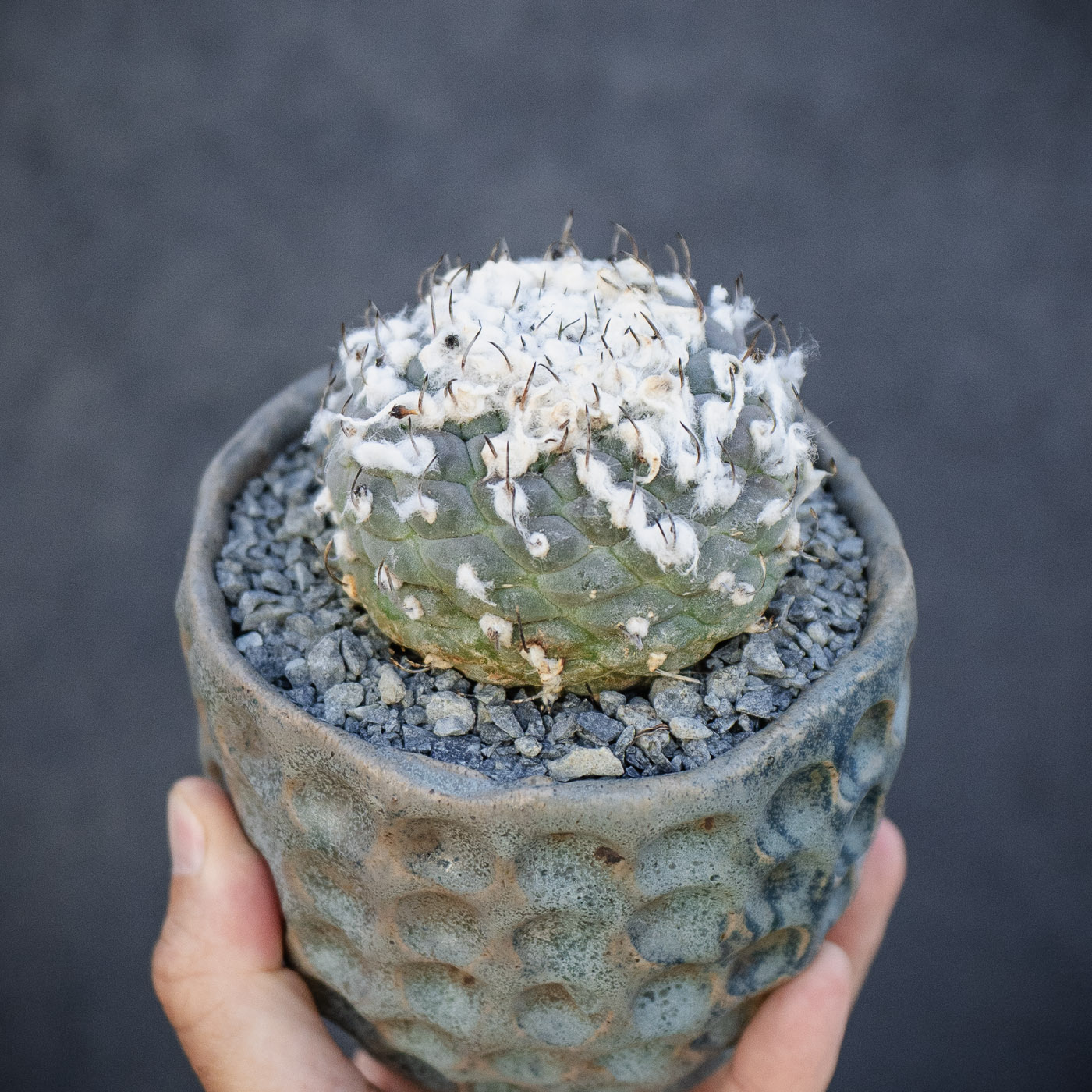
Turbinicarpus lophophoroides
Acquired12 days ago8/21/2026
PotterGV Succulents
Notes
Adapted to a rigorous Chihuahuan desert climate with a summer monsoon rainfall pattern, this species wakes up in the spring to flower and performs the vast majority of its growing throughout the warm summer months. It forms a thick, oversized turnip-like taproot that anchors it deeply and stores vital moisture, making it highly susceptible to rot if soil stays wet. In a mild coastal climate like Zone 10b, it performs beautifully when staged in a highly breathable, custom raw cement container. It demands an uncompromisingly porous, 100% mineral substrate—a fast-draining blend of pumice, calcined clay, and decomposed granite is ideal. Regular top-watering is highly effective during the active warm months as long as the soil flushes through instantly and dries completely between cycles. Since its stunning blooms are a magnet for open-pollinating bees, avoiding strong systemic chemical insecticides is the safest way to manage pests without harming local pollinators. Keep it strictly bone-dry throughout the winter dormancy.
Origin
Mexico. This fascinating, miniature solitary cactus is endemic to the Chihuahuan Desert, strictly localized to limestone-rich gypsum hills and shale flats in the state of San Luis Potosí. Growing in extremely harsh, mineral-dominant soil, it remains remarkably compact, rarely exceeding 3 to 5 cm in height and 5 to 8 cm in diameter. The stem is depressed-globose and flattened at the top, featuring soft, rounded tubercles that give it an uncanny resemblance to a Lophophora (peyote), which inspired its species name. The epidermis is a striking blue-green to grayish-green, adorned with small areoles bearing a few soft, papery, whitish spines that often twist or fall off with age. In spring and summer, it produces disproportionately large, beautiful funnel-shaped flowers ranging from pale pink to white with a darker midstripe.
Note: Coordinates indicate a general region for educational purposes and are not exact locations. Please do not use them for collection or poaching.