2026/07/22
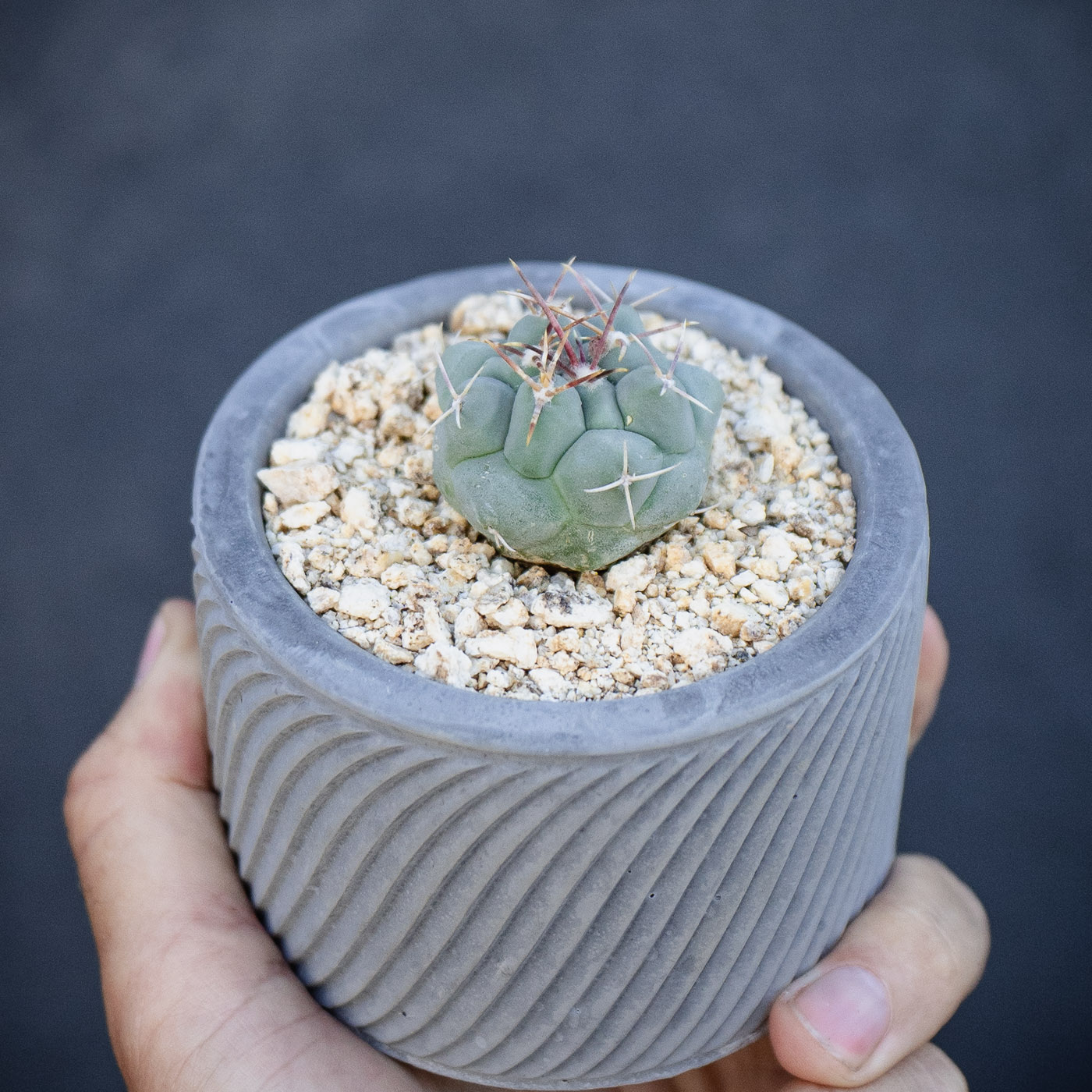
Thelocactus hexaedrophorus
Acquired2 months ago7/7/2026
PotterPrickly Point
Notes
This highly durable desert species aligns its active growing season with the warm, intensely bright days and sporadic heavy downpours of the Mexican summer. From mid-spring through summer, it pushes exceptionally large, satiny flowers directly from the newly forming tubercles at the apex. The blooms are typically a pristine silvery-white, sometimes flushing to a delicate pale pink or featuring a magenta midstripe. Because it naturally grows in severe limestone fissures, it forms a massive, fleshy taproot to hoard water. In cultivation, this taproot is highly susceptible to rot if given too much organic material or stagnant moisture. It demands a sharply draining, alkaline-leaning mineral substrate (such as 70% to 80% volcanic pumice, crushed limestone, and coarse granite) and should be watered deeply only when the daytime temperatures are high and the mix has dried out completely.
Origin
Mexico. This incredibly structural, heavily armored Chihuahuan Desert native has a wide distribution across the arid limestone hills, calcareous flats, and dry matorral scrub of San Luis Potosí, Nuevo León, Tamaulipas, and Zacatecas. Growing at elevations ranging from 1,000 to 2,000 meters above sea level, it thrives in extreme alkaline environments, completely exposed to the baking sun and anchored into fractured limestone rock. The specific epithet hexaedrophorus translates to "bearing six-sided shapes," perfectly describing its morphology. Instead of continuous ribs, the stem is entirely broken up into large, distinct, highly geometric, hexagonal tubercles. The body is typically a striking glaucous, powdery blue-grey or dull olive-green. The areoles are heavily armed with robust, rigid, awl-like spines that can be highly variable in color—ranging from bone-white to a fiery ruby-red or reddish-brown before weathering down to a chalky grey.
Note: Coordinates indicate a general region for educational purposes and are not exact locations. Please do not use them for collection or poaching.