2026/06/19
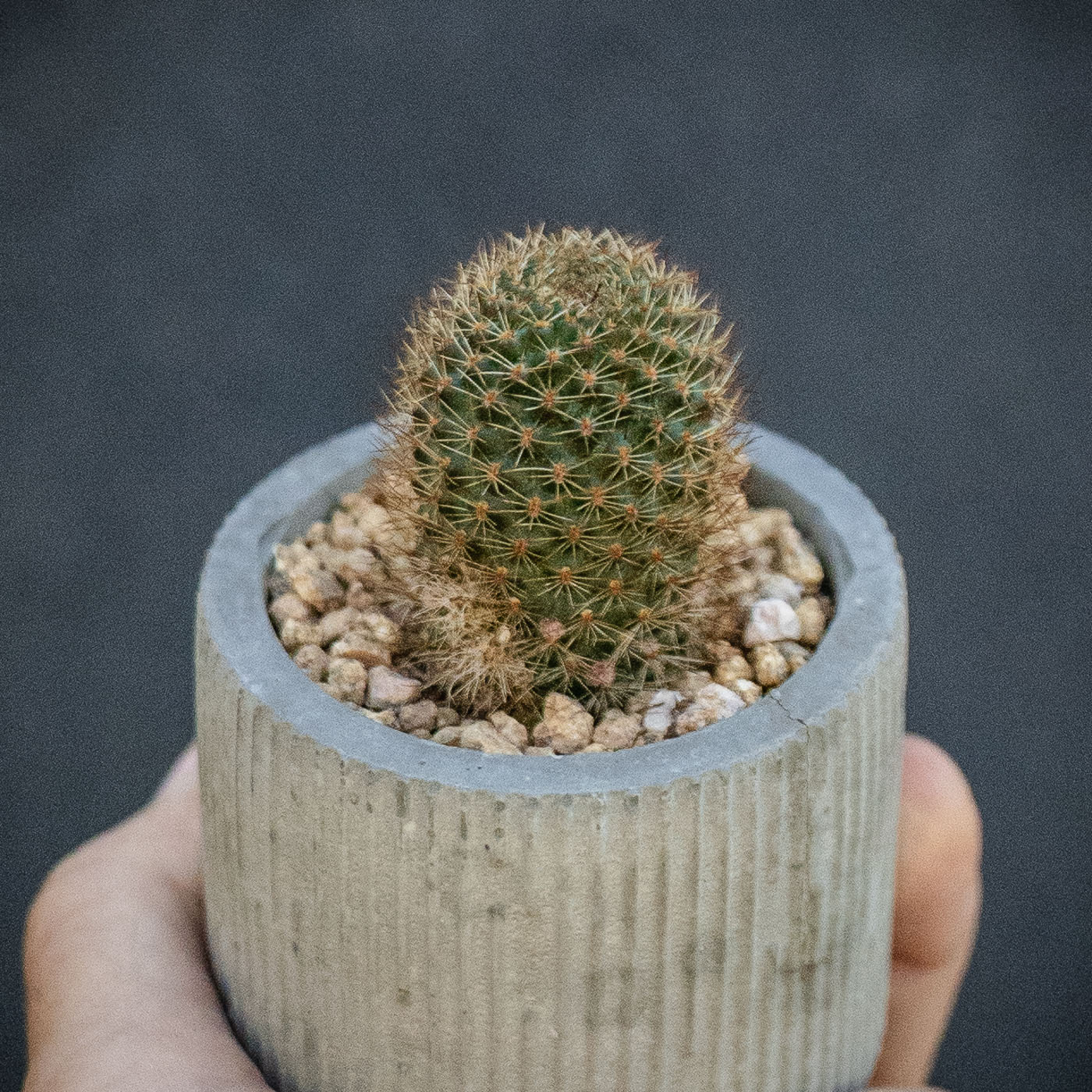
Rebutia fulviseta
Acquired3 months ago6/18/2026
PotterPrickly Point
Notes
This mountain dweller triggers its primary metabolic activity and vegetative development during the warm, bright months of spring and summer, matching the seasonal rainfall of its high-Andean habitat. In early-to-mid spring, it puts on a spectacular floral display, pushing large, funnel-shaped, fiery dark-red flowers with delicate white filaments directly from the lower areoles around the base of the stems. In winter, the plant undergoes a profound, cold-hardy rest period, needing a cool, bright, and completely dry environment to mimic alpine winters, which stimulates the following season's heavy bud development. In cultivation, it has an absolute intolerance for heavy, water-retentive mixes or stagnant conditions; it thrives in a porous, mineral-heavy substrate (such as 75% to 80% coarse pumice, gritty river sand, and a small fraction of loam) and must be watered thoroughly only when the mix is bone-dry during the active growing months, cutting off moisture entirely once winter temperatures drop toward freezing.
Origin
Bolivia and Argentina. Discovered by Walter Rausch in 1970, this petite, clump-forming alpine cactus is native to the high-altitude rocky slopes of the Andes mountains, ranging from the Tarija and Padcaya regions of southern Bolivia down into the Salta and Jujuy provinces of northern Argentina. It thrives at elevations around 2,200 meters above sea level, growing tucked into gravelly crevices, rocky ledges, and sandy mineral scree where water never pools. The species forms dense, multi-headed mats of small, globose-to-short-cylindrical stems that exhibit a striking dark olive-green to deep purplish-bronze epidermis when grown under high light. The specific epithet fulviseta translates to "tawny bristle," perfectly describing the dense coat of fine, short, bristly reddish-brown spines that erupt from its small, brown-felted areoles, giving the entire plant a distinctively fuzzy, bristled texture.
Note: Coordinates indicate a general region for educational purposes and are not exact locations. Please do not use them for collection or poaching.