2026/06/09
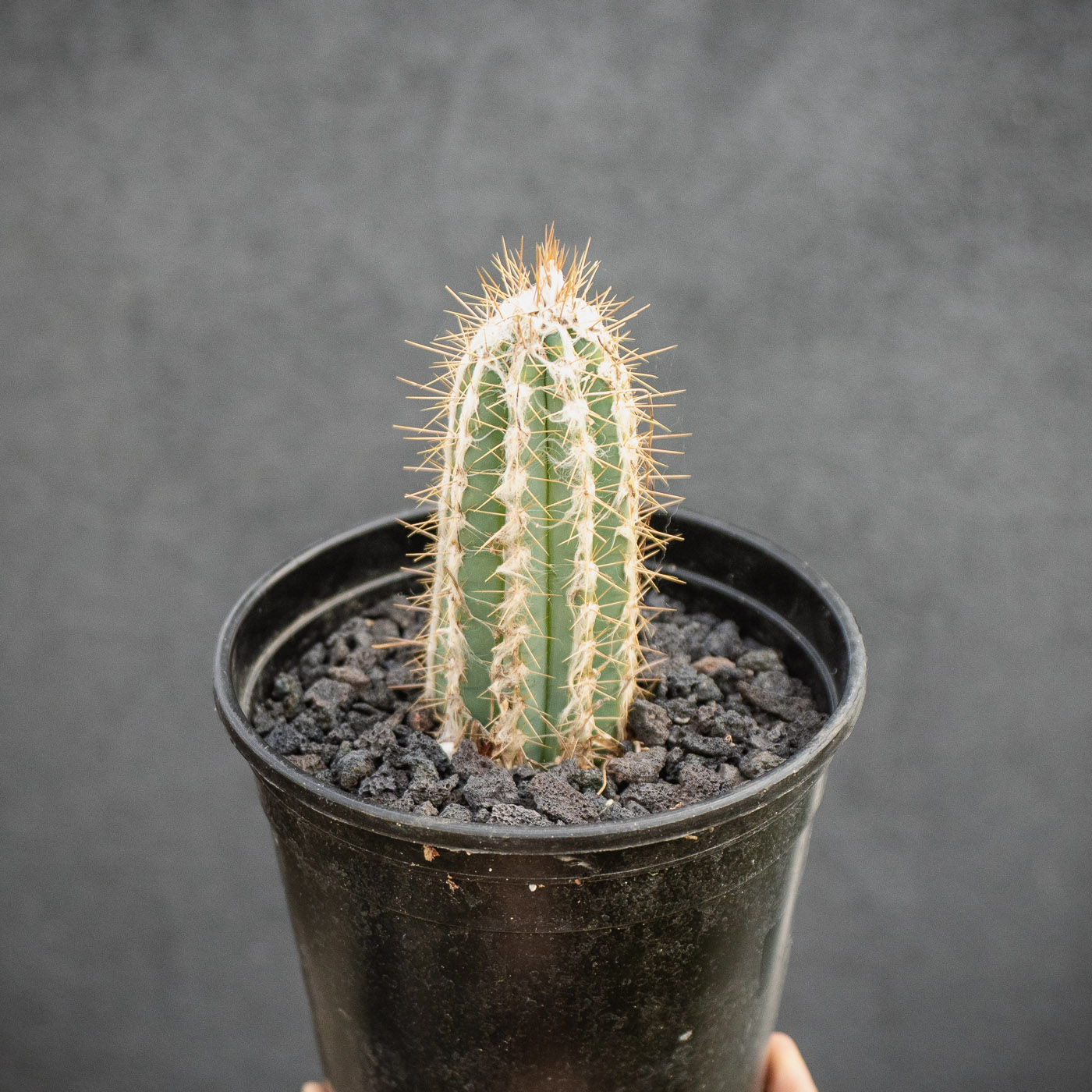
Pilosocereus chrysacanthus
Golden-Spined Tree Cactus
Acquired3 months ago6/4/2026
Notes
This species functions as a robust summer grower, aligning its main vegetative growth and structural wood development with the high temperatures and monsoonal rainfall patterns of south-central Mexico. As mature branches reach flowering age, they develop a highly specialized, densely woolly lateral pseudocephalium—a distinct zone of long, white tufted hairs along the sides of the stems near the apex from which tubular, pinkish-white, nocturnal blossoms emerge in late spring and summer. In winter, the plant undergoes a structural slowdown, demanding dry conditions to prevent cold-induced blemishes and root death. In cultivation, it requires a porous, highly aerated, mineral-heavy substrate (such as an 80% pumice and granite grit mix with a modest loam fraction) and should be watered thoroughly only when the medium has completely dried out during the warm active months, maintaining a strictly dry and well-ventilated rest throughout the winter.
Origin
Mexico. This beautiful, columnar tree cactus is endemic to the highly distinct semi-arid tropical valleys of south-central Mexico, concentrated heavily within the states of Puebla and Oaxaca, particularly throughout the Tehuacán-Cuicatlán Valley. In habitat, it forms an integral part of the dense thorny scrublands and deciduous forests, growing at elevations ranging from 700 to 1,800 meters on well-draining calcareous slopes and rocky limestone cliffs. It develops a multi-branched, tree-like habit over time, featuring heavily glaucous, sky-blue to blue-green stems. The species is highly celebrated for its striking contrast: its 9 to 12 sharp, prominent ribs are densely lined with closely spaced areoles that erupt with fierce, brilliant golden-yellow to copper-colored spines, which beautifully offset the intensely blue epidermis.
Note: Coordinates indicate a general region for educational purposes and are not exact locations. Please do not use them for collection or poaching.