2026/09/14
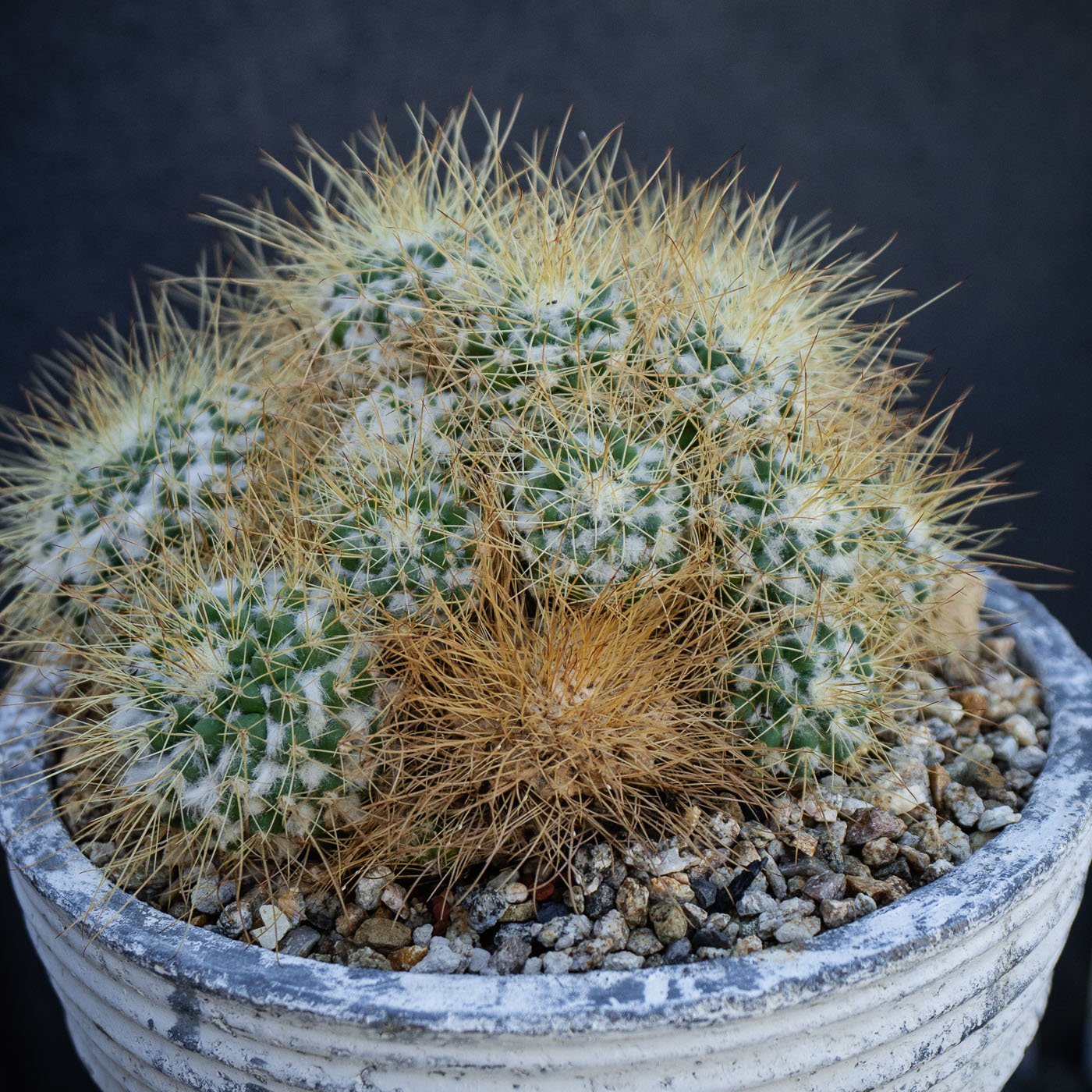
Mammillaria petterssonii
Acquiredabout 1 month ago8/16/2026
Notes
Adapted to the distinct wet and dry seasonal cycles of the Mexican highlands, this robust species pushes its active growth and flowering during the warm, summer monsoon months. In a coastal Zone 10b environment, it thrives outdoors beneath the protective diffusion of shade cloth, which prevents its fleshy green epidermis from blistering under intense, direct midday sun. A polycarbonate roof is essential to strictly control moisture, blocking out cold, stagnant winter rains that would rapidly invite root rot. To replicate the coarse volcanic scree of its native habitat, it requires an uncompromisingly fast-draining, highly porous mineral substrate—such as your standard gritty blend of 80% volcanic pumice cut with calcined clay and coarse decomposed granite. Housed in a deep, breathable raw cement pot, water deeply and thoroughly during the peak heat of summer when growth is active, provided the substrate dries out completely between applications, and enforce a strict, bone-dry rest throughout the cool winter dormancy.
Origin
Mexico. Endemic to the rocky, semi-arid highlands and volcanic slopes of central Mexico, spanning primarily across the states of Guanajuato, Jalisco, and Aguascalientes. In its native habitat, it grows nestled in mineral-rich soils amidst scrub and open oak woodlands on steep inclines. It is a robust, large-bodied species for the genus, forming primarily solitary (though occasionally slowly clustering) globose to short-columnar stems with a pale green epidermis. It is heavily armed with remarkably long, rigid, awl-like central spines that emerge reddish-brown to dark yellow before weathering to a chalky white or grey. As it matures, the axils between its prominent tubercles develop dense white wool, creating a striking contrast when it pushes out vibrant rings of pink to magenta flowers with darker midstripes near its apex.
Note: Coordinates indicate a general region for educational purposes and are not exact locations. Please do not use them for collection or poaching.