2026/07/28
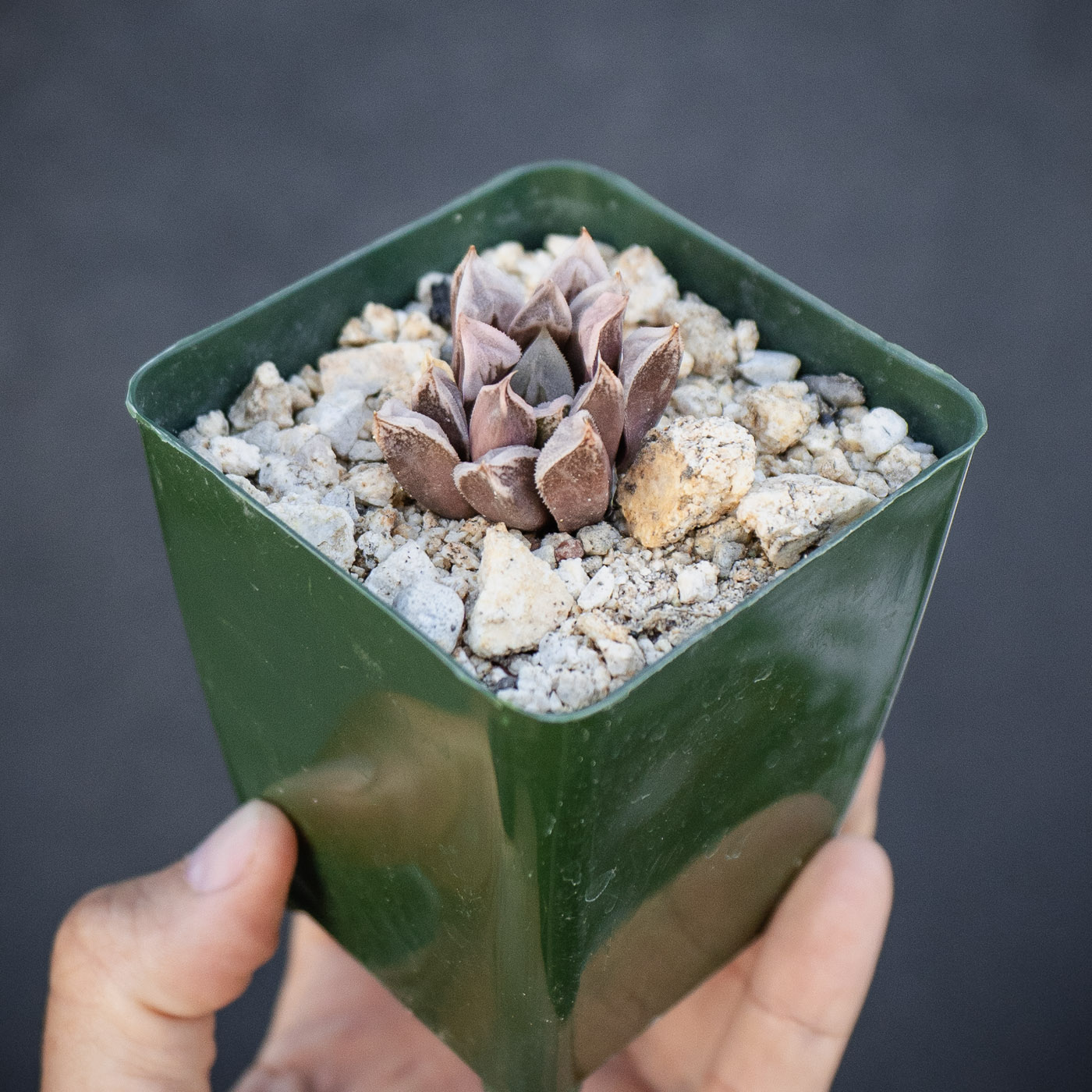
Haworthia wimii hybrid cv. Love
Acquired4 months ago5/22/2026
Notes
Inheriting the strict physiological adaptations of its parents, 'Love' drives its primary vegetative growth, root development, and intense cellular hydration during the temperate months of autumn and spring. It slows its metabolism down significantly during the intense heat of mid-summer and the cold stretches of winter. When exposed to bright, filtered light and mild drought stress, the dark epidermis flushes with deep mahogany, pink, and amethyst tones. It pushes slender, simple inflorescences bearing small, inconspicuous white-to-greenish tubular flowers primarily in late spring. In cultivation, its thick, fleshy root system is highly prone to root collapse if kept in damp, compacted soil; it demands an exceptionally coarse, porous, mineral-dominant substrate (such as 85% to 90% premium pumice, akadama, and fine granite grit with minimal organics) and should be watered thoroughly only when the potting medium has dried out completely, coupled with excellent air circulation.
Origin
Cultivar origin (highly selected hybrid). This striking, modern cultivar is a complex Japanese-style hybrid centered heavily around the genetics of Haworthia wimii (formerly known to collectors as Haworthia major). While born out of meticulous selective breeding programs tailored for structural intensity and texture, its parent lineage traces directly back to the rocky, quartz-rich outcrops and sparse, arid scrublands of the Western Cape province in South Africa. 'Love' is highly celebrated for its beautifully dramatic, highly textured morphology. It forms a compact, geometric rosette of thick, truncate-to-lanceolate dark purplish-green to nearly blackish leaves. The upper leaf windows (faces) are heavily embellished with intricate, raised white spines, frosty teeth, and rough, sand-paper-like tubercles that run along prominent longitudinal veins, giving the entire plant a shimmering, crystalline texture.
Note: Coordinates indicate a general region for educational purposes and are not exact locations. Please do not use them for collection or poaching.