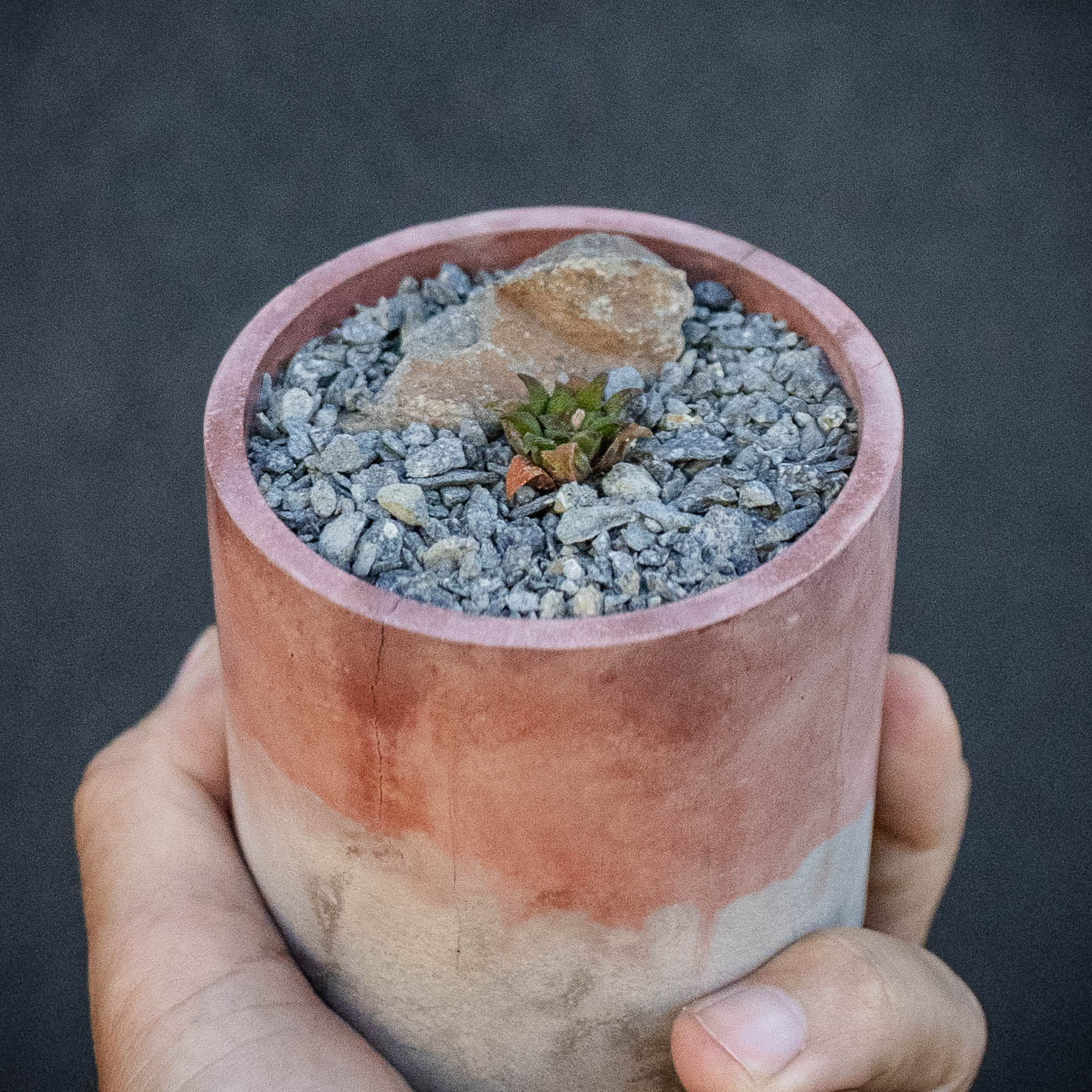
2026/06/14
Haworthia parksiana
Acquired3 months ago6/13/2026
PotterPrickly Point
Notes
Highly adapted to a mild, maritime climate with a bimodal rainfall pattern (receiving small amounts of precipitation in both winter and summer), this miniature species drives its primary vegetative growth during the temperate months of autumn and spring. It slows its metabolism down significantly during the intense heat of mid-summer and the coldest stretches of winter. It produces tiny, inconspicuous white-to-greenish flowers on very slender, simple inflorescences during the spring. Because of its diminutive size and low-light habitat underneath dense nurse bushes, it is highly sensitive to direct, intense sunlight, which can quickly scorch or fatally dehydrate its compact tissue. In cultivation, it demands a highly porous, sharp-draining mineral substrate (such as 80% to 90% pumice, fine gravel, and akadama with minimal organics) to protect its delicate, fleshy roots from damp stagnation. It requires careful, disciplined watering only when the potting medium has dried out completely, along with bright, filtered light and excellent airflow.
Origin
South Africa. This is one of the smallest, rarest, and most geographically restricted species in the entire genus Haworthia. It is strictly endemic to a tiny area within the Western Cape province, specifically localized around the town of Mossel Bay. In its native habitat, it grows in flat or gently sloping maritime lowlands, almost completely hidden beneath the canopy of low, spiny Gasteria, Aloe, and karroid scrub vegetation. The plants are tiny, solitary or slowly offsetting geophytes that sit flush with the earth, often completely covered by wind-blown sand, silt, and fallen leaf litter. Its heavily recurved, triangular leaves are a distinct dark blackish-green to deep olive color, uniquely covered in tiny, rough, sand-paper-like tubercles that help blend the rosette perfectly into the surrounding dark, gritty soil and lichen crusts.
Note: Coordinates indicate a general region for educational purposes and are not exact locations. Please do not use them for collection or poaching.