2026/07/28
Haworthia maraisii
Acquired9 months ago12/28/2025
Field Data
Field NumberISI 2025-26
Notes
HBG 120289 ISI 2025-26 ex Karoo BG 11/26/02
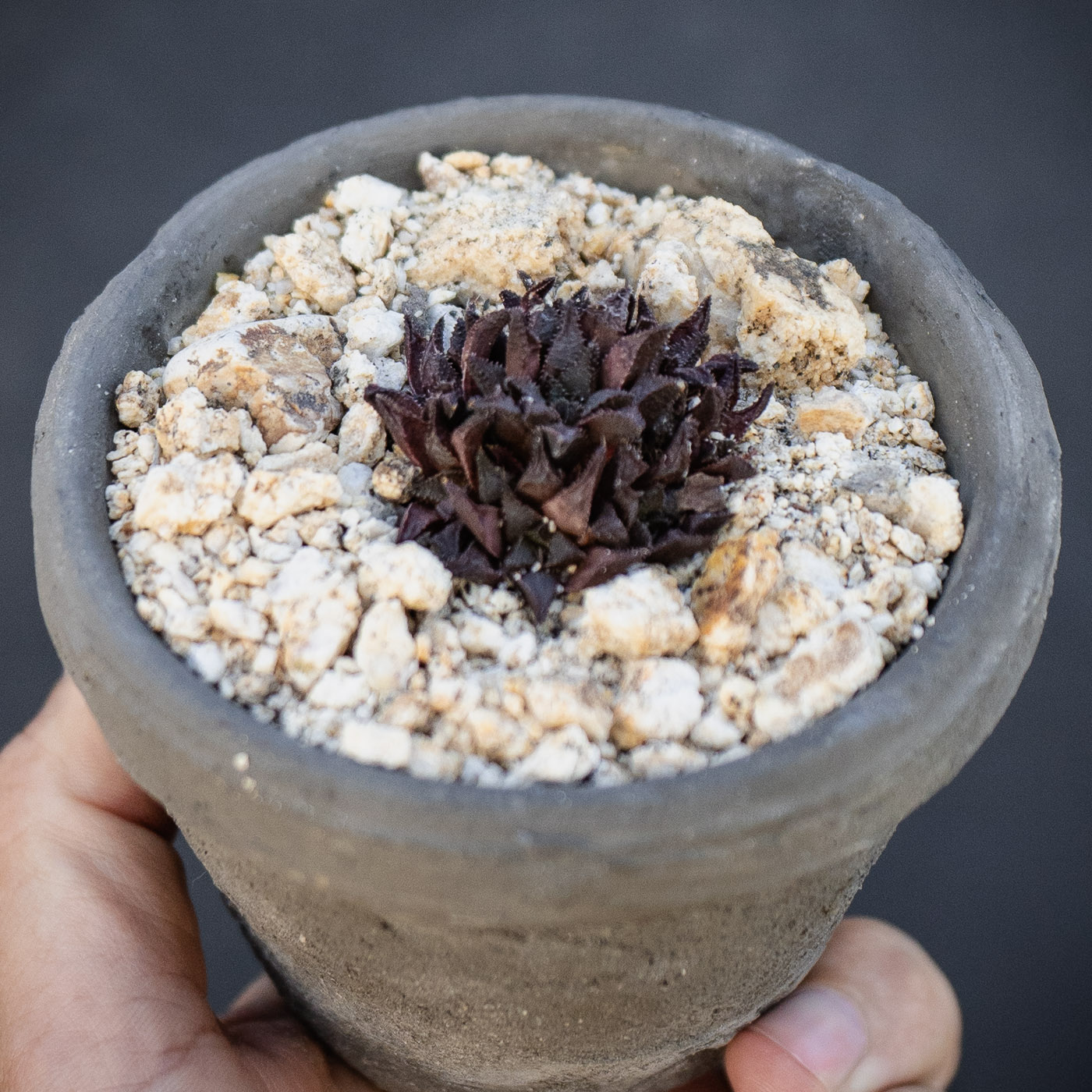
Miniature rosettes to 2 cm diameter.
Lvs dark blue-green, scabrous.
Slowly offsets to form clumps.
Described and named by Karl von Pöllnitz (1896–1945).
Often historically debated as a variety of H. magnifica or H. mirabilis, this specific clone was originally sourced from the Karoo Botanical Garden (KBG 148/2000) in Worcester, South Africa, and offered through the Huntington's 2025 International Succulent Introductions.
Endemic to the Cape's winter-rainfall climate, this species wakes up as the weather cools in autumn, pushing its active leaf growth and thick, fleshy contractile root development through the mild winter and into spring. During the heat of mid-summer, it goes semi-dormant and requires very careful, reduced watering to avoid boiling or rotting its sensitive root system. In a mild, coastal Southern California climate like Zone 10b, it thrives outdoors year-round under the dappled protection of a shade cloth, which provides just enough stress to bring out its dark purple hues without scorching the leaf tips. Because of its thick roots, it requires a deep pot and a highly porous, fast-draining substrate. An airy, high-mineral blend—such as 80% pumice cut with 20% organic material, or a heavily aerated mix incorporating sterilized decomposed granite—is perfect to ensure water flashes through the pot quickly and oxygen reaches the root zone.
Origin
South Africa. This highly cryptic, miniature succulent is native to the winter-rainfall regions of the Western Cape, distributed from Heidelberg westwards through Robertson and Worcester. It is a master of camouflage in its natural habitat, growing nearly flush with the soil surface tucked under nurse bushes or nestled tightly into rock crevices and shaded shale ridges. The rosette is tight, stemless, and small, rarely exceeding 3 to 5 cm in diameter, though it readily offsets to form low, dense clusters. The leaves are fiercely textured—erect to slightly recurved, and covered on both sides with tiny, bristly tubercles. While the plant can remain a dull, cryptic green in full shade, strong light stresses the epidermis into an intense, dark brownish-purple or nearly blackish-bronze hue, making the translucent, slightly "windowed" leaf tips (end-areas) stand out beautifully.
Note: Coordinates indicate a general region for educational purposes and are not exact locations. Please do not use them for collection or poaching.