2026/09/14
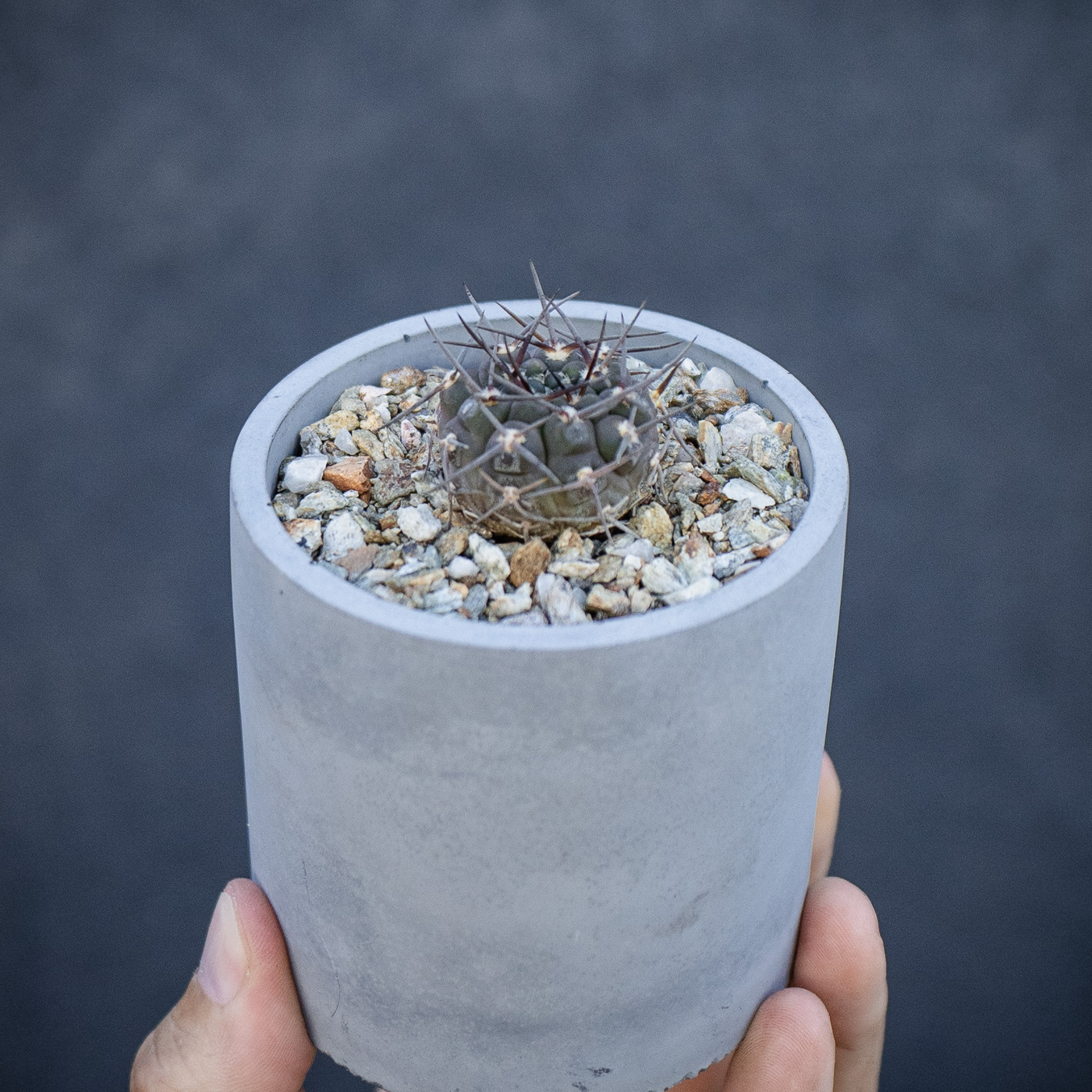
Gymnocalycium schroederianum var. longispinum
Acquired6 days ago9/11/2026
PotterPrickly Point
Notes
Adapted to a temperate to subtropical climate that experiences distinct summer rainfall, this species actively pushes growth during the warm months. In a coastal Zone 10b environment, it performs beautifully outdoors but strictly requires the protective diffusion of shade cloth; because it naturally grows under dappled shade, its dark epidermis is highly susceptible to severe scorching if exposed to harsh, direct midday sun. A polycarbonate roof remains absolutely critical during the winter months to block out cold, stagnant seasonal rains that would rapidly rot its thick root system. While it naturally tolerates slightly more moisture than your hyper-arid Chilean species, it still demands an uncompromisingly fast-draining, highly porous mineral substrate to thrive in captivity—such as your standard gritty blend of 80% volcanic pumice cut with calcined clay and coarse decomposed granite. Housed in a deep, breathable raw cement pot, water deeply and consistently during the peak summer heat when active growth occurs, ensuring the substrate dries completely between applications, and enforce a strict, bone-dry rest throughout the cool winter dormancy.
Origin
Argentina and Uruguay. Endemic to the grassy pampas, riverine woodlands, and low hills of eastern Argentina (spanning provinces such as Entre Ríos, Santa Fe, and Buenos Aires) and neighboring Uruguay. In its native habitat, unlike the high-desert extreme environments of the Atacama, this species is typically found nestled in leaf litter, shaded by tall grasses, or growing under the protective canopy of low shrubs where it receives seasonal rainfall. This specific variety (longispinum) is highly prized for its notably extended, sweeping, and occasionally twisting radial spines. It forms a deeply flattened-globose body with a dark green to bronzed epidermis, broad, distinct chin-like ribs, and produces elegant, slender-tubed white to greenish-white flowers from its apex.
Note: Coordinates indicate a general region for educational purposes and are not exact locations. Please do not use them for collection or poaching.