2026/08/15
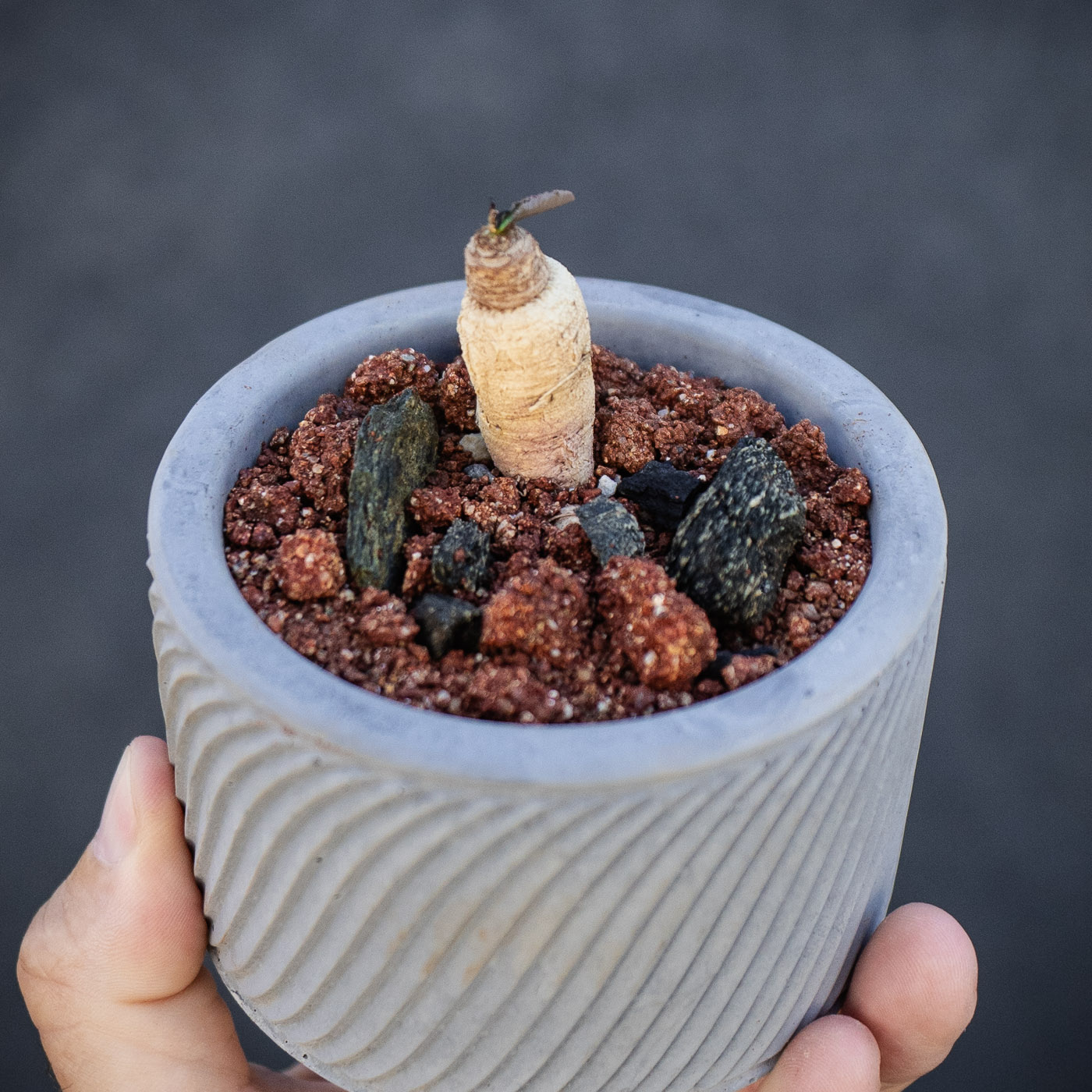
Euphorbia subapoda
Acquiredabout 1 month ago8/15/2026
PotterPrickly Point
Notes
Adapted to a distinct tropical wet-dry climate, this geophyte wakes up and pushes new foliage during the warm, wet summer months. In a coastal Zone 10b environment, it performs beautifully outdoors beneath the bright, filtered light of a shade house. The polycarbonate roofing is especially crucial during the colder months, as this species drops its leaves and enters a strict dormancy where it must remain completely dry to prevent its massive tuber from rotting. Because it possesses such a large, water-storing caudex, it demands an exceptionally fast-draining, highly porous substrate—such as a gritty blend of pumice, decomposed granite, calcined clay, and a touch of cactus soil. Housed in a breathable raw cement pot, it appreciates deep, thorough waterings during the peak of summer heat, provided the mineral mix dries out completely between soakings.
Origin
Madagascar. This rare, highly sought-after geophytic succulent is endemic to the seasonally dry, rocky regions and deciduous forests of western and central Madagascar. Its defining characteristic is a massive, swollen underground tuber (caudex) that serves as a vital water reservoir to survive prolonged droughts. Above ground, it produces a dense, Medusa-like crown of short, twisting, semi-succulent branches armed with small, stipular spines. During the active growing season, these branches are topped with narrow, ovate green leaves and small, yellowish-green cyathia (flowers). In its natural habitat, the massive caudex is almost entirely subterranean to protect it from the baking sun and fires, but in cultivation, it is often staged partially raised above the soil line to showcase its sculptural, woody form.
Note: Coordinates indicate a general region for educational purposes and are not exact locations. Please do not use them for collection or poaching.