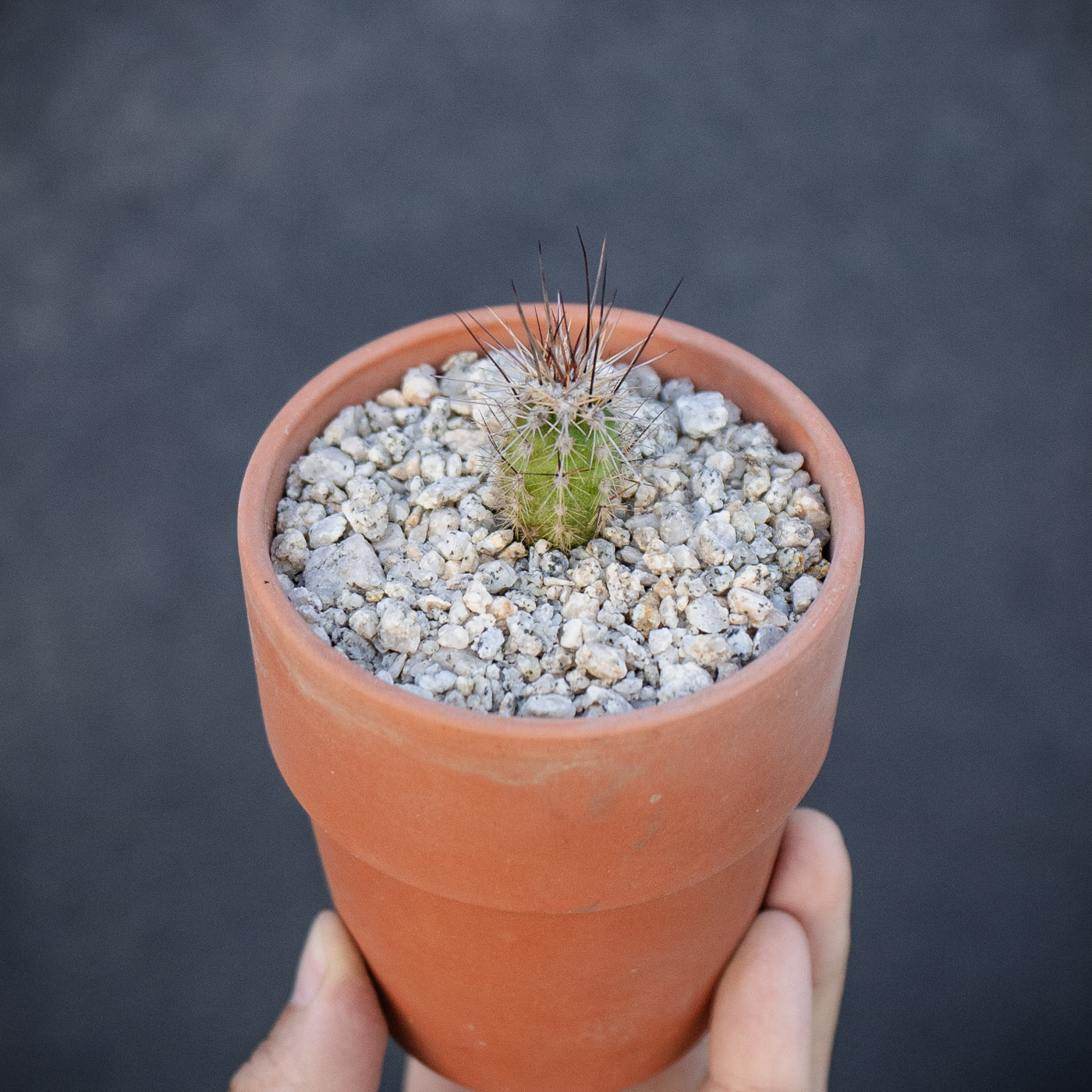
2026/08/20
Eulychnia acida
Sowingabout 2 years ago9/1/2024
Acquired16 days ago8/17/2026
Notes
While it survives on the dense camanchaca coastal fogs in its harsh native habitat, Eulychnia acida is an active summer grower that responds exceptionally well to cultivation. In a coastal Zone 10b environment, it thrives outdoors where it can enjoy bright light and heat, but a position beneath the protective diffusion of shade cloth ensures the intense afternoon sun won't bronze or scorch the younger growth. Because it is highly susceptible to root rot in stagnant moisture, it demands an uncompromisingly fast-draining, porous substrate—such as a heavy blend of pumice, decomposed granite, and calcined clay. Housed in a deep, breathable raw cement pot, it appreciates thorough, deep waterings during the peak heat of spring and summer, provided the mineral mix dries out completely between soakings. As temperatures drop in the autumn, water must be drastically reduced, enforcing a strict, dry dormancy throughout the winter months to protect its roots from cold, wet conditions.
Origin
Chile. This robust, tree-like columnar cactus is endemic to the coastal and inland deserts of western Chile, spanning primarily across the Coquimbo and Atacama regions. Growing from sea level up to 1,300 meters, it dominates rocky slopes, arid desert scrubs, and coastal fog oases (lomas). The plant develops a distinct trunk before branching out to form massive, sometimes ragged-looking candelabras that can reach heights of up to 7 meters in the wild. Its broad ribs are heavily armed with long, formidable needle-like spines that transition from brown to ashy grey with age. In the summer, it produces beautiful, bell-shaped white flowers with pale rose midstripes, followed by fleshy, acidic fruits (locally called copao) that are harvested and eaten.
Note: Coordinates indicate a general region for educational purposes and are not exact locations. Please do not use them for collection or poaching.