2026/09/14
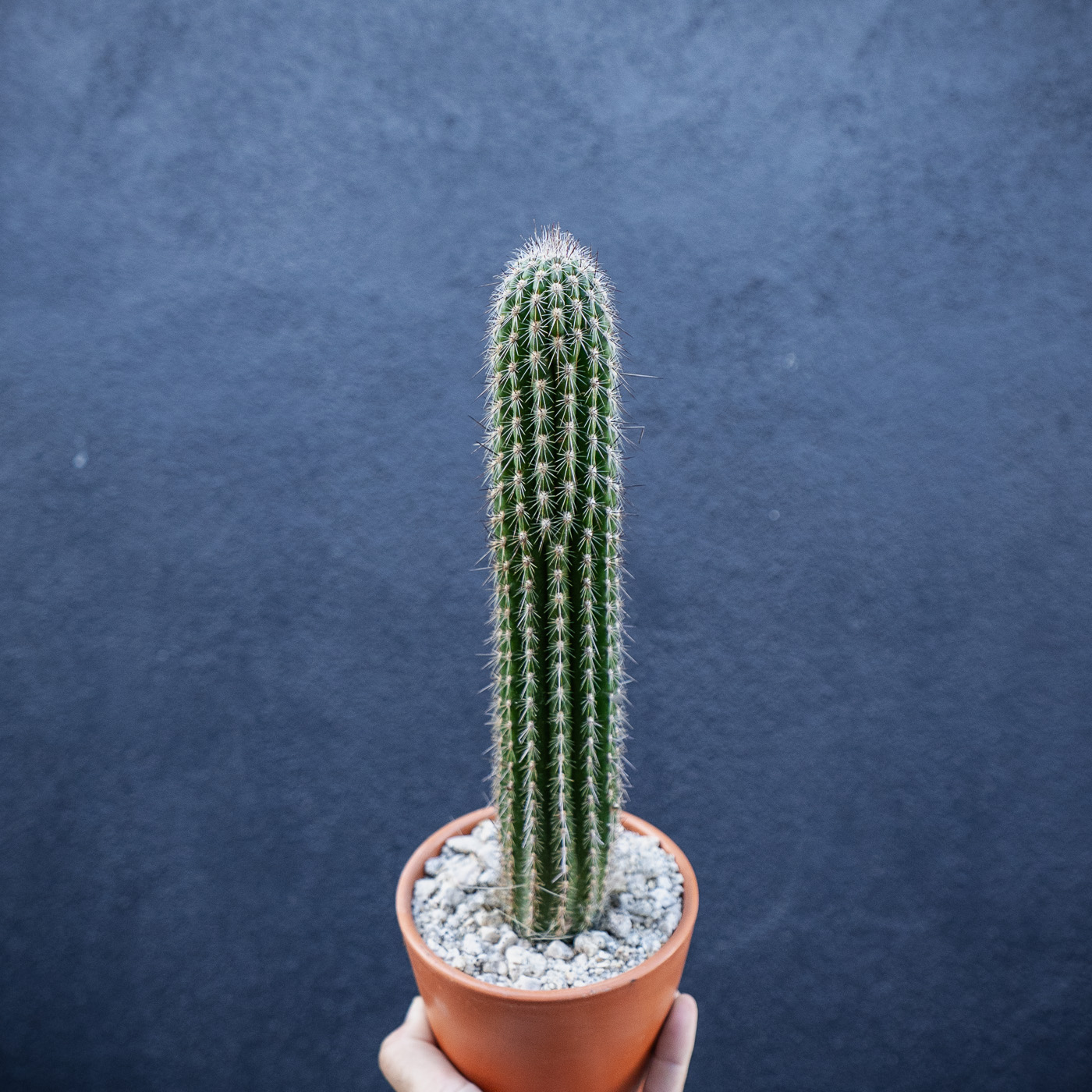
Espostoa blossfeldiorum
Acquired5 days ago9/12/2026
Notes
Adapted to the high-altitude, semi-arid climate of the Andes, which experiences distinct warm, wet summers and cool, dry winters, this columnar species actively pushes its growth during the hot months. In a coastal Zone 10b environment, it performs beautifully outdoors beneath the protective diffusion of shade cloth; although its dense, bristly spines provide some natural shade, the cloth prevents its underlying epidermis from scorching during extreme heat waves. A polycarbonate roof is absolutely critical to strictly control moisture, completely blocking out cold, stagnant winter rains that would quickly invite basal rot. To mirror its native Andean scree, it requires an uncompromisingly fast-draining, highly porous mineral substrate—such as a rugged blend of 80% volcanic pumice cut with calcined clay and coarse decomposed granite. Housed in a tall, breathable raw cement pot to anchor its mature height, it appreciates deep, thorough waterings during the peak summer heat when active growth occurs, provided the substrate dries completely between applications, followed by a strict, bone-dry rest throughout the cool winter dormancy.
Origin
Northern Peru. Endemic to the steep, rocky, semi-arid slopes and dry gorges of the Marañón River valley, spanning the Cajamarca and Amazonas regions. In its native habitat, it clings to mineral-rich inclines and rocky outcrops amidst sparse Andean brush. It forms a striking, usually solitary (or occasionally basally branching) columnar stem with a dark green epidermis that is densely cloaked in an array of glassy, yellowish-white, hair-like bristly spines. As it reaches maturity, it develops a distinct, dense, woolly lateral pseudocephalium—a thick mane of specialized bristles and hair running down one side of the stem—from which its nocturnal, cream-to-white tubular flowers eventually emerge.
Note: Coordinates indicate a general region for educational purposes and are not exact locations. Please do not use them for collection or poaching.