2026/09/15
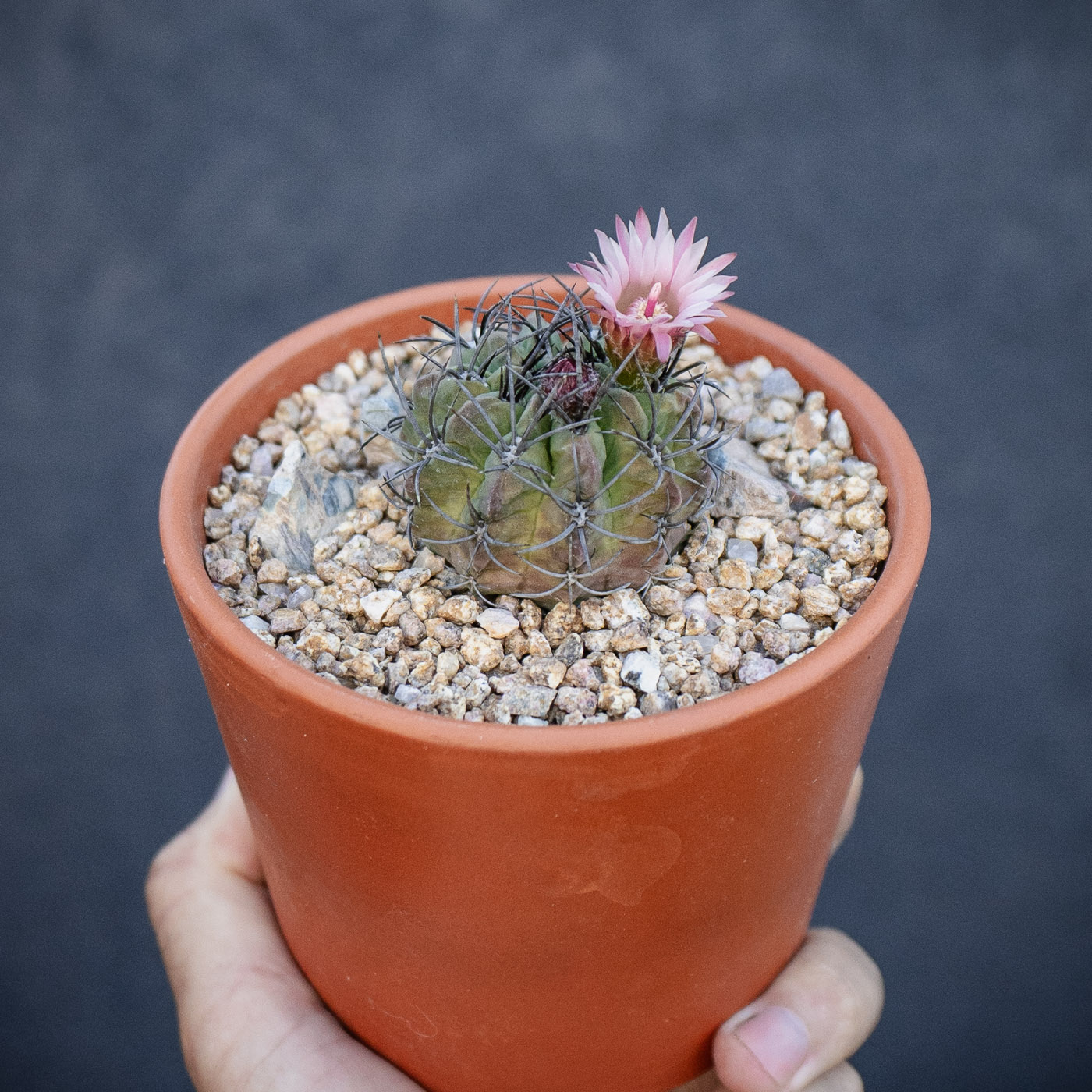
Eriosyce taltalensis subs. paucicostata f. viridis
Acquired2 months ago7/8/2026
Notes
Endemic to a hyper-arid marine environment that sees almost no rainfall, this subspecies is an evolutionary fog-specialist. It coordinates its primary root growth, tissue hydration, and structural spine expansion during the cooler, humid months of autumn and early spring, drawing moisture from the low-lying camanchaca fog banks. In late winter to early summer, it produces highly satiny, funnel-shaped flowers from the young apical areoles that range from a delicate cream-white or pale pinkish-tan to a striking, deeper cream color with contrasting reddish-brown outer tepals. During the hot, stagnant mid-summer months, it slows its metabolism down entirely to protect its subterranean reserves. In cultivation, its large, fleshy taproot requires an uncompromisingly sharp, 85% to 90% mineral-dominant substrate (such as volcanic pumice, decomposed granite, and gritty sand) and must be watered with great care only when the mix is thoroughly dry.
Origin
Chile. This highly localized, moody geophyte is native to the hyper-arid coastal cliffs and steep granitic hillsides of the Antofagasta and Atacama regions, specifically concentrated around the rugged coastline north of Taltal and south of Paposo. Growing on sheer rock faces and loose, coarse mineral scree panels, it thrives in a landscape shaped by extreme aridity. The plant is solitary and slow-growing, forming a depressed-globose stem that can become short-cylindrical over decades. The standout feature of the viridis selection is its distinctively smooth, matte, deep olive-green to forest-green epidermis, which completely lacks the chalky blue-white cuticular wax (pruina) found on the standard glaucous forms of paucicostata. The stem features 8 to 12 low, broad, highly architectural ribs divided into prominent tubercles. These are topped by felted areoles that sprout thick, rigid, upward-curving spines that open a rich coppery-bronze to dark brown before weathering to an intense, metallic slate-grey.
Note: Coordinates indicate a general region for educational purposes and are not exact locations. Please do not use them for collection or poaching.