2026/07/22
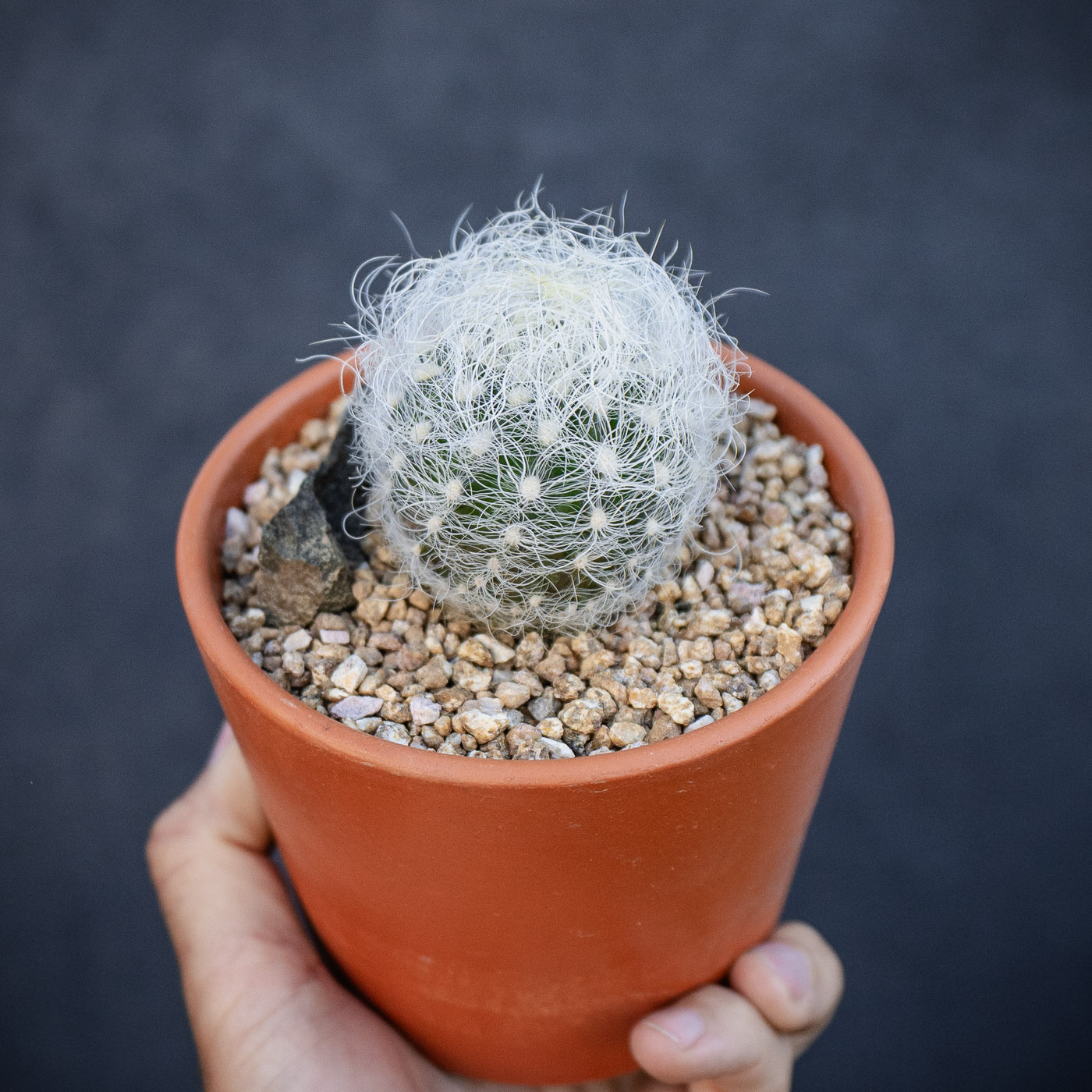
Eriosyce senilis
Acquired2 months ago7/7/2026
Notes
Perfectly adapted to a semi-arid, Mediterranean-influenced desert climate with winter-dominant rainfall patterns, this species wakes up and drives its primary root activity, spine development, and structural expansion during the cool, bright months of autumn and early spring. It enters a defensive metabolic rest during the harsh, stagnant heat of mid-summer. In late winter to early spring, it produces an incredibly vivid, dramatic display of medium-sized, funnel-shaped flowers that erupt directly through the dense crown spines. The flowers are multi-petaled and intensely satiny, showing brilliant shades of neon carmine-pink, bright magenta, or deep fuchsia with lighter yellowish throats. In cultivation, it has a large, fleshy, fibrous root system that is highly vulnerable to rot if left in a soggy or organic-heavy medium. It requires an exceptionally sharp-draining, 85% to 90% mineral-dominant substrate (such as premium volcanic pumice, crushed granite, and a touch of clay loam) and must be watered with great restraint only when the mix is thoroughly dry.
Origin
Chile. This incredibly striking, intensely spiny cactus is native to the arid mountain valleys and steep rocky slopes of the Coquimbo region, particularly concentrated along the pre-Andean foothills of the Elqui and Limarí provinces. Growing at elevations ranging from 400 to over 1,000 meters above sea level, it thrives nestled in highly mineral porphyry gravels, fractured rock faces, and loose scree. Eriosyce senilis is celebrated for its dense, tangled, and woolly appearance, which gives it its specific epithet senilis (meaning "old man" or "senile"). The stem is solitary, globose to short-cylindrical, and hidden beneath a dense, protective cage of long, flexible, glass-like spines. These spines are remarkably variable, ranging from stark snowy-white and silver-grey to deep copper-brown or jet-black, often curling and twisting together to form a highly structural, insulating shield against the extreme alpine sun and temperature drops.
Note: Coordinates indicate a general region for educational purposes and are not exact locations. Please do not use them for collection or poaching.