2026/09/14
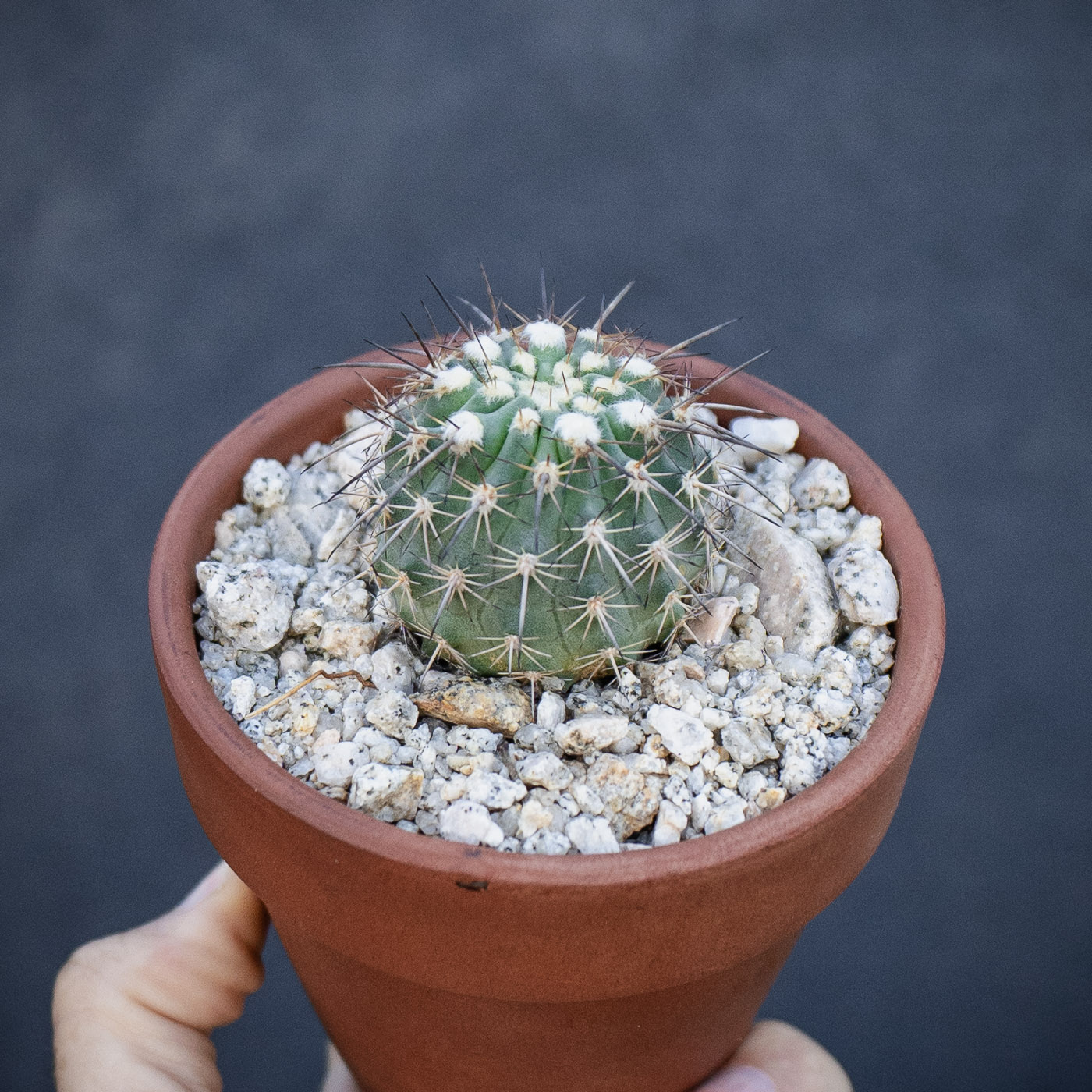
Eriosyce islayensis
Acquired5 days ago9/12/2026
Notes
Evolving in a severe coastal desert ecosystem where measurable rain almost never falls, this species relies entirely on the thick, moisture-laden sea fogs—known locally in Peru as the garúa, the direct equivalent of the Chilean camanchaca—that roll inland to condense on its woolly apex and superficial root system. In a coastal Zone 10b environment, it thrives outdoors under the protective diffusion of shade cloth, which prevents its epidermis from blistering. A polycarbonate roof is absolutely critical year-round to strictly block out unpredictable winter rains; its root system is notoriously sensitive and highly rot-prone if subjected to stagnant moisture. To replicate the sterile, sandy scree of its native habitat, it demands an uncompromisingly fast-draining, highly porous mineral substrate—such as your preferred gritty blend of 80% volcanic pumice cut with calcined clay and coarse decomposed granite. Housed in a breathable raw cement pot, water must be applied with extreme discipline only during warm, breezy days in the shoulder seasons, enforcing a strict, completely bone-dry rest throughout the peak mid-summer heat and cold winter dormancy.
Origin
Southern Peru and extreme northern Chile. Endemic to the hyper-arid coastal deserts spanning from just south of Lima, down through the Arequipa region (notably around Islay and Mollendo), and into the northernmost stretches of the Chilean coast. In its native habitat, it grows on incredibly desolate, mineral-rich alluvial plains, sterile sand dunes, and exposed, windy slopes towering directly above the Pacific Ocean. It forms solitary, globose to short-cylindrical stems with a grey-green to lime-blue epidermis. It is heavily protected by rigid, spreading dark spines, and mature specimens are instantly recognizable by the extremely thick, dense cushion of creamy-white to grey wool crowning their apex, from which small yellow flowers eventually emerge.
Note: Coordinates indicate a general region for educational purposes and are not exact locations. Please do not use them for collection or poaching.