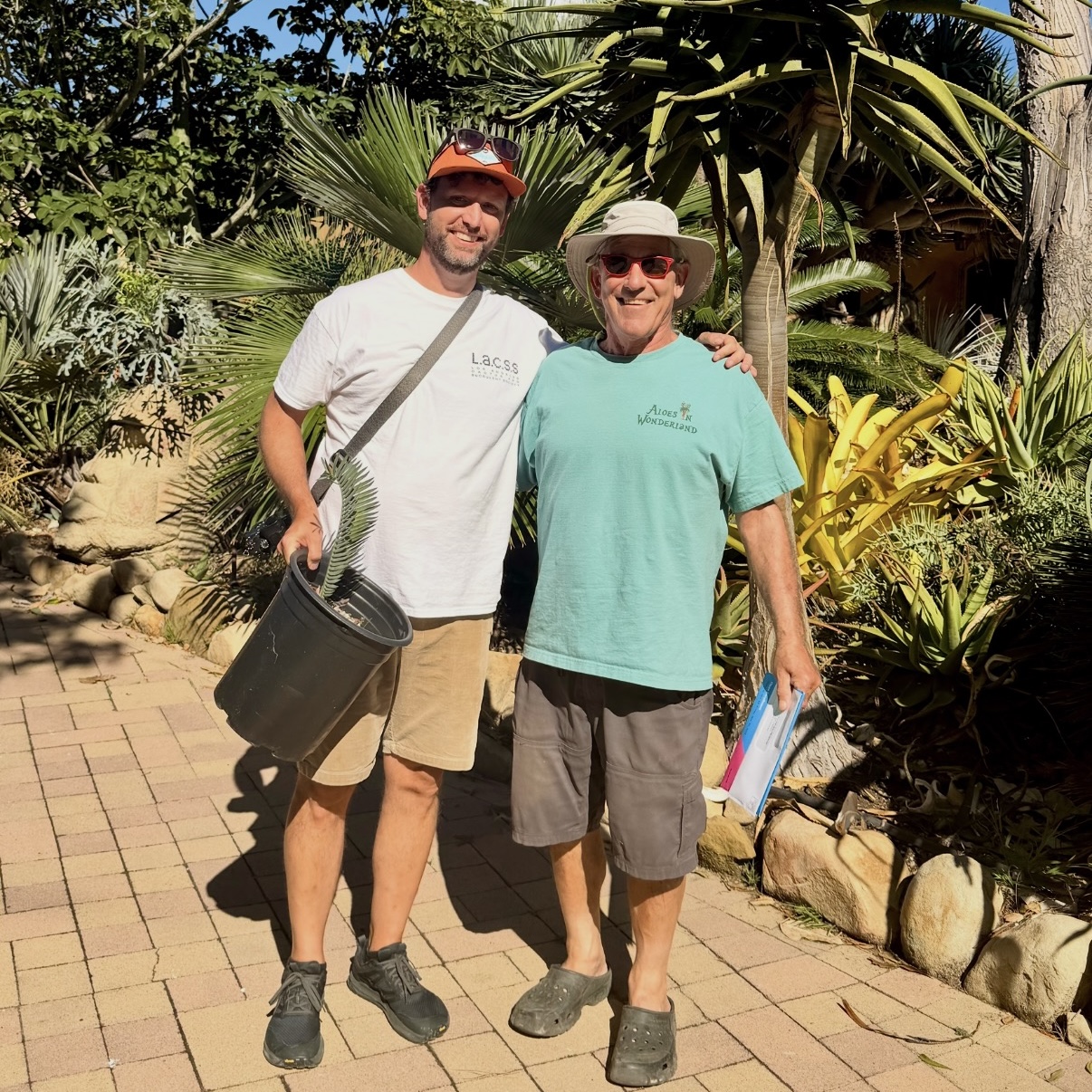
Encephalartos lehmannii
Karoo cycad
Acquired1 day ago10/24/2026
Notes
Hailing from an arid, semi-desert Mediterranean to summer-rainfall transition zone, this xerophytic cycad requires maximum UV sun exposure and intense heat to trigger new leaf flushes and maintain its brilliant silvery-blue waxy coating. In a coastal Zone 10b environment, keeping it in full sun is essential; shady or overly humid conditions will cause new fronds to stretch, turn green, and lose their signature glaucous bloom. It demands a deep, exceptionally well-draining, coarse mineral substrate—such as your 80% volcanic pumice blend cut with coarse decomposed granite and calcined clay—to match its native rocky quartzite soils and accommodate its long, fleshy taproot and coralloid root system. Cultivating this species in a large, heavy, raw cement container provides vital structural counter-weight and root aeration while rapidly wicking away excess soil moisture. Water deeply during warm spring and summer growth cycles, allowing the substrate to dry out thoroughly between soakings, and keep it on a lean, minimal watering schedule throughout the cool winter rest beneath a solid polycarbonate roof to protect against cold, stagnant rain.
Origin
South Africa. Endemic to the dry, stony hillsides, quartz ridges, and arid Karoo scrublands of the Eastern Cape province. In habitat, it grows fully exposed to harsh sunlight and extreme temperature swings, anchored into poor, rocky soils and quartzitic outcrops. It forms a robust, medium-sized cycad with a thick, woody trunk (up to 2 meters tall) topped by a striking crown of rigid, pinnate fronds. It is universally celebrated for its intense blue-grey to silvery glaucous foliage, a thick waxy coating developed to reflect intense solar radiation and retain moisture. As a dioecious gymnosperm, mature male plants produce 1–2 large, greenish-brown to yellow cones, while female plants produce massive, heavy, egg-shaped cones containing bright red seeds.
Note: Coordinates indicate a general region for educational purposes and are not exact locations. Please do not use them for collection or poaching.