2026/07/31
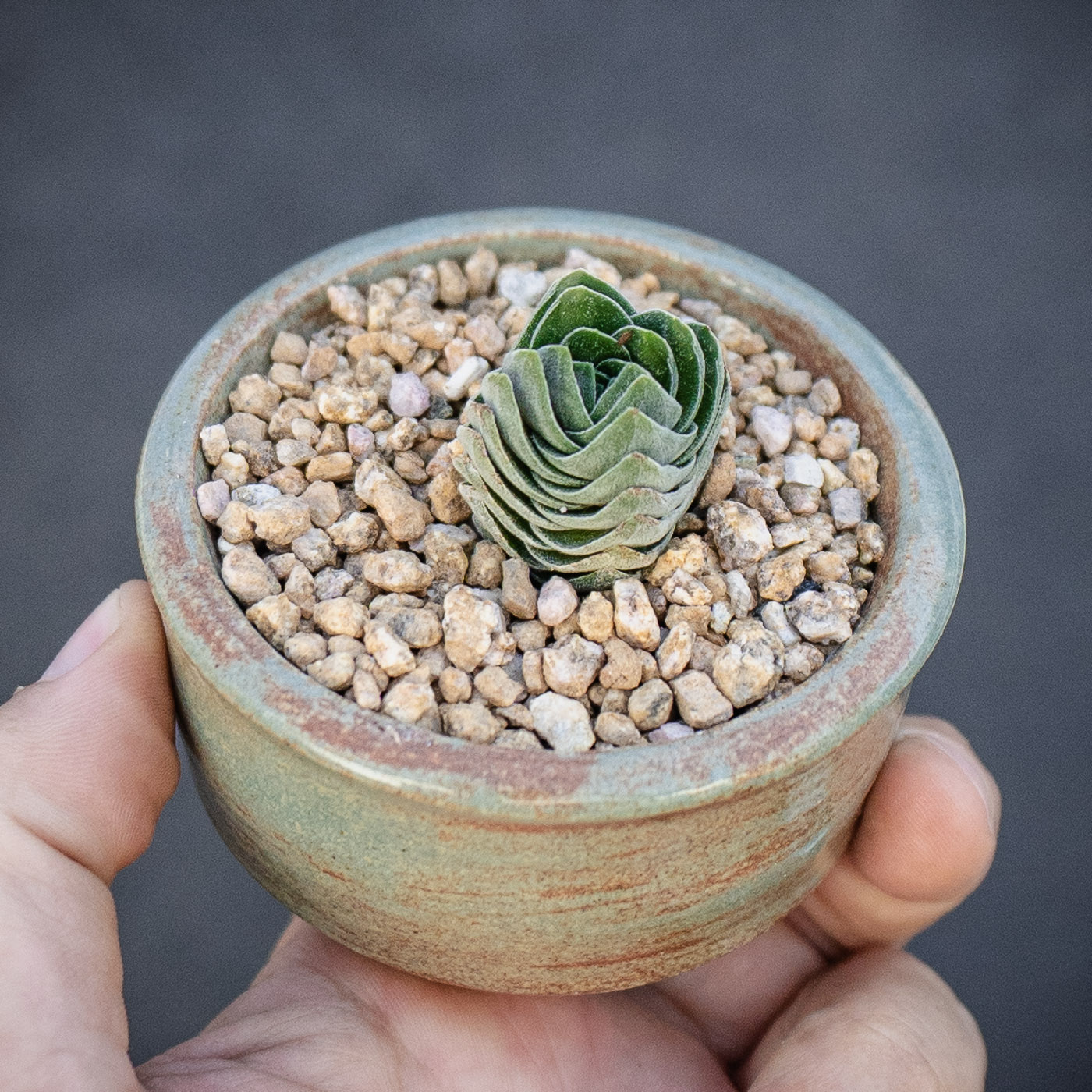
Crassula pyramidalis
Buddha's Temple
Acquiredabout 2 months ago7/29/2026
PotterPeety Pots by Pablo
Notes
Endemic to the Cape's distinct winter-rainfall climate, this species wakes up from dormancy as the temperatures drop in autumn. In a mild, coastal Southern California climate like Zone 10b, it thrives outdoors year-round under the dappled protection of a shade house, benefiting immensely from the cool, wet winters. During the heat of mid-summer, it goes into a strict metabolic rest and is highly susceptible to fungal rot if exposed to stagnant moisture or heavy humidity. It requires a sharply draining mineral substrate. If staging this geometric plant in hand-crafted raw cement pots, ensure the concrete has been thoroughly cured and leached beforehand, as a sudden alkaline spike from fresh cement can severely shock its fine, shallow root system. Water thoroughly only during the active, cool months when the soil has completely dried out, pulling back almost entirely during the summer peak.
Origin
South Africa. This striking, highly architectural miniature succulent is native to the semi-arid winter-rainfall regions of the Western Cape and the Little Karoo. It grows nestled in shallow quartz patches, rocky soils, and tucked under the protective cover of low Karoo scrub to shield itself from the baking sun. The plant forms incredibly tight, upright, quadrangular (four-sided) columns composed of tiny, flat, triangular leaves that overlap perfectly like shingles on a roof. Stems are typically 2 to 10 cm tall and barely a centimeter wide, remaining a vibrant, bright green in shaded conditions but flushing to an intense, stressed reddish-brown or purplish-bronze when exposed to strong UV light or drought. It is a slow-clumping species with a monocarpic growth habit at the stem level; when a stem reaches maturity, it produces a dense, beautiful cluster of tiny, sweet-smelling white or pale pink flowers directly from the apex, after which that specific stem will slowly die off, leaving the basal offsets to continue the cluster.
Note: Coordinates indicate a general region for educational purposes and are not exact locations. Please do not use them for collection or poaching.