2026/07/31
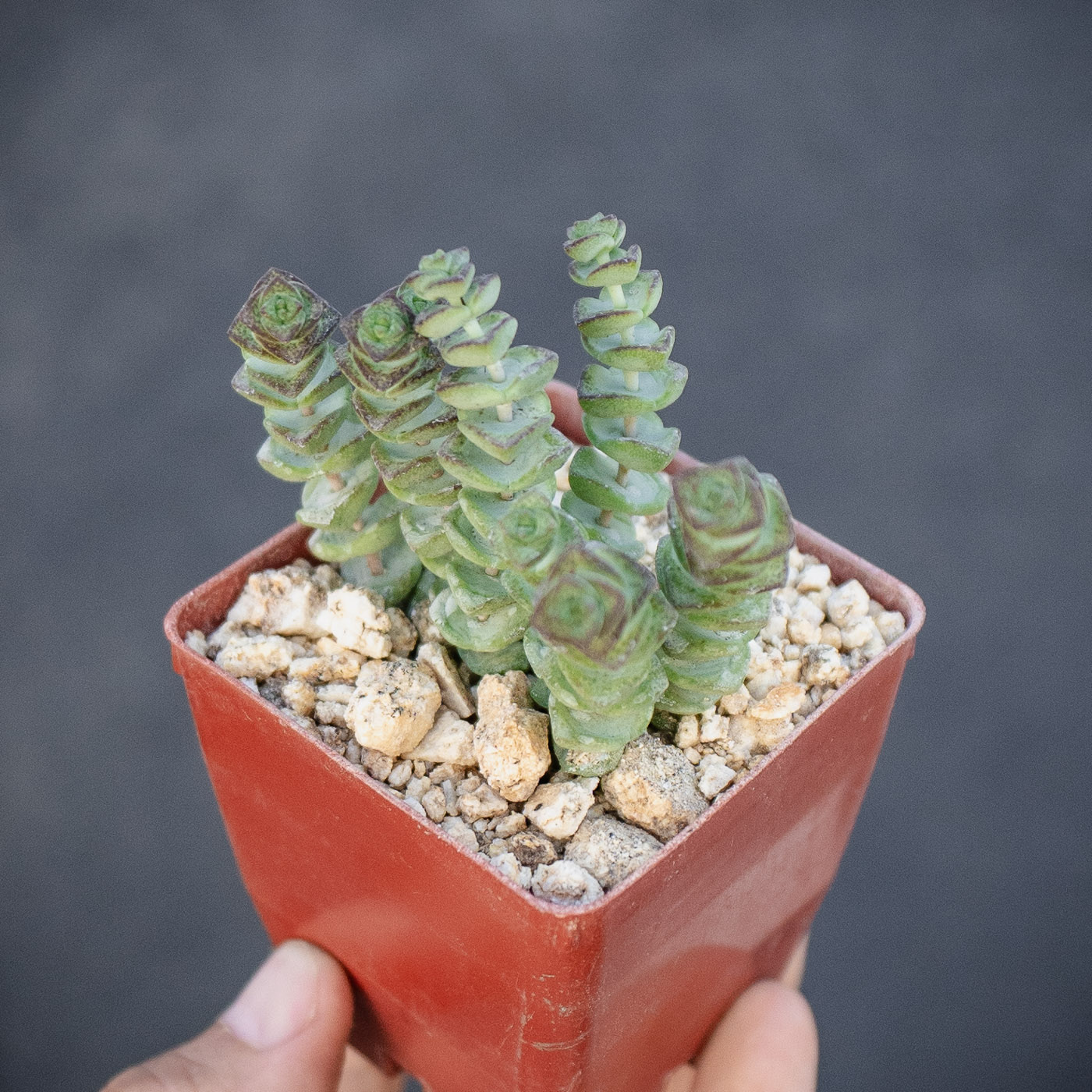
Crassula marniana
Jade Necklace
Acquiredabout 2 months ago7/29/2026
Notes
Adapted to the distinct winter-rainfall patterns of the Cape, this species does the bulk of its growing when the weather cools down. In a mild coastal climate like Zone 10b, it performs beautifully outdoors year-round. It thrives perfectly under the protective diffusion of a polycarbonate and wood shade house, which provides the ideal balance of intense, filtered light necessary to bring out its striking red margins while shielding it from scorching afternoon extremes. During late winter or early spring, it produces tight clusters of tiny, star-shaped pale pink or white flowers at the very tips of the stems.
Because the leaves are so tightly stacked, the microscopic gaps create perfect, protected micro-environments for pests; routine scouting is critical to catch mealybug or mite infestations early before they establish deep in the leaf axils where contact sprays can't reach. It requires a highly porous, fast-draining mineral mix (such as 70% pumice and coarse grit mixed with 30% loam). If potting into hand-crafted raw cement planters, ensure the concrete has been fully cured and leached to prevent an alkaline spike from burning the fine roots. Water deeply during the cooler active months, allowing the soil to dry out entirely between waterings, and reduce moisture drastically during the peak heat of summer dormancy to prevent stem rot.
Origin
South Africa. This highly architectural, cascading succulent is native to the rocky, mountainous slopes of the Western Cape and the Little Karoo. It grows wedged in shallow quartzite soils and sandstone crevices, often trailing gracefully down steep cliff faces and rocky outcrops. The plant is instantly recognizable for its trailing, wire-like stems completely enveloped by fleshy, tightly stacked, rounded leaves that look exactly like thick geometric beads threaded on a string. The leaves are a soft, matte grey-green but develop intensely beautiful, bright crimson or deep burgundy margins when exposed to bright light and environmental stress. As the stems lengthen, they transition from an upright, structural posture to a heavy, cascading habit, making it an exceptional hanging or trailing specimen.
Note: Coordinates indicate a general region for educational purposes and are not exact locations. Please do not use them for collection or poaching.