2026/08/05
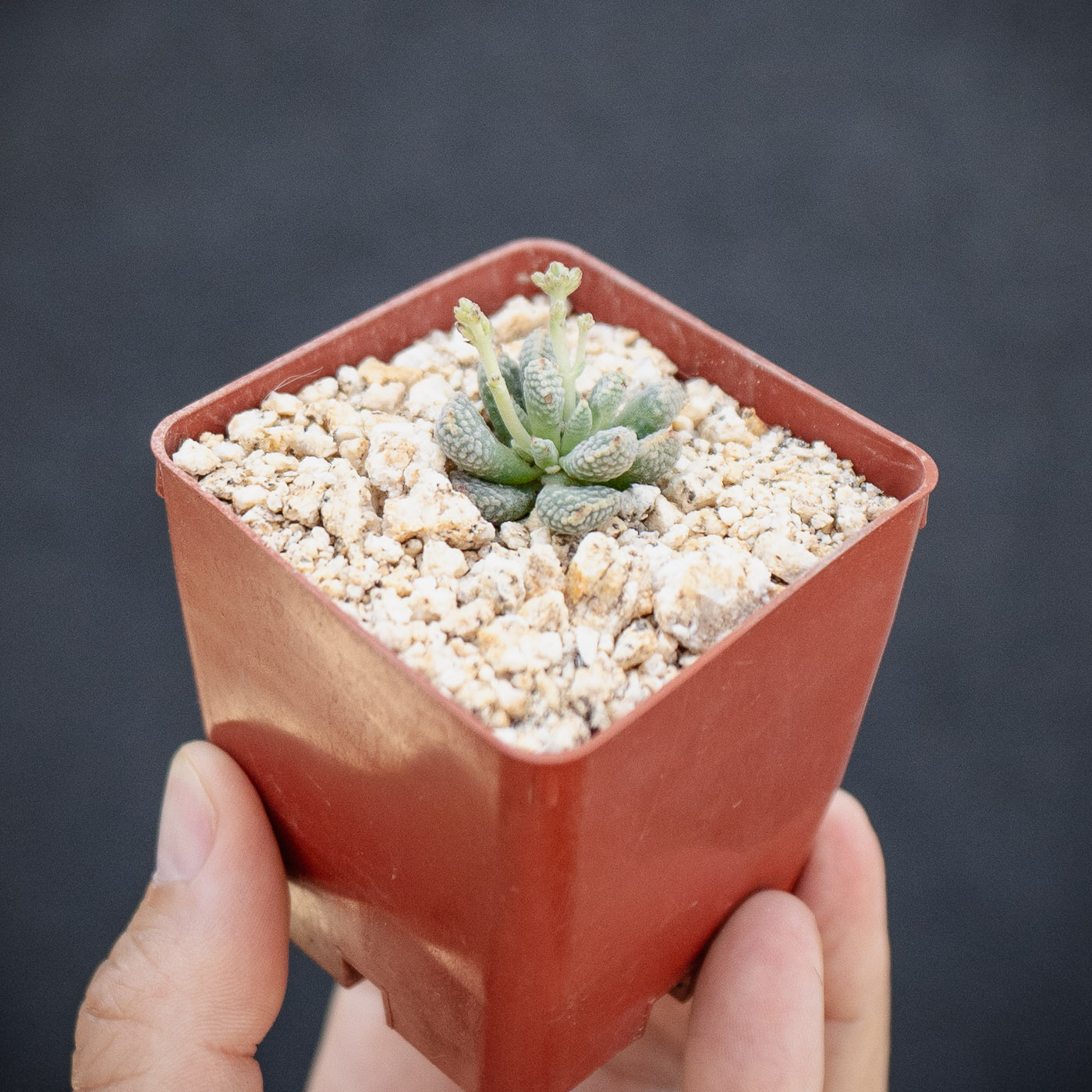
Crassula ausensis subs. titanopsis
Acquiredabout 1 month ago8/3/2026
Notes
Adapted to an extreme desert winter-rainfall regime, this species wakes up and begins active growth as temperatures cool down in autumn. In a mild coastal climate like Zone 10b, it performs exceptionally well outdoors year-round when protected beneath the bright diffusion of a shade house, which prevents its delicate foliage from scorching under intense direct sun. Because its root system is extremely fine and shallow, it requires an uncompromisingly fast-draining, porous mineral mix (such as 80% pumice and coarse sand with minimal organic loam). Water thoroughly only when the soil has dried out completely during the cool active months, and pull back drastically during the peak heat of summer dormancy to prevent stem rot.
Origin
Namibia and South Africa. This tiny, highly sought-after miniature succulent is native to the harsh, arid gravel plains and rocky quartz outcrops of the southern Namib Desert, specifically around Aus. It grows wedged tightly into shallow, mineral-rich crevices and beneath the partial shade of protective rocks, enduring extreme heat and prolonged drought. The plant forms compact rosettes rarely exceeding 3 to 4 cm in diameter, composed of thick, fleshy, spatula-shaped leaves. The epidermis is a fascinating, textured grey-green to pale bronze, heavily mottled with raised, whitish, wart-like dots that give it a striking resemblance to a miniature Titanopsis. During the cooler winter months, it produces delicate clusters of tiny, star-shaped white flowers on short stalks held just above the foliage.
Note: Coordinates indicate a general region for educational purposes and are not exact locations. Please do not use them for collection or poaching.