2026/06/23
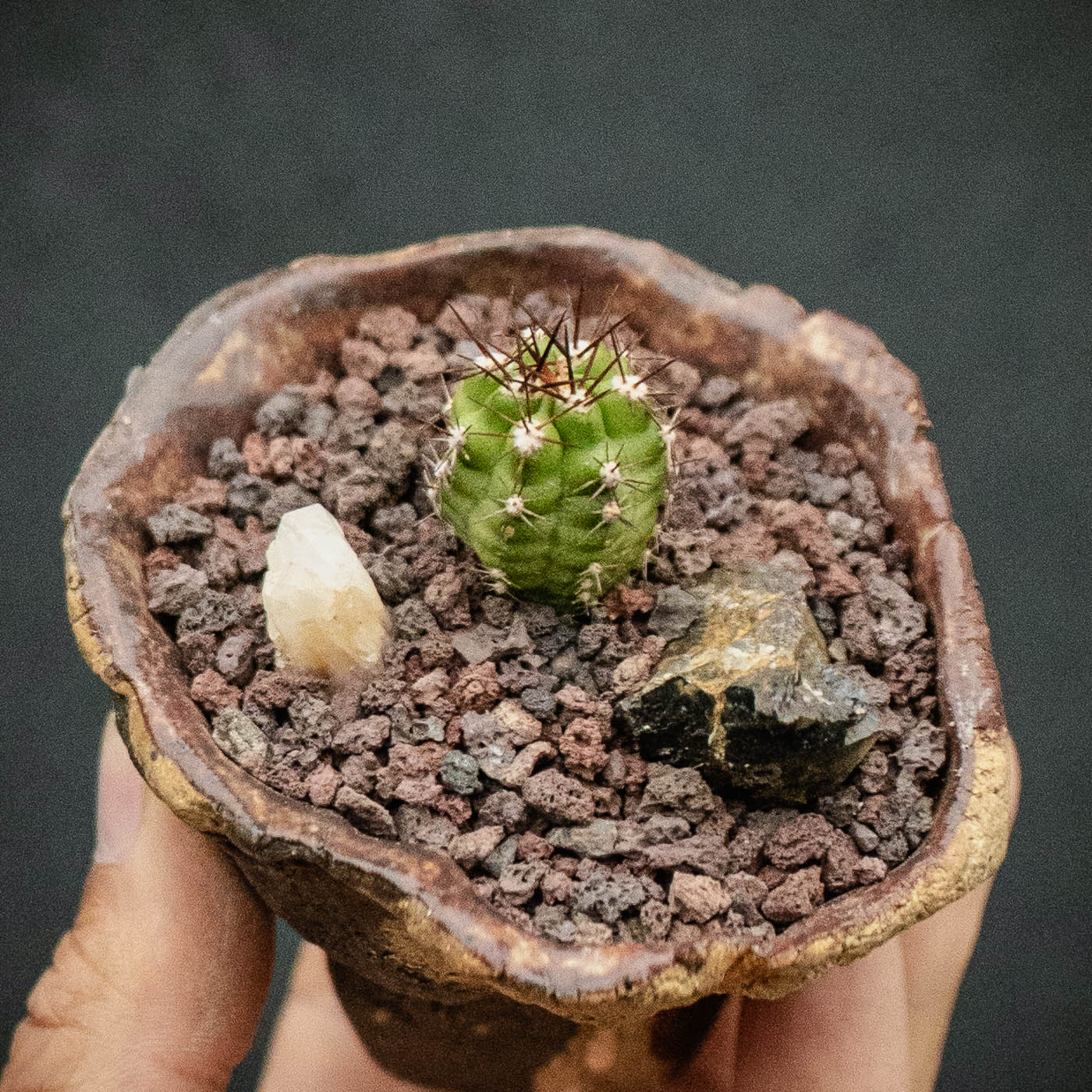
Copiapoa solaris
Field Data
Field NumberJN 2613
Recorded ByJan Novák
LocalityMina Doña Maria, Chile
Field data provided by rarecactus.com
Notes
Surviving in an environment that experiences virtually zero measurable annual rainfall, this collection is an extreme fog-dependent specialist. It relies entirely on the dense camanchaca fog that rolls inland during the cooler autumn, winter, and spring mornings, capturing moisture via the thick, densely felted, yellowish-white wool that blankets the plant's apex. The collected water is funneled down to a massive, water-storing subterranean root system. During the stagnant, high-heat intensity of mid-summer, the plant shuts its metabolism down entirely, dropping into a protective state of dormancy where the apical wool and heavy spines shield it from solar scorching. In late summer, it pushes small, satiny yellow flowers directly out of the dense crown wool (a feature so uniquely hairy it earned the subgenus name Pilocopiapoa). In cultivation, it is legendary for its exceptionally slow growth rate on its own roots; it demands an uncompromisingly sharp, 90% to 95% purely mineral substrate (premium volcanic pumice, decomposed granite, and crushed quartz with zero uncomposted organics) and must be watered with extreme restraint only during warm, breezy weather.
https://www.cl-cactus.com/fn.asp?FnID=10992802200317130859
Origin
Chile. This highly localized, legendary cactus is a specific 2024 field collection by Jan Novák (JN 2613) from Mina Doña María, located south of Antofagasta in the Antofagasta Region of the northern Atacama Desert. Thriving at an elevation of 421 meters, this variant inhabits incredibly harsh, sun-baked mountain slopes and hyper-arid granitic terraces that steeply rise above the Pacific Ocean. Copiapoa solaris is considered one of the ultimate masterworks of the genus, characterized by its remarkably thick, heavily armed, and slow-growing morphology. The stems are robust, cylindrical, and grey-green, masked beneath a heavy, chalky white cuticular wax designed to reflect extreme solar radiation. This particular collection showcases an incredibly dense, interlaced armor of thick, rigid spines that open as a rich amber, copper, or reddish-brown before weathering to a beautiful, ghostly chalk-grey. The individual heads slowly offset from the base over decades, eventually forming massive, dense, dome-like cushions in habitat.
Note: Coordinates indicate a general region for educational purposes and are not exact locations. Please do not use them for collection or poaching.