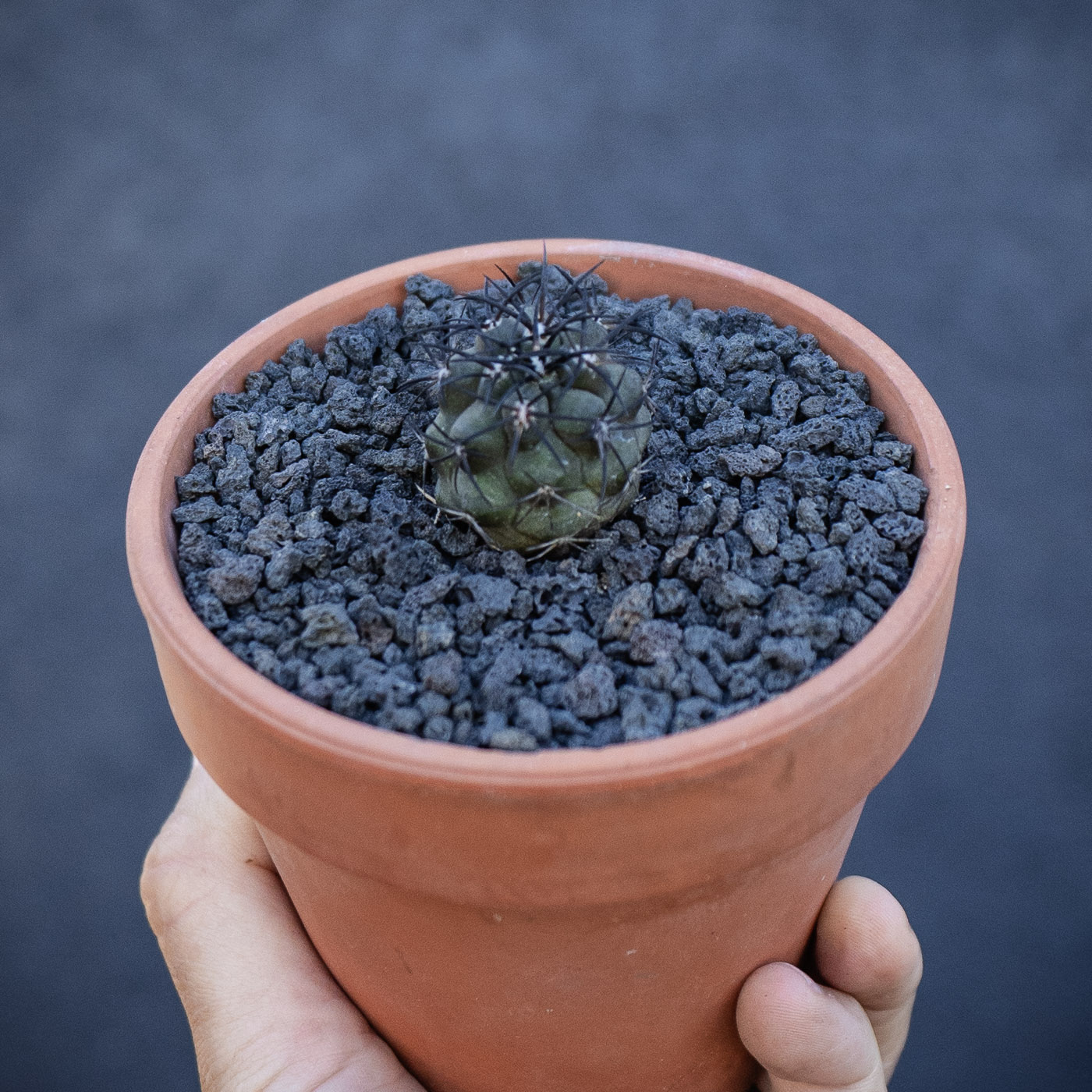
Copiapoa schulziana
Sowingalmost 2 years ago2/4/2025
Acquired23 days ago10/30/2026
Field Data
JN 2180Field NumberJN 2180
Recorded ByJan Novák
LocalityQuebrada Chañaral, Chile
Field data provided by rarecactus.com
Notes
Because this population sits further inland than the extreme coastal fog-belt species, it experiences higher solar intensity, greater diurnal temperature swings, and occasional rare desert storm moisture rather than constant camanchaca blankets. In a coastal Zone 10b environment, it thrives under maximum UV exposure, which brings out the rich, dark contrast of its heavy brown-to-black spination and encourages clean, compact growth. It demands an uncompromisingly porous, fast-draining mineral substrate, making your 80% premium pumice blend cut with coarse decomposed granite and calcined clay ideal to replicate the coarse, sterile mountain scree of its native ravines. Cultivating this specimen in a deep, highly breathable raw cement pot provides ample vertical space for its thick, napiform (tuberous) taproot while keeping the root collar completely free of lingering moisture. Water deeply but infrequently during warm summer growth cycles—allowing the substrate to dry out entirely between soakings—and strictly withhold water throughout a bone-dry winter rest beneath a solid polycarbonate roof to protect against unseasonal rains.
Origin
Chile. This specific collection (Jan Novák collection number JN 2180) originates from the rugged interior gravel slopes and dry washes of the Quebrada Chañaral (or inland areas leading up toward Domeyko) in the Atacama Desert. Unlike the ultra-coastal, fog-bathing species wrapped in thick white wax, Copiapoa schulziana occurs further inland on steep, rocky hillsides at elevations around 550 to 650 meters, where it grows alongside other native xerophytes like Miqueliopuntia miquelii and Eulychnia acida. It typically forms a solitary, upright, slightly cylindrical stem with a naked, woolly apex and a distinctive pistachio-to-dull-green epidermis that remains visible beneath its armature. The areoles bear stout, dark chocolate-brown to blackish radial spines paired with a prominent, upward-pointing central spine. During the warm season, it pushes fragrant, bright yellow flowers through its apical crown.
Note: Coordinates indicate a general region for educational purposes and are not exact locations. Please do not use them for collection or poaching.