2026/07/28
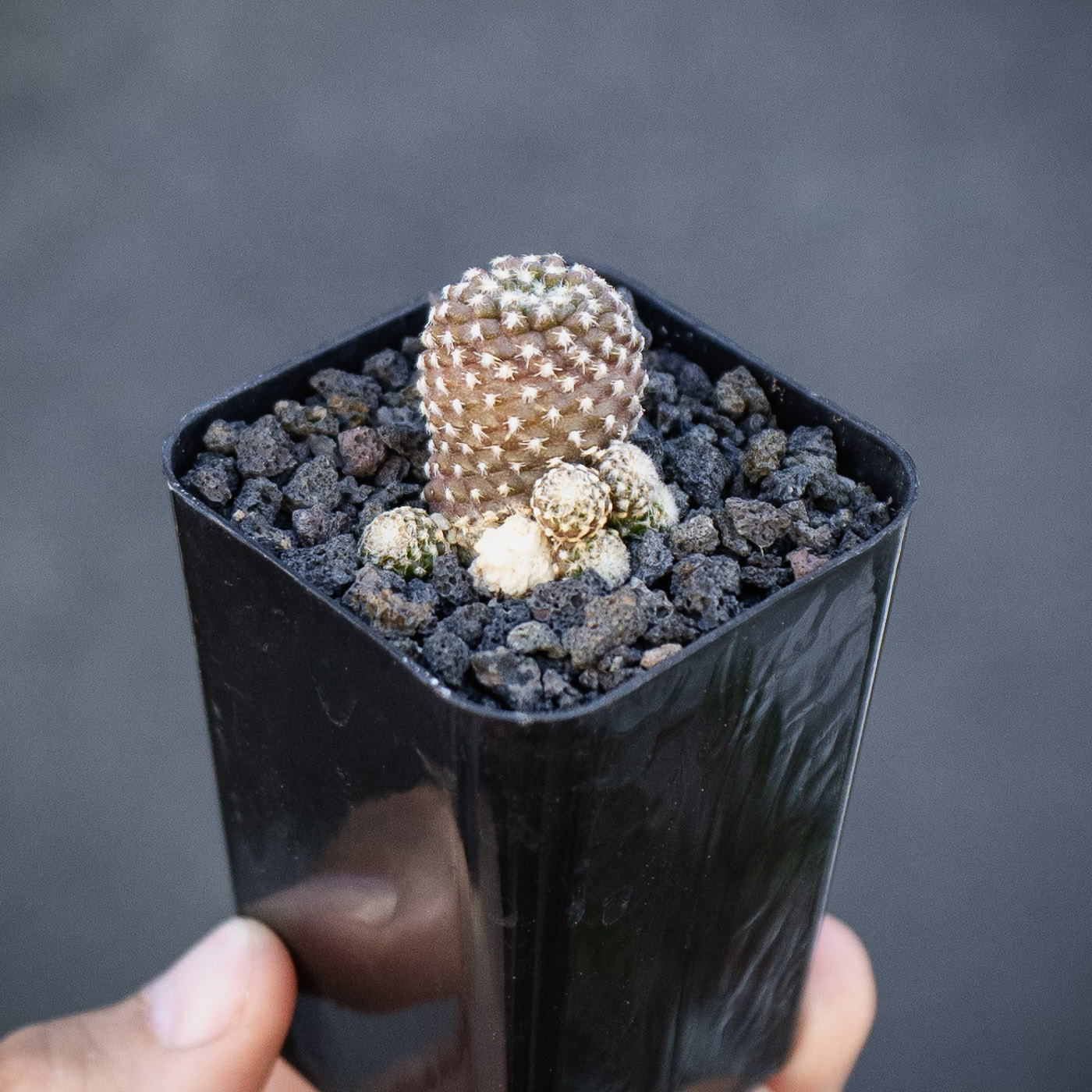
Copiapoa laui
Acquired3 months ago6/26/2026
Notes
Because measurable rainfall in this habitat is virtually non-existent, Copiapoa laui survives entirely off the cool, moisture-laden camanchaca fog that rolls in from the Pacific Ocean. It gathers condensation and stores it in an astonishingly massive, thick, tuberous taproot that sits deep beneath the rock line. Growth is highly opportunistic, firing up strictly during the cooler, humid shoulder seasons of autumn and early spring. During the active season, it pushes relatively large, silky, pale yellow flowers from the apex of the stems, which frequently dwarf the tiny individual heads producing them.
In cultivation, it is notoriously challenging and highly rot-prone on its own roots. It demands an uncompromisingly lean, 95% to 100% mineral substrate (such as premium volcanic pumice, decomposed granite, and coarse quartz grit) in a deep pot to accommodate its subterranean taproot. Watering must be executed with extreme restraint only during warm, breezy weather, while enforcing a strict, deep metabolic rest during the stagnant heat of mid-summer to prevent the root system from boiling.
Origin
Chile. This highly cryptic, incredibly slow-growing miniature geophyte is the absolute smallest species in the entire Copiapoa genus. It is native to a hyper-arid, tightly restricted coastal strip within the Antofagasta Region, specifically localized around the steep hills and dry, rocky ravines near Esmeralda and Pan de Azúcar National Park. It grows mostly underground, anchored securely into coarse mineral scree, quartz gravel, and fractured seaside terraces. The exposed portion of the plant consists of tiny, heavily clumping, flattened-globose heads that rarely exceed 1 to 1.5 cm in diameter. The epidermis lacks the thick, chalky white wax of its larger relatives; instead, it exhibits a dull, dusty grey-green color that blushes to an intense reddish-brown or purplish-bronze when subjected to high UV stress. The tiny stems feature almost no distinct ribs, maintaining a bumpy, tuberculate surface topped with microscopic, fine, hair-like white or pale-grey spines (older growth is frequently completely spineless).
Note: Coordinates indicate a general region for educational purposes and are not exact locations. Please do not use them for collection or poaching.