2026/08/20
Copiapoa krainziana
Sowingover 2 years ago1/1/2024
Acquired16 days ago8/17/2026
Notes
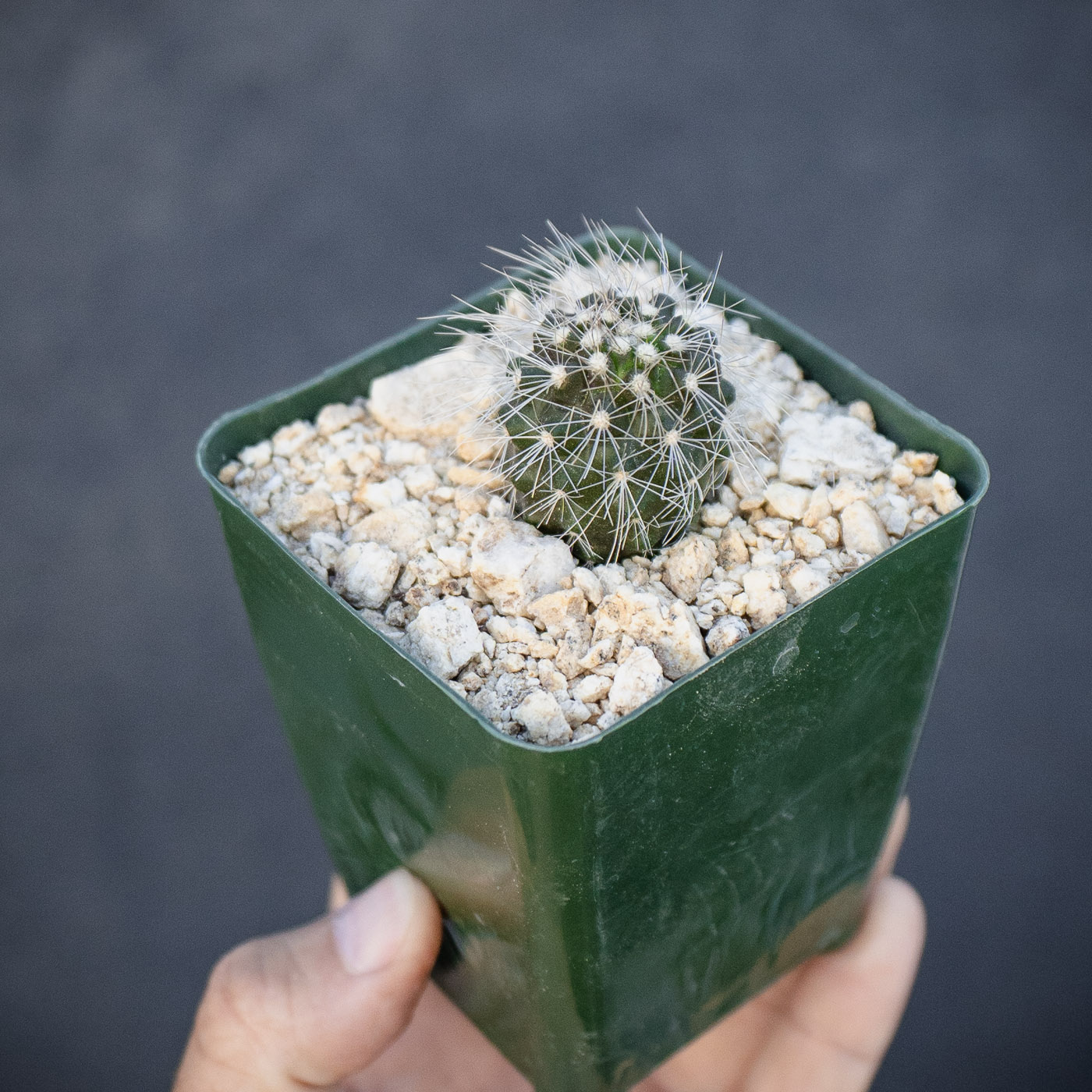
Evolving in one of the driest places on earth, this species relies entirely on the cool, moisture-laden camanchaca fogs rolling in from the Pacific, absorbing condensation through its woolly apex and channeled ribs rather than taking up groundwater. In a coastal Zone 10b environment, it performs beautifully outdoors beneath the protective diffusion of shade cloth and a polycarbonate roof, which prevents its dense "hair" from accumulating debris and completely shields it from fatal winter rains. It demands an uncompromisingly lean, 95% to 100% mineral substrate—such as premium volcanic pumice, calcined clay, and coarse decomposed granite—with zero organic matter. Housed in a breathable raw cement pot, it requires extreme watering discipline. Water very lightly only on warm, breezy days during the shoulder seasons, enforcing a strict, completely dry rest throughout the peak mid-summer heat and the cold winter dormancy to prevent rapid root rot.
Origin
Chile. This highly distinctive, incredibly slow-growing cactus is endemic to the hyper-arid Atacama Desert, strictly localized to the Quebrada San Ramon, a rugged canyon system just north of Taltal in the Antofagasta Region. Clinging to steep, rocky granitic slopes, it exists in an environment practically devoid of rainfall. It slowly forms clustering mounds of globose to short-cylindrical stems. Its most remarkable and defining feature is the dense covering of long, soft, curving white or silvery-grey spines that almost completely obscure the greenish body—resembling a wild nest of coarse hair—topped with a thick cushion of apical wool designed to capture passing moisture.
Note: Coordinates indicate a general region for educational purposes and are not exact locations. Please do not use them for collection or poaching.