2026/06/19
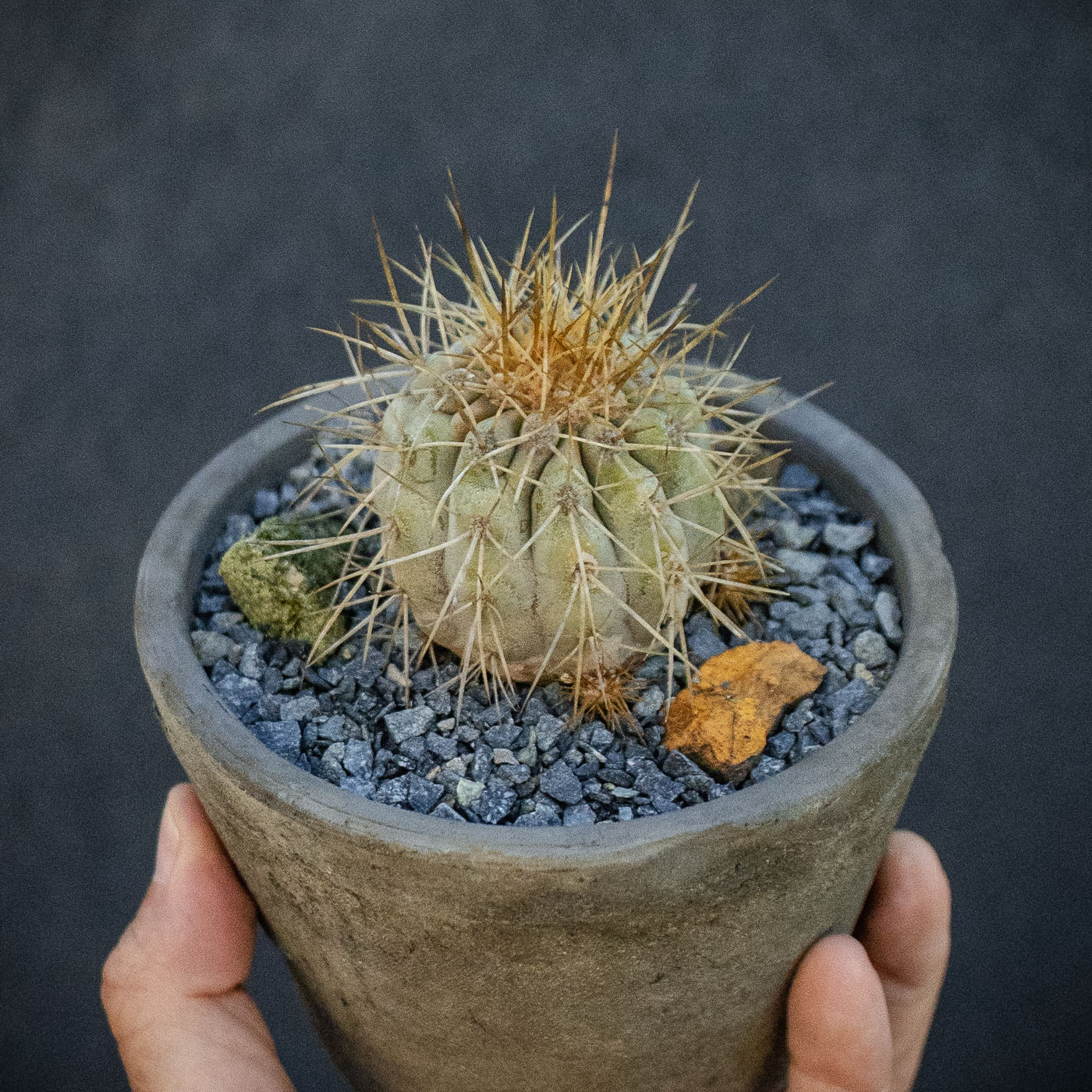
Copiapoa haseltoniana aff. tenebrosa
Acquired3 months ago6/16/2026
Field Data
Field NumberBIG 264
Recorded ByIgnazio Blando
LocalityTaltal, Chile
Elevation400m
Event DateJanuary 2017
Field data provided by rarecactus.com
Notes
Operating as a highly specialized Atacama endemic, this dark-bodied population relies almost entirely on the coastal camanchaca fog that slides up the steep seaside cliffs and mountain ridges north of Taltal. It catches this atmospheric moisture via its dense, felted apical wool and channeled ribs, funneling it down to a thick, swollen, starch-heavy taproot system. It enters a highly defensive, low-metabolic state during the stagnant heat of mid-summer to avoid sunburn and dehydration. Small, satiny yellow flowers push straight out of the dense orange-brown apical felt during late spring. In cultivation, its highly pigmented, dark skin makes it prone to heat-trapping if air circulation is stagnant; it requires an aggressively lean, strictly mineral mix (such as 90% coarse pumice, decomposed granite, and zero uncomposted organics) and must be watered with an disciplined, highly restrained hand only during warm, breezy weather when the substrate is bone-dry.
Origin
Chile. The field collection number BIG 264 (collected by Ignazio Blando) places this specific population in the extremely arid coastal mountains North of Taltal, at an elevation of roughly 400 meters. While standard Copiapoa haseltoniana is famous for its massive, clustering mounds displaying bright orange-yellow apical wool and golden spines near Paposo, the aff. tenebrosa variant (associated with the rugged slopes around Mount Perales and the deep, shaded cracks of Quebrada San Ramón) exhibits a much darker, moodier appearance. The name tenebrosa translates to "dark" or "gloomy," perfectly capturing its distinctive dark charcoal-grey to nearly black epidermis. This melanistic body provides a stark, breathtaking contrast against the intensely woolly, pale-orange apex and heavy spines.
Note: Coordinates indicate a general region for educational purposes and are not exact locations. Please do not use them for collection or poaching.