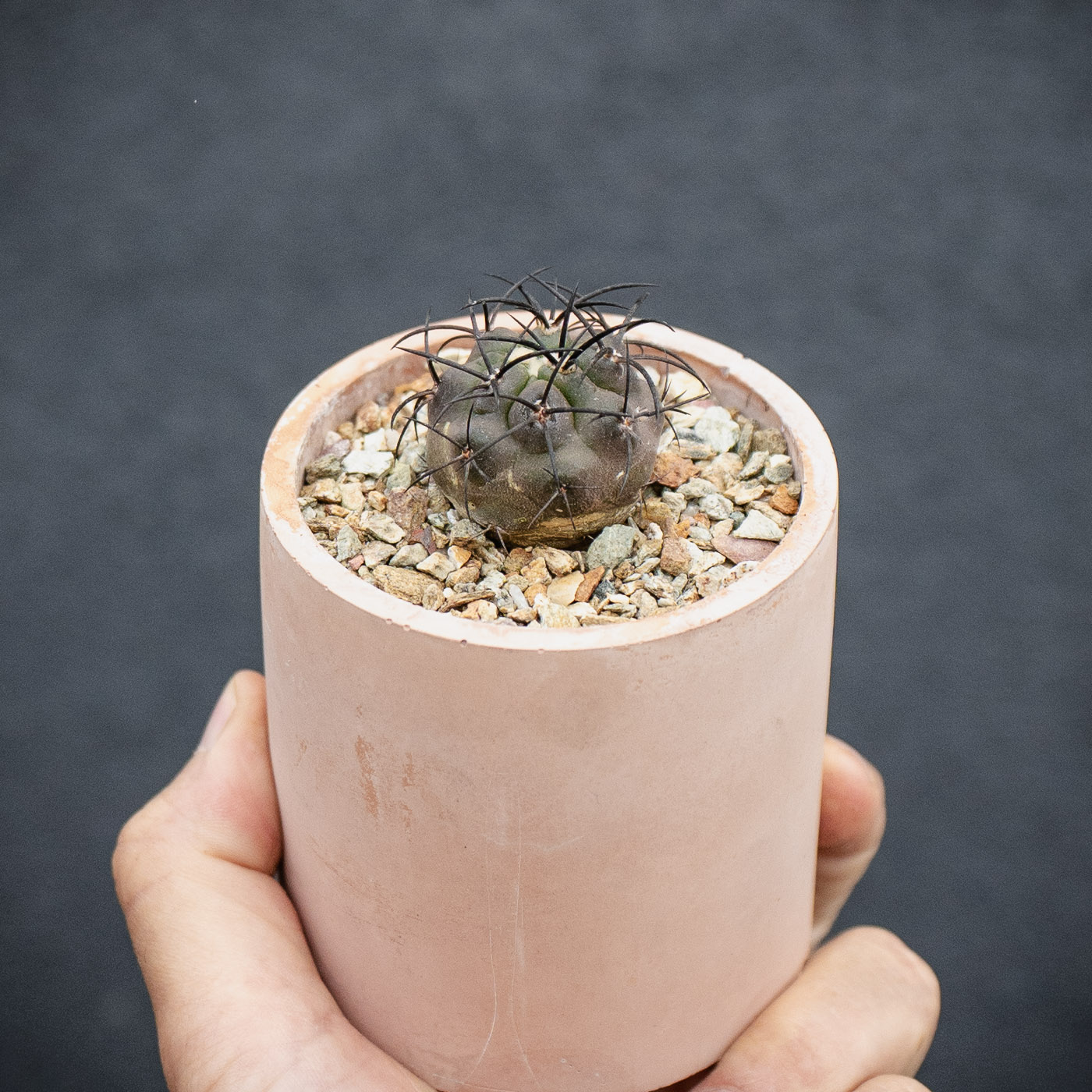
Copiapoa griseoviolacea
Acquired13 days ago11/9/2026
PotterPrickly Point
Notes
Evolving in one of the driest coastal fog-deserts on Earth, this species is exceptionally sensitive to overwatering, organic soils, and stagnant humidity. In a coastal Zone 10b environment, maintaining strict mineral aridity and maximum UV sun exposure is vital to preserve its unique grey-violet skin coloration, waxy finish, and compact form; excess moisture or shade will cause the plant to turn dull green and rapidly succumb to rot. It demands an uncompromisingly porous, fast-draining mineral substrate, making your 80% premium pumice blend cut with coarse decomposed granite and calcined clay ideal to replicate its native rocky coastal scree. Cultivating this specimen in a deep, highly breathable raw cement pot provides necessary vertical space for its substantial taproot while rapidly wicking away residual moisture around the root collar. Water must be applied with extreme restraint only during warm summer stretches—allowing the substrate to dry out completely between soakings—and strictly withheld throughout a bone-dry winter dormancy beneath a solid polycarbonate roof to protect against cold seasonal rains.
Origin
Chile. Endemic to a hyper-arid, fog-shrouded coastal pocket of the Atacama Desert in the Antofagasta Region, specifically localized to the remote coastal flats and gravelly hills north of Paposo. In its harsh native habitat, this rare and distinctive species grows fully exposed to intense maritime sun, where it receives virtually no rainfall and depends entirely on moisture captured from the dense camanchaca fog rolling off the Pacific. It forms small, globose to slightly flattened stems that eventually clump to form tight, low-profile colonies. The specific epithet (griseoviolacea, meaning grey-violet) describes its unique, delicate epidermis color—a striking greyish-violet to purple-grey tone overlaid with a subtle chalky waxy bloom. The areoles bear short, dark, needle-like spines, and a light woolly crown protects the apex, from which bright yellow, funnel-shaped flowers emerge during the warm season.
Note: Coordinates indicate a general region for educational purposes and are not exact locations. Please do not use them for collection or poaching.