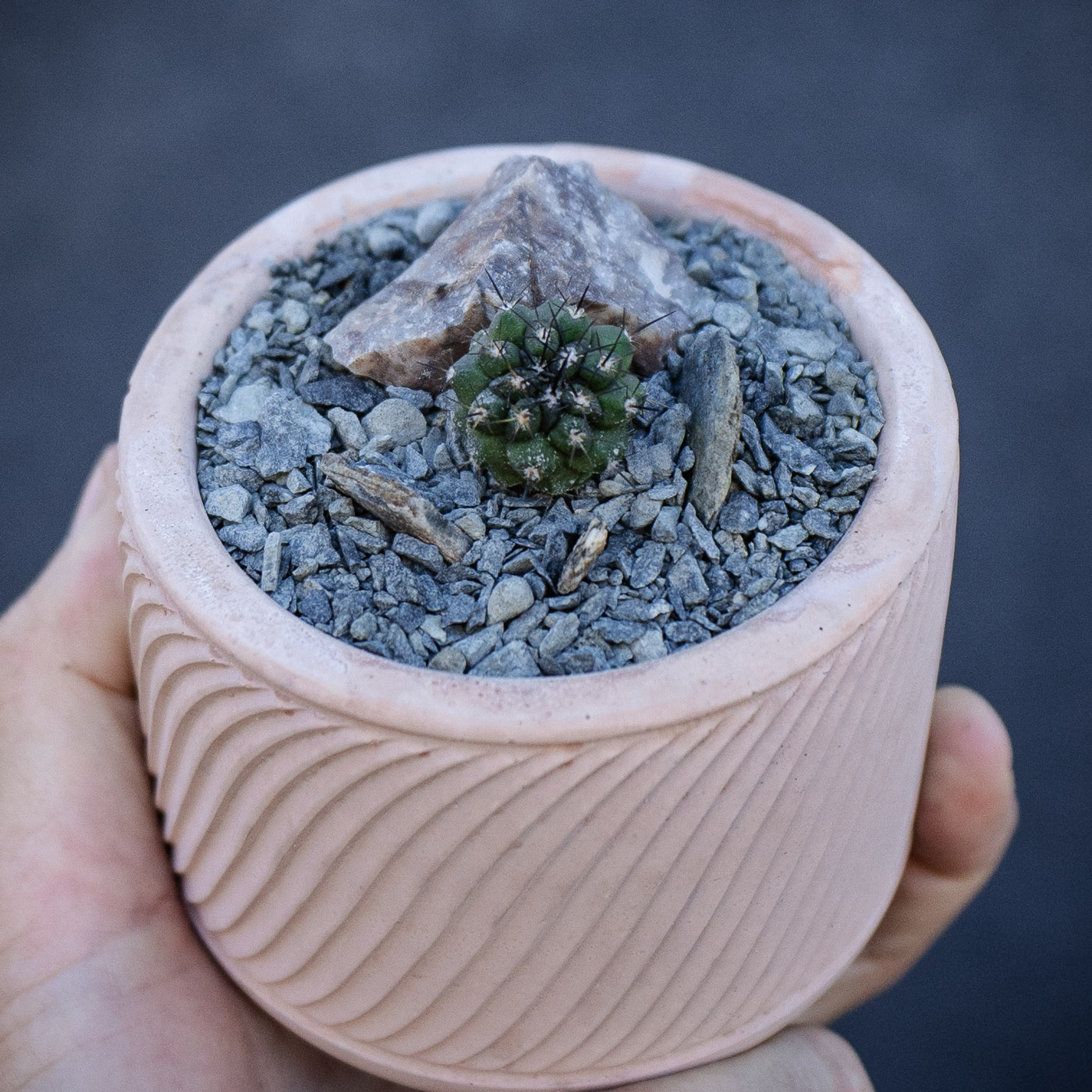
Copiapoa fusca
Field Data
JN 2656Field NumberJN 2656
Recorded ByJan Novák
LocalityQuebrada del Pino, Chile
Field data provided by rarecactus.com
Notes
Thriving in a hyper-arid desert environment where moisture is driven primarily by coastal influence and inland creeping camanchaca mists, this species is exceptionally sensitive to overwatering and root rot if exposed to lingering moisture or organic soils. In a coastal Zone 10b environment, maintaining strict mineral aridity and maximum UV sun exposure is vital to preserve its compact form, subtle waxy bloom, and strong spination. It demands an uncompromisingly porous, fast-draining mineral substrate, making your 80% premium pumice blend cut with coarse decomposed granite and calcined clay ideal to mimic its native rocky, gravel-strewn pedregal. Cultivating this specimen in a deep, highly breathable raw cement pot provides necessary vertical room for its substantial taproot while rapidly wicking away residual moisture around the base. Water must be applied with extreme restraint only during warm summer stretches—allowing the substrate to dry out completely between soakings—and strictly withheld throughout a bone-dry winter dormancy beneath a solid polycarbonate roof to protect against cold seasonal rains.
Origin
Chile. This specific field collection by Jan Novák (JN 2656) originates from the rugged, arid gravel plains and dry hillsides of the Quebrada del Pino in the Atacama Desert. Described as a distinct species by botanists Ingrid Schaub and Ricardo Keim, Copiapoa fusca typically grows as a solitary or sparsely clustering globose-to-moderately flattened stem featuring a distinct grey-green to yellowish-green epidermis partially covered by a fine, pale waxy bloom. Its specific name (fusca, meaning dark or brown) reflects the deep, rich tones of its skin and heavy armature. The areoles bear straight, needle-like grey spines accompanied by 1 to 3 stout, dark central spines pointing outward. Deep beneath the surface, it is anchored by a thick, fleshy taproot, and during the warm season, it pushes bright yellow, funnel-shaped flowers through its pale, woolly apical depression.
Note: Coordinates indicate a general region for educational purposes and are not exact locations. Please do not use them for collection or poaching.