2026/09/09
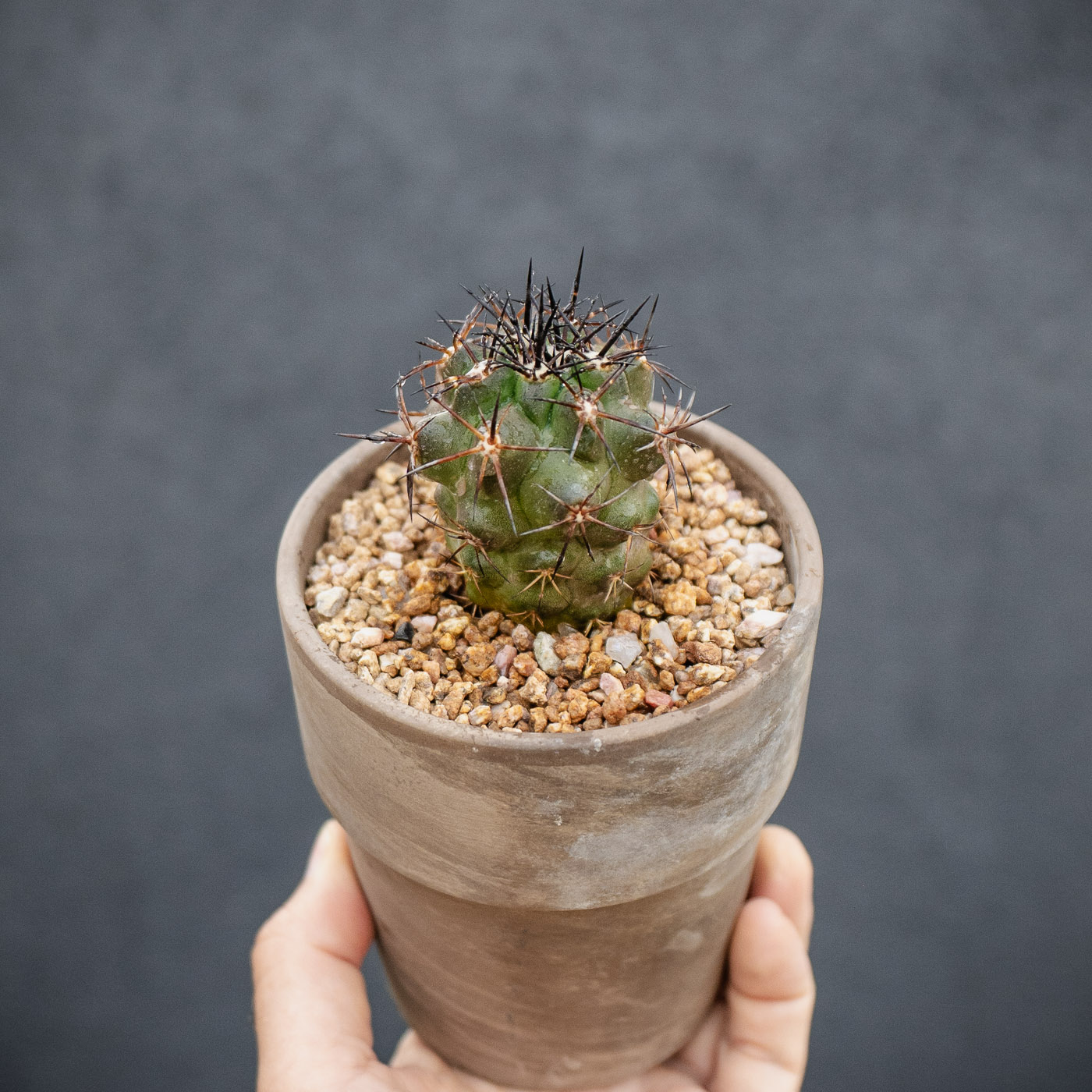
Copiapoa echinata var. borealis
Acquired13 days ago9/4/2026
Notes
Evolving in an environment that sees virtually no measurable rainfall, this geophytic survivor relies almost entirely on the dense camanchaca fogs rolling off the Pacific. In a coastal Zone 10b environment, it performs beautifully outdoors beneath the protective diffusion of shade cloth and a polycarbonate roof, which shields its skin from extreme midday sun while strictly blocking out unpredictable winter rains. Because its large taproot is notoriously susceptible to rot, it demands an uncompromisingly fast-draining mineral substrate. A custom blend of 80% volcanic pumice, cut with decomposed granite, calcined clay, and just a trace of organic cactus mix, provides the perfect aeration. Housed in a deep, breathable pot, water must be applied with extreme discipline only during warm, breezy days in the shoulder seasons, enforcing a strict, bone-dry rest throughout the peak mid-summer heat and cold winter dormancy.
Origin
Chile. This northern geographical variant of the fiercely armed C. echinata is endemic to the stark coastal terraces of the Atacama Desert, primarily centered around Bahía Salada and Puerto Viejo. Surviving in hyper-arid, rocky scree, it develops a massive, fleshy underground taproot (frequently linking it to the megarhiza complex) to hoard moisture during prolonged droughts. Above ground, it forms robust, clustering mounds of grey-green to brownish globose stems. It is defined by its pronounced, sharp ribs and a dense, aggressive covering of stiff, needle-like spines, eventually producing pale yellow flowers from a woolly apex.
Note: Coordinates indicate a general region for educational purposes and are not exact locations. Please do not use them for collection or poaching.