2026/09/16
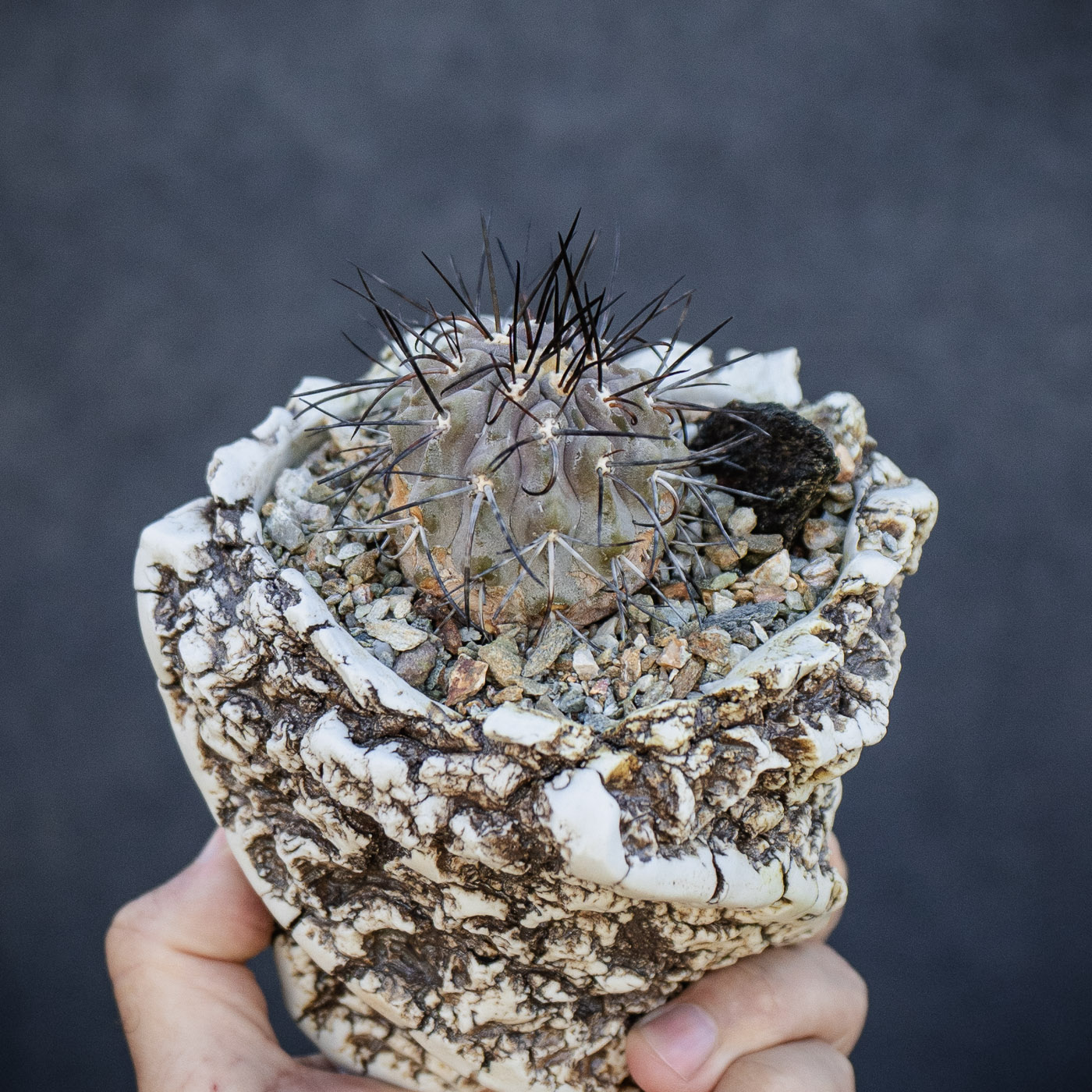
Copiapoa dealbata
Acquiredabout 19 hours ago9/16/2026
PotterSuccy Ceramics
Notes
Evolving along the hyper-arid coastline of the Atacama, this species relies heavily on the regular, dense camanchaca sea fogs rather than rainfall to sustain its massive clusters. Replicating this severe environment in a coastal Zone 10b climate requires exceptional drainage to maintain its signature chalky-white wax; an excessively organic or consistently damp soil will cause the plant to bloat and turn green before eventually succumbing to rot. It thrives in a stark, heavily mineral-based substrate, making a gritty 80% premium pumice blend perfectly suited to mimic the sterile coastal sands of Llanos de Challe. Cultivating this slow-growing specimen in a hand-crafted raw cement pot ensures rapid evaporation and root aeration. Because it requires extreme discipline with watering—often going weeks without a deep soaking during the active season and requiring a strictly bone-dry winter dormancy—mounting an NTAG213 NFC tag to the pot offers an ideal way to digitally log watering cycles and integrate the plant's history directly into the pricklypoint.com inventory system. To protect the root system from unexpected cold, stagnant winter rains, housing it permanently under a solid polycarbonate greenhouse roof is essential.
Origin
Chile. This incredibly impressive, mound-forming species is endemic to the southern Atacama Desert, heavily concentrated along the coastal terraces and rocky plains of the Huasco Province, particularly around Carrizal Bajo and Llanos de Challe National Park. In habitat, it forms some of the most massive, spectacular domed clusters of the entire genus, sometimes stretching over two meters across and containing hundreds of individual heads. The stems are globose to shortly cylindrical, featuring a dense, chalky greyish-white epicuticular wax that protects against severe ultraviolet radiation. The ribs are prominent and armed with thick, straight, dark brown to jet-black spines that create a striking contrast against the pale epidermis. During the warm season, it pushes satiny, pale yellow flowers directly from the dense, woolly apical crown.
Note: Coordinates indicate a general region for educational purposes and are not exact locations. Please do not use them for collection or poaching.