2026/09/14
Copiapoa dealbata
Notes
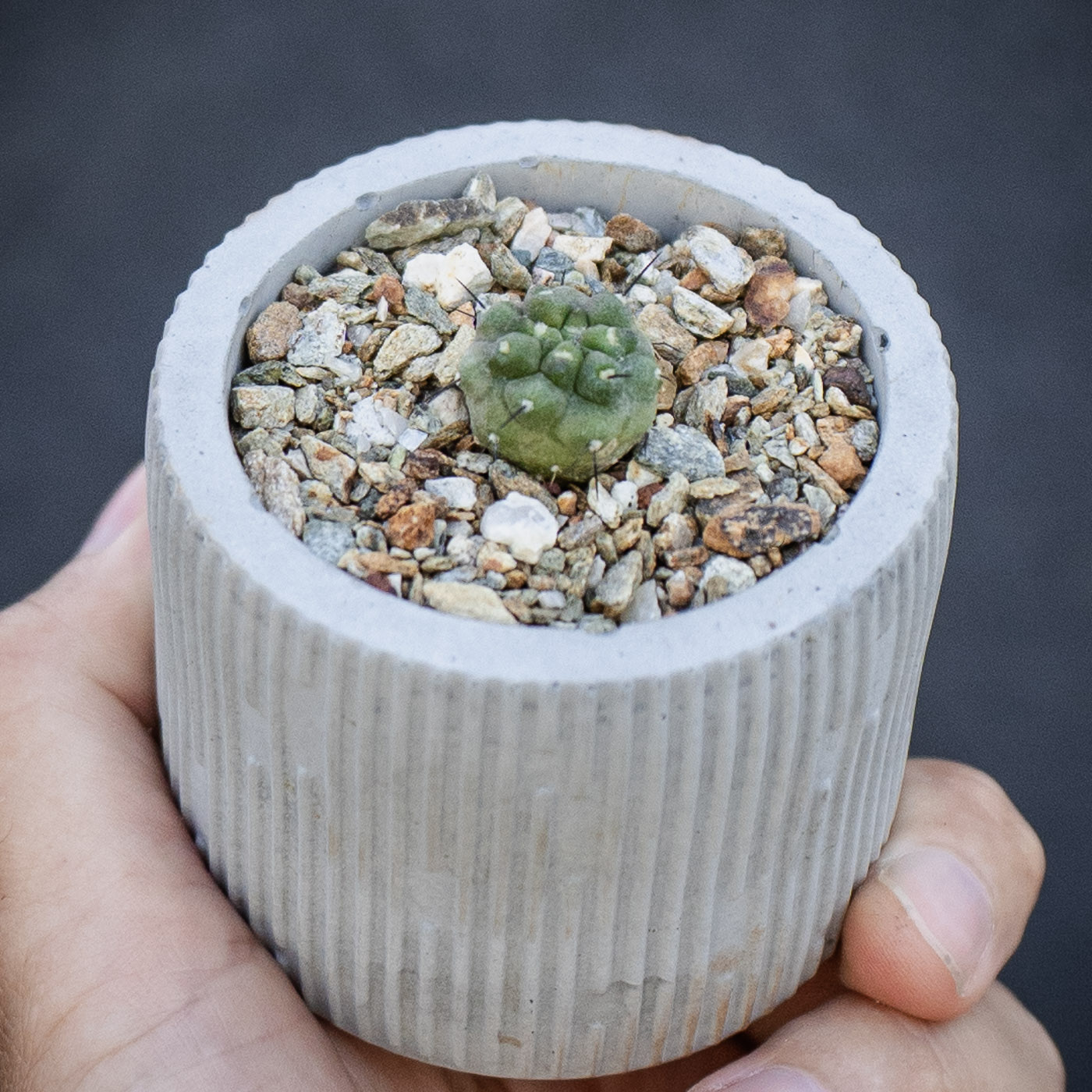
Evolving in a hyper-arid coastal desert with practically zero annual rainfall, this plant depends almost entirely on the dense camanchaca fogs for hydration. In a coastal Zone 10b environment, it performs beautifully outdoors under the protective diffusion of shade cloth, which prevents its chalky white epidermis from scorching. A polycarbonate roof is strictly necessary to block out winter rains that would rapidly rot its root system. To replicate the sandy, rocky coastal soils of its habitat, it requires an uncompromisingly fast-draining, high-mineral substrate. A custom formulation of roughly 80% pumice, cut with calcined clay, decomposed granite, and just a trace of organic cactus mix, provides the ideal structure and aeration. Housed in a deep, breathable raw cement pot, water must be applied with extreme discipline only during warm, breezy days in the shoulder seasons, enforcing a strict, bone-dry rest throughout the peak mid-summer heat and cold winter dormancy.
Origin
Chile. Endemic to the coastal Atacama Desert in the Huasco Province, this species is particularly concentrated around Carrizal Bajo, Totoral, and the Huasco river valley. In its native habitat, it forms massive, spectacular cascading mounds and ancient, wide-spreading clusters across the arid, rocky coastal hills (lomas) and sandy alluvial plains. It is easily recognized by its stark, greyish-white waxy epidermis (pruina) that shields it from blistering solar radiation, contrasting sharply with its stout, typically sparse dark spines. Over decades of slow growth, the apex of each head produces a dense cushion of wool to capture passing moisture before pushing out pale yellow flowers.
Note: Coordinates indicate a general region for educational purposes and are not exact locations. Please do not use them for collection or poaching.