2026/06/08
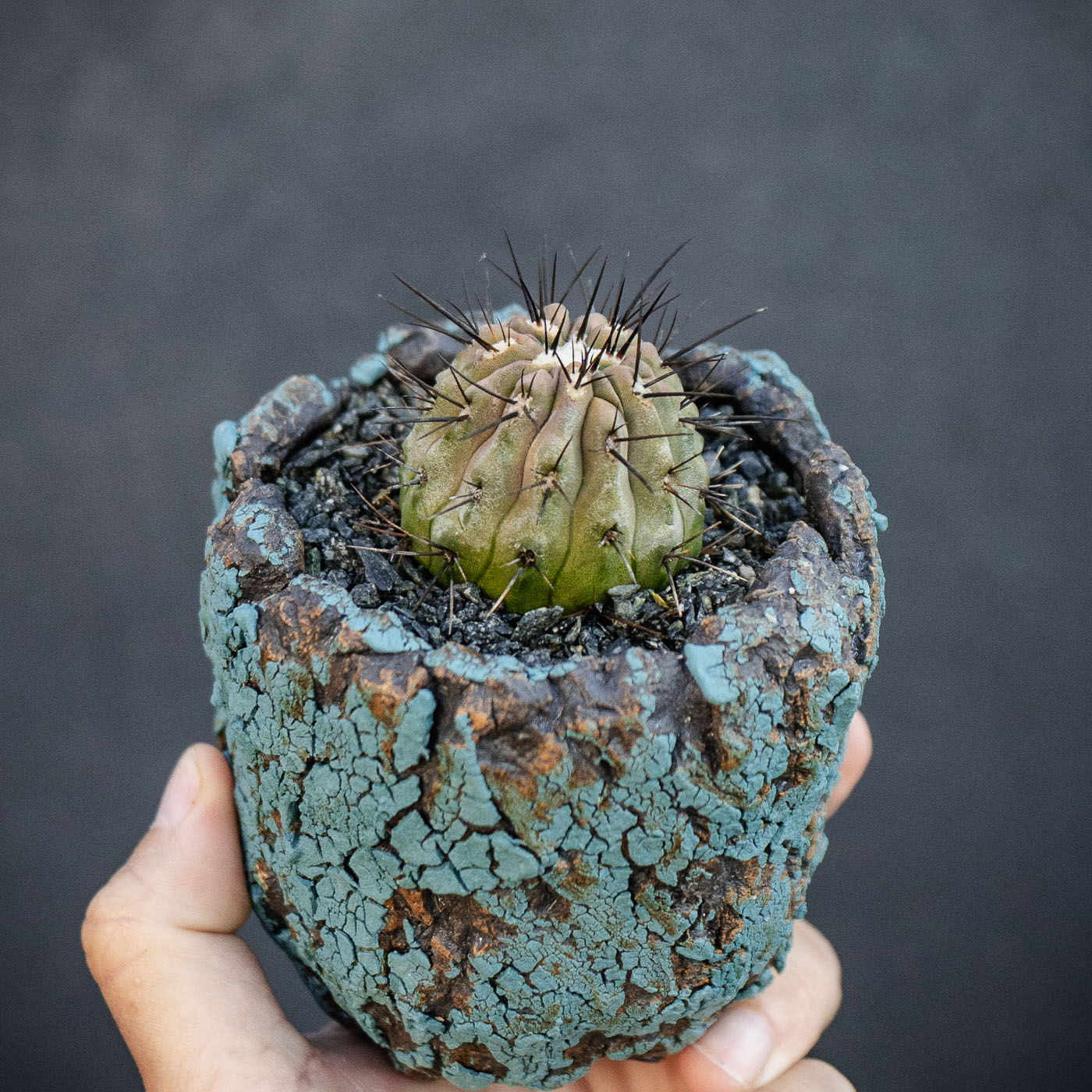
Copiapoa dealbata
Notes
Living in a hyper-arid habitat where true rain may not fall for decades, this species relies almost entirely on the dense coastal fog (camanchaca) that rolls inland off the cold Pacific Ocean during the cooler winter and spring months. It absorbs this atmospheric moisture through its spines and woolly apex, storing it in a large, fleshy, woody taproot system while slowing its metabolism to a crawl during the high-heat, stagnant stretches of mid-summer. It pushes small, satiny, bright yellow flowers directly out of the woolly apex in late spring and early summer. In cultivation, it has zero tolerance for wet, organic, or poorly ventilated soil, which causes immediate root collapse; it requires an exceptionally lean, porous, mineral-dominant substrate (such as 85% to 90% pumice, decomposed granite, and coarse grit sand) and must be watered with an disciplined, highly restrained hand only during mild months when the potting mix is completely dry.
Origin
Chile. This striking, highly specialized cactus is strictly endemic to a narrow coastal corridor within the Atacama Desert, primarily centered in the Atacama Region north of Vallenar, with massive colonies protected within the Llanos de Challe National Park. It thrives on barren, flat coastal plains, sandy terraces, and low granite hillsides completely exposed to the elements. The name dealbata translates to "whitened" or "bleached," highlighting the plant's most famous evolutionary defense: a thick, dense, chalky white layer of cuticular wax that coats the stem body. This intense white armor reflects the punishing desert sun and prevents dehydration. Over decades, it branches heavily from the base to form spectacular, massive, mounding mounds up to two meters wide, containing hundreds of individual heads topped with straight, needle-like black-to-grey spines.
Note: Coordinates indicate a general region for educational purposes and are not exact locations. Please do not use them for collection or poaching.