2026/06/19
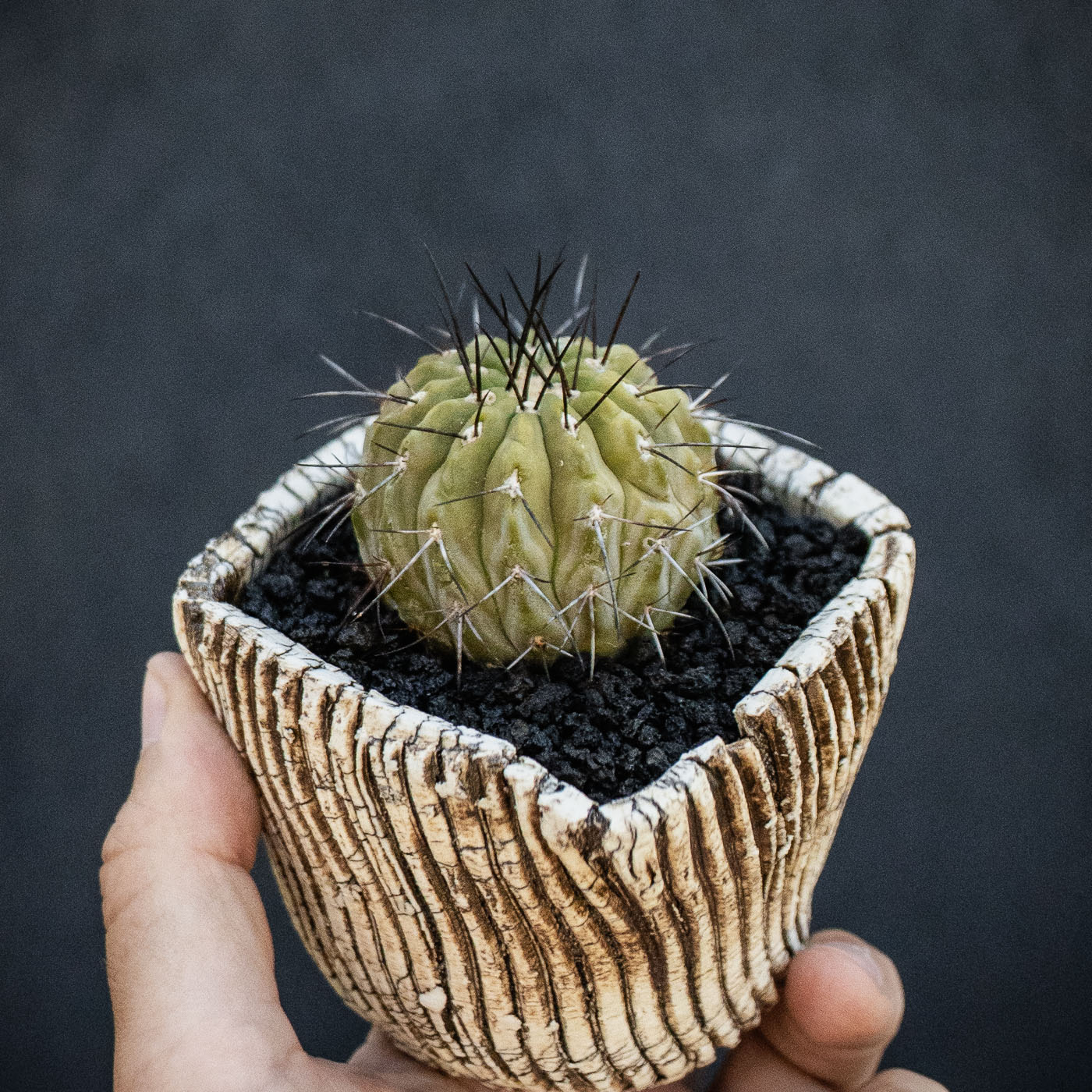
Copiapoa dealbata var. carrizalensis
Acquired3 months ago6/18/2026
PotterColibri Ceramics
Notes
This is a cutting of a carrizalensis originally from Ann Shein.
This variety is a highly specialized fog-assisted grower, pulling its vital hydration from the frequent, incredibly dense coastal camanchaca fog that blankets the Carrizal Bajo terraces during the cooler winter and spring months. The apex of each individual head is coated in an intensely thick, yellowish-grey to white woolly felt, which acts as a sponge to harvest atmospheric moisture, funneling it down to a large, thick root structure. The plants drop into a defensive, low-metabolic rest during the high-heat, stagnant stretches of mid-summer to prevent solar scorching and cellular dehydration. In mid-to-late summer, it reliably pushes pale, satin-yellow flowers directly out of the dense apical wool. In cultivation, it requires an aggressively lean, porous, mineral-dominant substrate (such as 85% to 90% premium pumice, crushed granite, and sharp sand with zero uncomposted organics) and must be watered with an disciplined, highly restrained hand only during warm, breezy weather when the medium is completely bone-dry.
Origin
Chile. This distinct variety is native to a very specific coastal enclave within the Atacama Desert, localized both north and south of the coastal valley of Quebrada Carrizal Bajo in the Huasco province of the Atacama Region. Growing on low seaside hills, sandy alluvial terraces, and gravelly coastal plains at elevations between 20 meters and 500 meters, it forms breathtaking, massive mounds in habitat that can exceed 1.5 to 2 meters across, composed of hundreds of individual, tightly packed heads. While closely related to the type species, the carrizalensis variety is highly distinguished by its spination and skin tone: unlike typical Copiapoa dealbata which typically features only a single, heavy central spine per areole, var. carrizalensis is heavily armed with a dense cluster of up to 7 or 8 stout, needle-like, jet-black to dark brown spines. Its globose stems also tend to maintain a richer, slightly greener body underneath a more subtle, silver-grey to white waxy cuticular film.
Note: Coordinates indicate a general region for educational purposes and are not exact locations. Please do not use them for collection or poaching.