2026/07/31
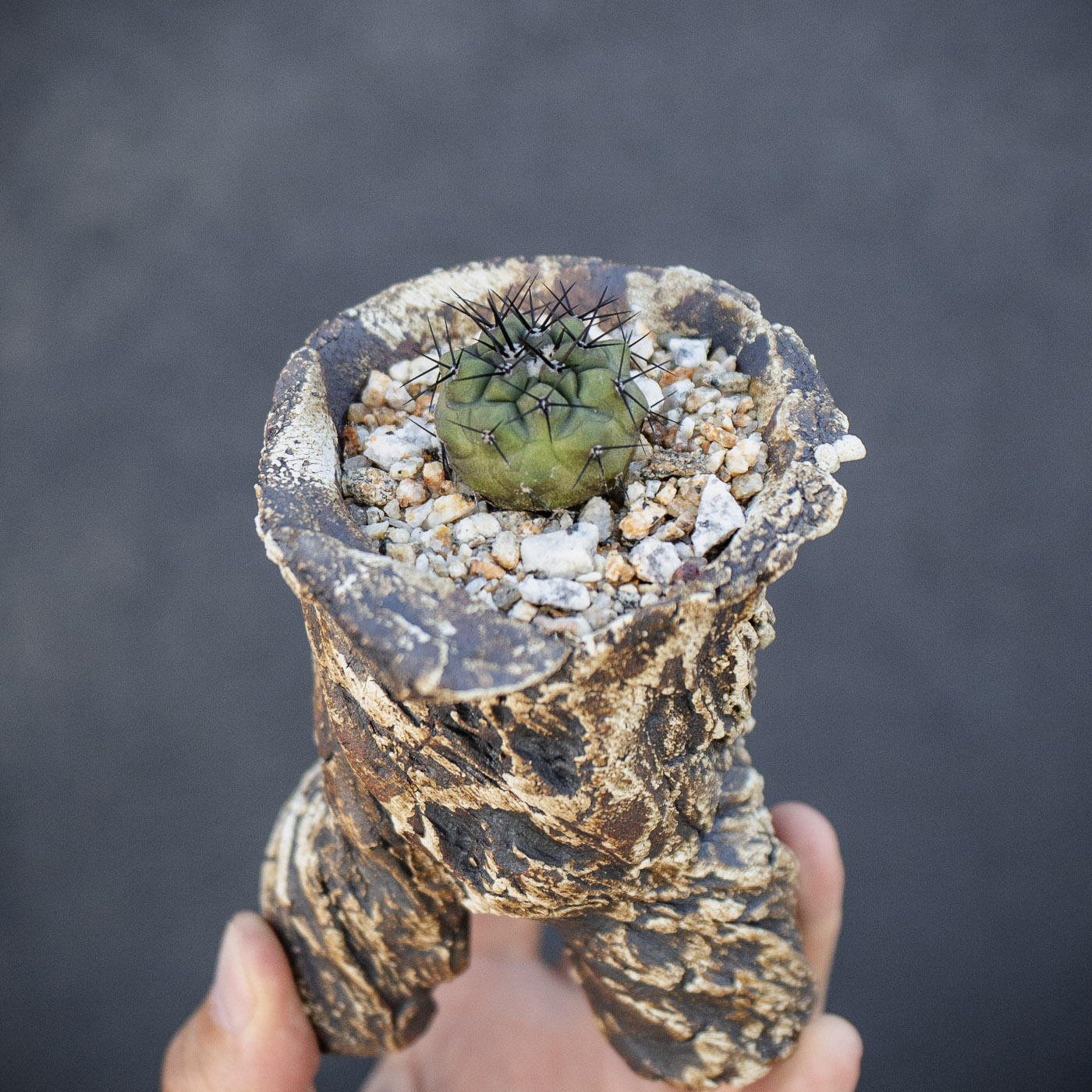
Copiapoa cinerea
Field Data
Field NumberJN 2482
Notes
Endemic to a zone where measurable rainfall can be absent for years at a time, this Tolepin population sustains its rigid structure entirely through the morning camanchaca fog banks rolling off the cold Pacific Ocean. Moisture is funneled down the heavily waxed ribs to a massive, wide-spreading taproot network anchored in the coarse scree. It initiates its primary, hyper-slow growth and root development during the cool autumn and spring shoulder seasons, entering a deep metabolic standby during mid-summer to prevent evaporation. In summer, small, satiny, pale-yellow funnel form flowers emerge directly out of the woolly apical center. In cultivation, it has zero tolerance for organic matter or prolonged moisture. It requires an uncompromising 90% to 95% purely mineral potting substrate (such as premium volcanic pumice, coarse sand, and decomposed granite) and must be watered with extreme discipline only during warm, breezy weather, paired with a strict, dry winter rest.
Origin
Chile. This specific field collection number (JN 2482) documents a distinct, highly localized population of the legendary Copiapoa cinerea, found at exactly 390 meters elevation near the Tolepin mine, situated in the rugged coastal hills just north of Taltal within the Antofagasta Region. Growing on steep, hyper-arid terraces and granitic scree completely exposed to the elements, this population perfectly exhibits the extreme morphological adaptations that make the species famous. It features a stark, bone-white to chalky ash-grey cuticular wax layer (pruina) developed to deflect intense ultraviolet radiation. The stems are solitary and globose when young, very slowly elongating into massive, cylindrical columns that form slow-offsetting clumps over decades. The heavy ribs are armed with stark, rigid black spines that provide a striking visual contrast against the ghostly white body, and the apex is crowned with a dense cushion of wool that absorbs atmospheric condensation.
Note: Coordinates indicate a general region for educational purposes and are not exact locations. Please do not use them for collection or poaching.