2026/08/21
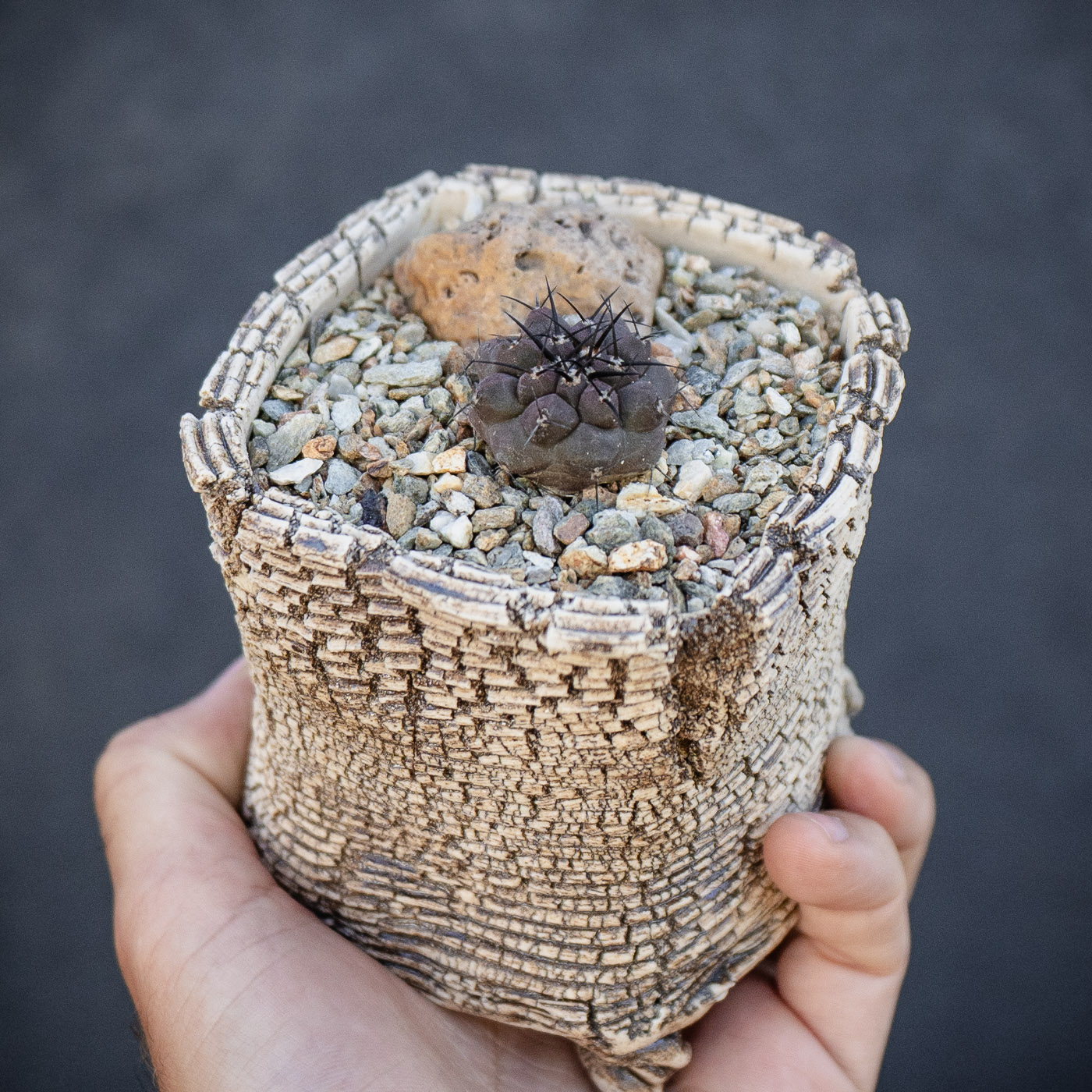
Copiapoa cinerea
Field Data
Field NumberJS 23
Notes
Evolving at high altitudes where measurable rainfall is virtually non-existent, this plant is a master of extreme drought tolerance, relying almost entirely on capturing whatever high-elevation fog it can intercept. In a coastal Zone 10b environment, it thrives outdoors where the protective diffusion of shade cloth prevents its epidermis from scorching, while a polycarbonate roof is absolutely critical to block out winter rains that would quickly rot its sensitive taproot. To mimic its barren, rocky habitat and maintain its compact, tightly armored form rather than letting it bloat, it demands an uncompromisingly fast-draining, highly mineral substrate—such as a gritty blend consisting of roughly 80% pumice mixed with decomposed granite and calcined clay. Housed in a deep, breathable raw cement pot, water must be applied with extreme discipline only during warm, breezy days in the shoulder seasons, enforcing a strict, bone-dry rest throughout the peak mid-summer heat and cold winter months to prevent metabolic softening and fatal rot.
Origin
Chile. This specific high-elevation form originates from 940 meters on Cerro Perales, a rugged peak situated inland from Taltal in the Antofagasta Region. Growing at the very upper limits of the coastal camanchaca fog belt, this population is subjected to extreme solar radiation, colder nights, and prolonged, severe drought. To survive this harsh, fog-edge environment, these high-montane specimens develop a fiercely armored, tightly spined character, often appearing more densely ribbed and rugged in habitat than their lower-elevation coastal counterparts. Beneath their rigid, dark spination, they maintain the iconic chalky, waxy epidermis that protects them from the intense Atacama sun.
Note: Coordinates indicate a general region for educational purposes and are not exact locations. Please do not use them for collection or poaching.