2026/09/16
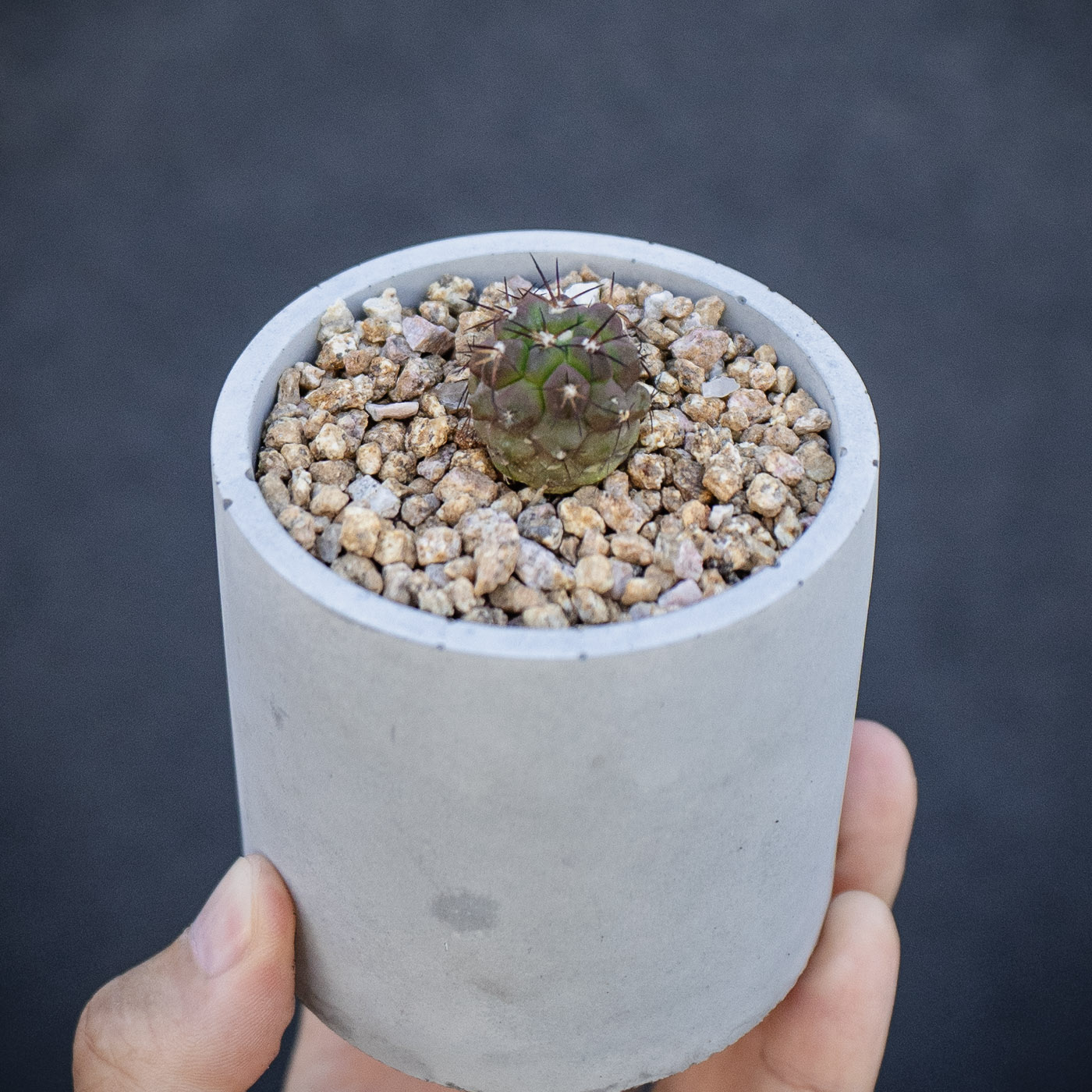
Copiapoa cinerea
Acquiredabout 20 hours ago9/16/2026
PotterPrickly Point
Notes
Evolving in a coastal desert where measurable rainfall is virtually non-existent, this species survives primarily by absorbing moisture from the camanchaca—the dense, cooling sea fogs that roll inland off the Pacific. In a coastal Zone 10b environment, replicating this extreme aridity is critical to maintaining its signature white wax; too much water or organic soil causes the plant to bloat, lose its waxy coating (turning green), and rapidly succumb to rot. It demands a highly aerated, virtually soil-free mineral substrate, making a gritty 80% premium pumice blend perfectly suited to mimic the sterile granitic soils of Taltal. Housing these prized specimens in breathable, hand-crafted raw cement pots ensures that any excess moisture is wicked away from the root zone instantly. Because the watering schedule requires extreme discipline—often stretching weeks or months between deep soakings during the active season—mounting an NTAG213 NFC tag directly to the pot provides a flawless digital tracking solution to log hydration history and sync the data with the pricklypoint.com inventory. While it requires intense, direct sunlight to build its thick white coating, it must remain absolutely bone-dry during the cool winter months, requiring the strict protection of a solid polycarbonate roof to block unpredictable coastal rains.
Origin
Place of origin: Chile. This iconic, highly coveted species is the undisputed king of the hyper-arid Atacama Desert. It is heavily concentrated along the barren, rocky coastal bluffs and granitic hillsides surrounding the town of Taltal in the Antofagasta Region. Growing directly facing the Pacific Ocean, the plant starts as a solitary, slow-growing column and over centuries can form massive, sprawling mounds. It is universally celebrated for its stark, high-contrast morphology: a thick, chalky, ash-white to pale grey epidermis (an epicuticular wax layer developed to reflect intense ultraviolet radiation and prevent water loss) completely covered by a crown of thick, rigid, jet-black to dark brown apical spines. During the height of summer, it produces small, funnel-shaped, pale yellow flowers wrapped in a woolly apex directly at the crown.
Note: Coordinates indicate a general region for educational purposes and are not exact locations. Please do not use them for collection or poaching.