2026/06/09
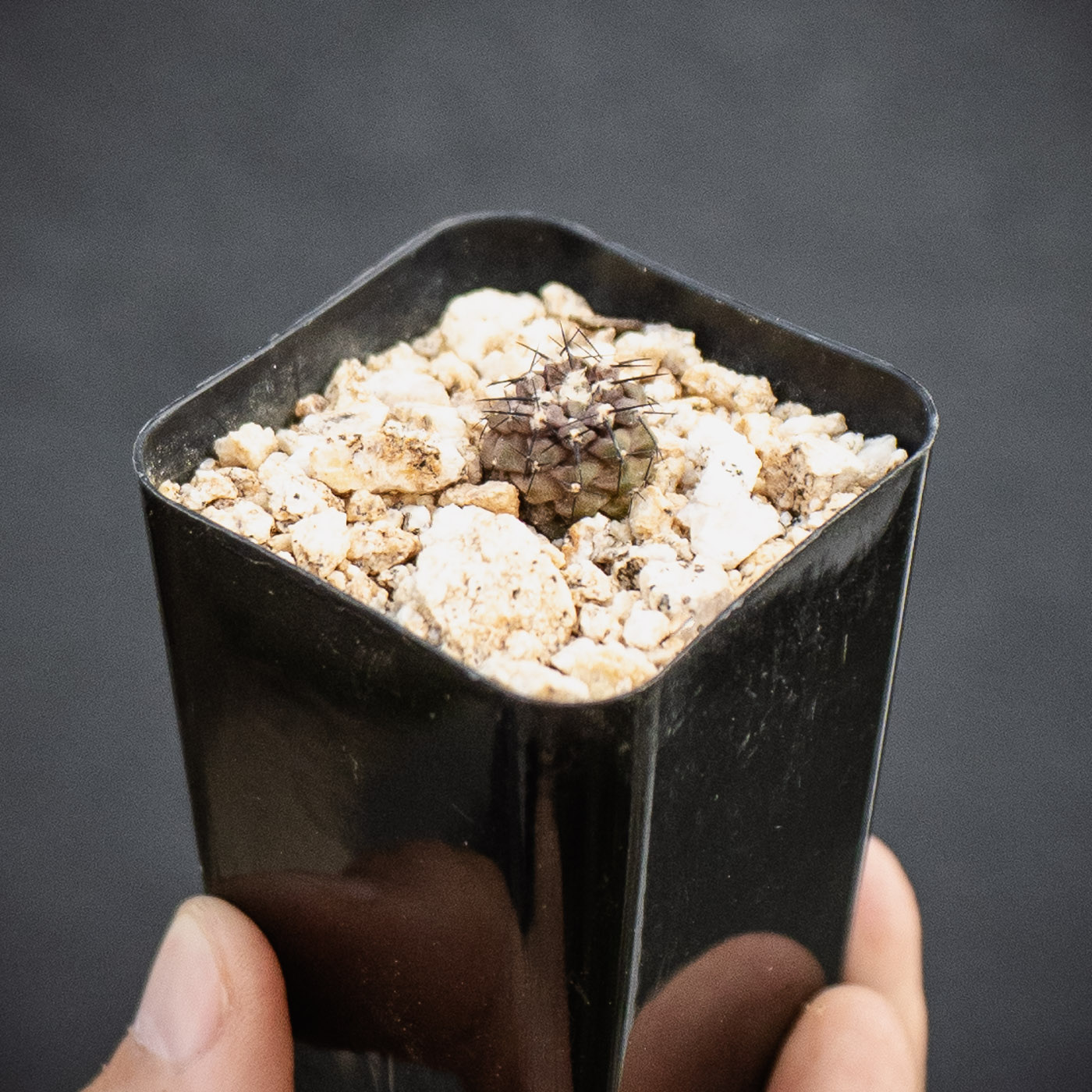
Copiapoa cinerea
Acquired3 months ago6/8/2026
Notes
Coming from a habitat that experiences virtually zero measurable rainfall for years at a time, this species drives its primary metabolic activity and structural hydration by absorbing the dense, predictable coastal fog (known locally as the camanchaca) that rolls inland during the cool winter and spring months. It slows its growth down significantly during the high-heat stretches of mid-summer, relying on a massive, thick, starch-heavy taproot to store water and anchor itself deep in the gravel. In late spring and summer, it pushes small, satiny, bright yellow flowers directly from the heavily woolly apex. In cultivation, it is highly sensitive to stagnant, wet soil, which can cause its root system to instantly collapse; it demands an exceptionally lean, porous, mineral-dominant substrate (such as 85% to 90% pumice, decomposed granite, and coarse sand) and must be watered with an disciplined, restrained hand only when the potting medium is bone-dry, keeping it mostly dry and well-ventilated during seasonal temperature extremes.
Origin
Chile. This iconic, highly specialized species is strictly endemic to an incredibly narrow, hyper-arid coastal strip within the Atacama Desert, primarily localized in the Antofagasta region near the town of Taltal. It populates barren, sun-bleached coastal hills (morros), rocky ocean cliffs, and gravelly alluvial plains that slope down toward the Pacific. The plant is celebrated for its striking evolutionary adaptation to this hyper-arid environment: it develops a thick, chalky, powdery-white epidermal wax (the cinerea or "ashen" coat) that coats its globose-to-cylindrical stem body, reflecting intense solar radiation and minimizing moisture loss. This stark white body is beautifully contrasted by dense, contrasting black-to-dark-brown spines erupting from heavily felted areoles along its broad ribs.
Note: Coordinates indicate a general region for educational purposes and are not exact locations. Please do not use them for collection or poaching.