2025/12/16
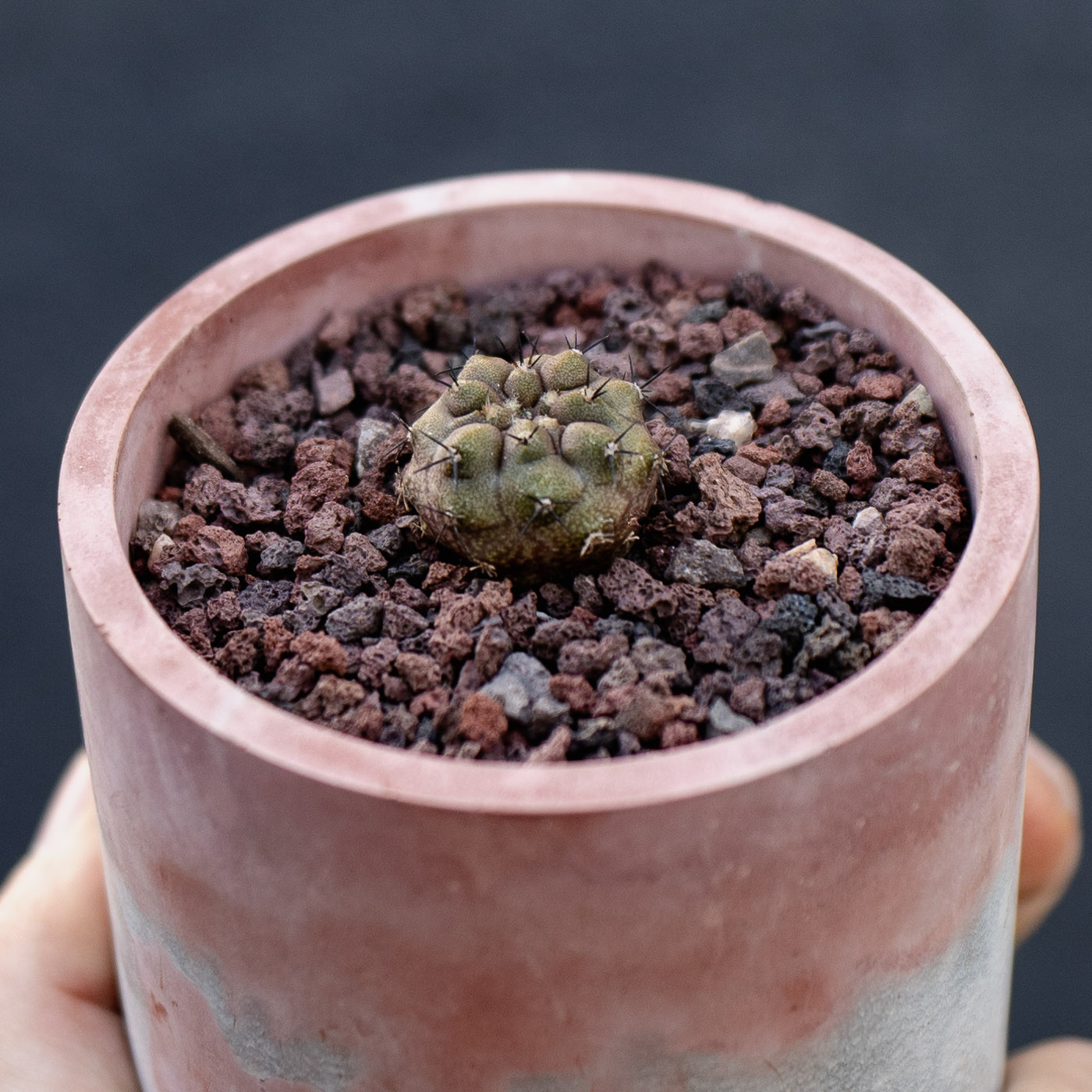
Copiapoa cinerea subs. columna-alba
Notes
Las Tortolas set of 2
Surviving in an environment that experiences years of absolute drought, the Las Tórtolas population drives its primary metabolic activity and structural hydration by condensing the dense coastal fog (camanchaca) that blankets the coast during the cool winter and spring months. The plant channels this moisture down its heavily waxed body into a massive, thick, carrot-like taproot that serves as its primary water reservoir, while entering a highly protective, low-metabolic dormancy during the stagnant heat of mid-summer. Small, satiny yellow flowers push directly from the dense, yellowish-brown wool at the apex in late spring. In cultivation, it has zero tolerance for wet, organic conditions or poor ventilation; it demands a strictly mineral-dominant, highly porous substrate (such as 85% to 90% pumice, decomposed granite, and coarse sand with very little organics).
Origin
Chile. This highly specialized, majestic cactus is strictly endemic to a hyper-arid coastal strip of the Atacama Desert, with this specific population localized around the rugged, sun-bleached terrain of Las Tórtolas, just north of Taltal. Unlike the clump-forming nominate species, subs. columna-alba grows almost exclusively as a solitary, columnar stem that leans distinctly northward toward the equator to optimize sun exposure and shield its sensitive apical growth point. In the stark, gravelly alluvial plains and barren coastal hillsides of Las Tórtolas, it develops a stark, chalky, powdery-white cuticular wax layer that is incredibly thick, reflecting intense solar radiation and locking in moisture. This smooth, brilliant white body is dramatically contrasted by relatively short, rigid, jet-black to dark grey spines that emerge from heavily felted, recessed areoles along its precise, symmetric ribs.
Note: Coordinates indicate a general region for educational purposes and are not exact locations. Please do not use them for collection or poaching.