2026/07/31
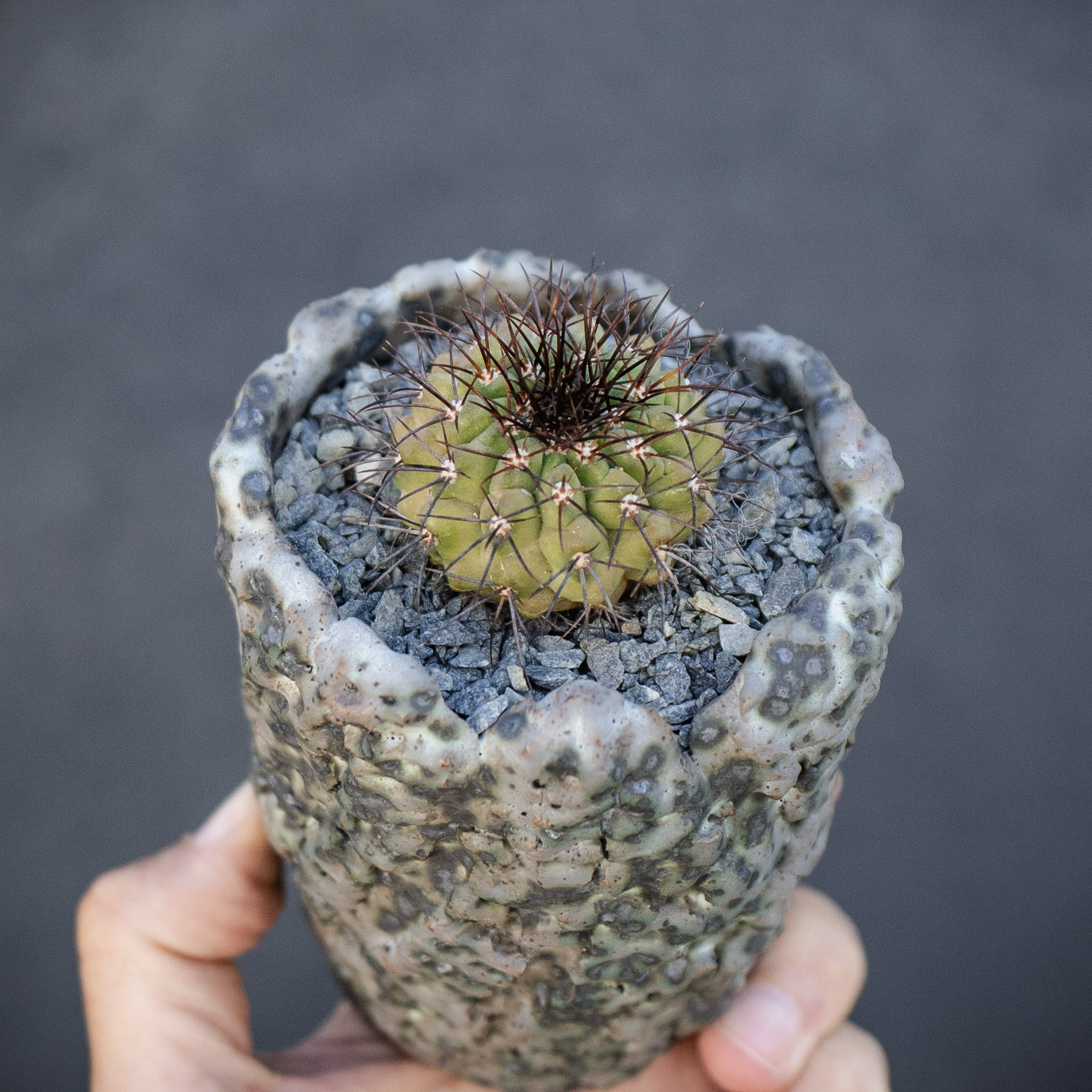
Copiapoa ahremephiana
Acquiredabout 2 months ago7/29/2026
PotterGV Succulents
Notes
Surviving in one of the driest landscapes on Earth, this species relies completely on the cool, moisture-laden camanchaca fogs rolling off the Pacific Ocean, which are trapped and absorbed by its massive golden wool cap. It forms a thick, deeply anchored taproot that requires immaculate drainage to survive. In cultivation, it demands an uncompromisingly porous, 95% to 100% mineral substrate composed of volcanic pumice, coarse sand, and granite grit. It should be watered cautiously only during warm, windy periods when the soil can dry rapidly, and it requires a completely dry, cool winter rest to avoid fatal root and stem rot.
Origin
Chile. This magnificent and highly sought-after cactus is endemic to the hyper-arid coastal hills and granitic slopes of the Antofagasta Region, strictly localized to a very narrow strip north of Taltal. It grows perched on steep, barren terraces directly exposed to the brutal Atacama sun, anchored firmly into coarse mineral scree. The solitary to slowly offsetting stem is globose when young, eventually developing into a striking cylindrical column. Its standout feature is an extraordinarily thick, dense cap of long, tangled, cream-colored to golden-yellow wool that covers the entire apex, completely smothering the new growth and emerging flowers to protect them from intense ultraviolet radiation. The underlying epidermis is a pale bluish-grey, heavily armed with robust, dark grey to black spines that poke dramatically through the golden fleece.
Note: Coordinates indicate a general region for educational purposes and are not exact locations. Please do not use them for collection or poaching.