2026/06/14
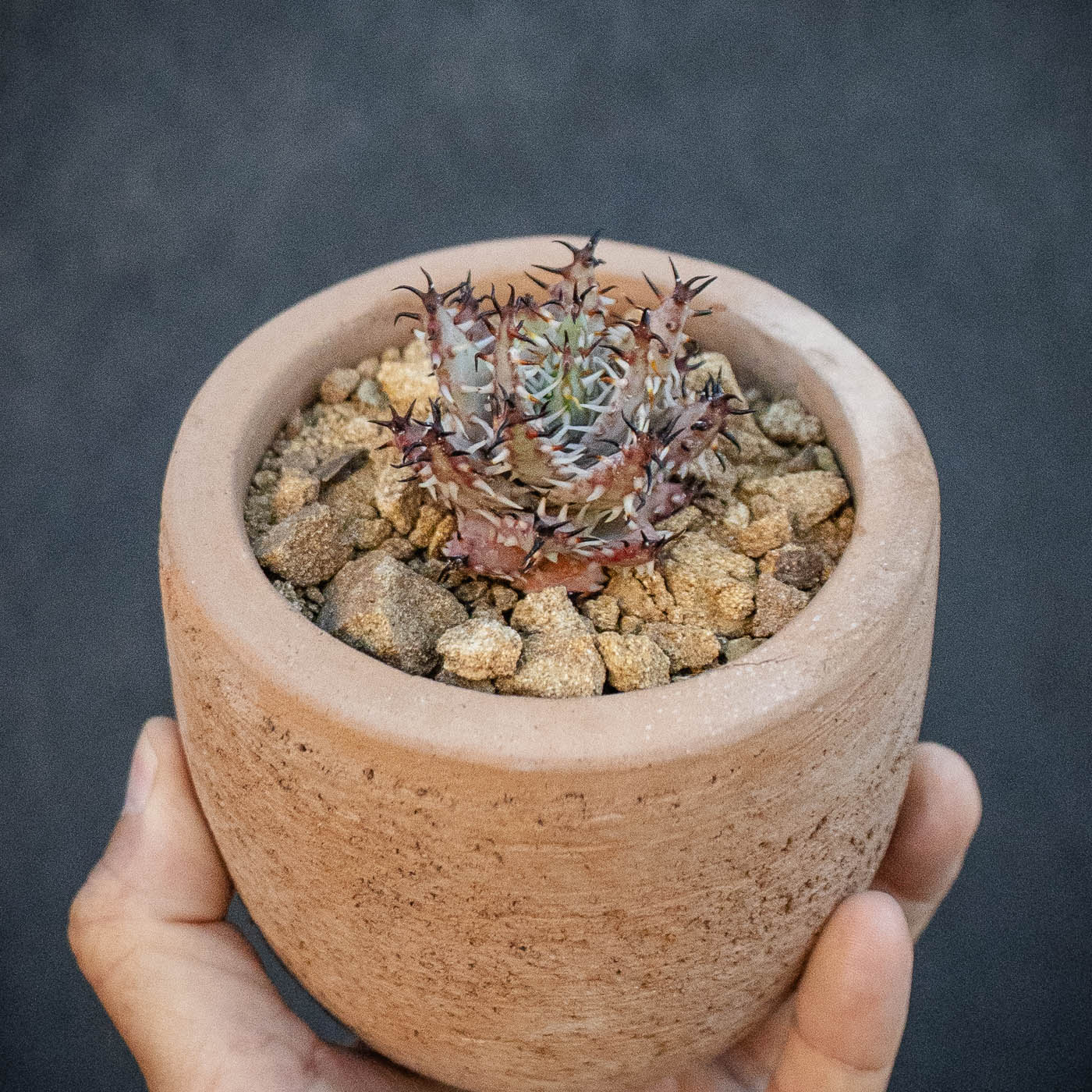
Aloe erinacea
Hedgehog Aloe
Acquired3 months ago6/13/2026
Notes
This species is a dedicated winter grower, timing its primary vegetative push and metabolic activity with the cool winter months and the sparse winter rainfall or coastal fog moving inland from the Atlantic Ocean. It goes into a deep, defensive dormancy during the blistering, stagnant heat of summer, using its heavily tucked, incurved leaves to shield its sensitive core from dehydration. It produces tall, unbranched inflorescences bearing dense, tubular red-and-yellow blossoms primarily in mid-to-late winter. In cultivation, it is notoriously sensitive to excessive moisture and has absolutely zero tolerance for wet feet; it demands an exceptionally lean, highly porous, mineral-dominant substrate (such as 85% to 90% pumice, crushed dolomite, and coarse granite grit) and must be watered with extreme restraint only during the cool shoulder seasons and winter months when nights are crisp, keeping it completely dry and well-ventilated during the summer heat.
Origin
Namibia. This highly prized, fiercely armed succulent is endemic to a very restricted geographic range in the extremely arid southwestern mountains of Namibia, primarily localized on the rugged, sun-bleached dolomite cliffs and rocky hillsides of the Lüderitz district. Growing in habitat at elevations between 900 and 1,300 meters, it is perfectly adapted to survive on exposed, barren rock faces. The name erinacea translates to "hedgehog," which perfectly describes its growth form: a compact, dense rosette of thick, incurved, pale grey-green to glaucous blue leaves that are heavily armored with sharp, contrasting dark brown to black terminal spines and fierce white-to-black marginal teeth. Over a long period, solitary rosettes slowly offset to form massive, impenetrable, spiky clumps.
Note: Coordinates indicate a general region for educational purposes and are not exact locations. Please do not use them for collection or poaching.