2026/07/28
Agave ferdinandi-regis
King of the Agaves
Acquiredover 3 years ago6/1/2023
Notes
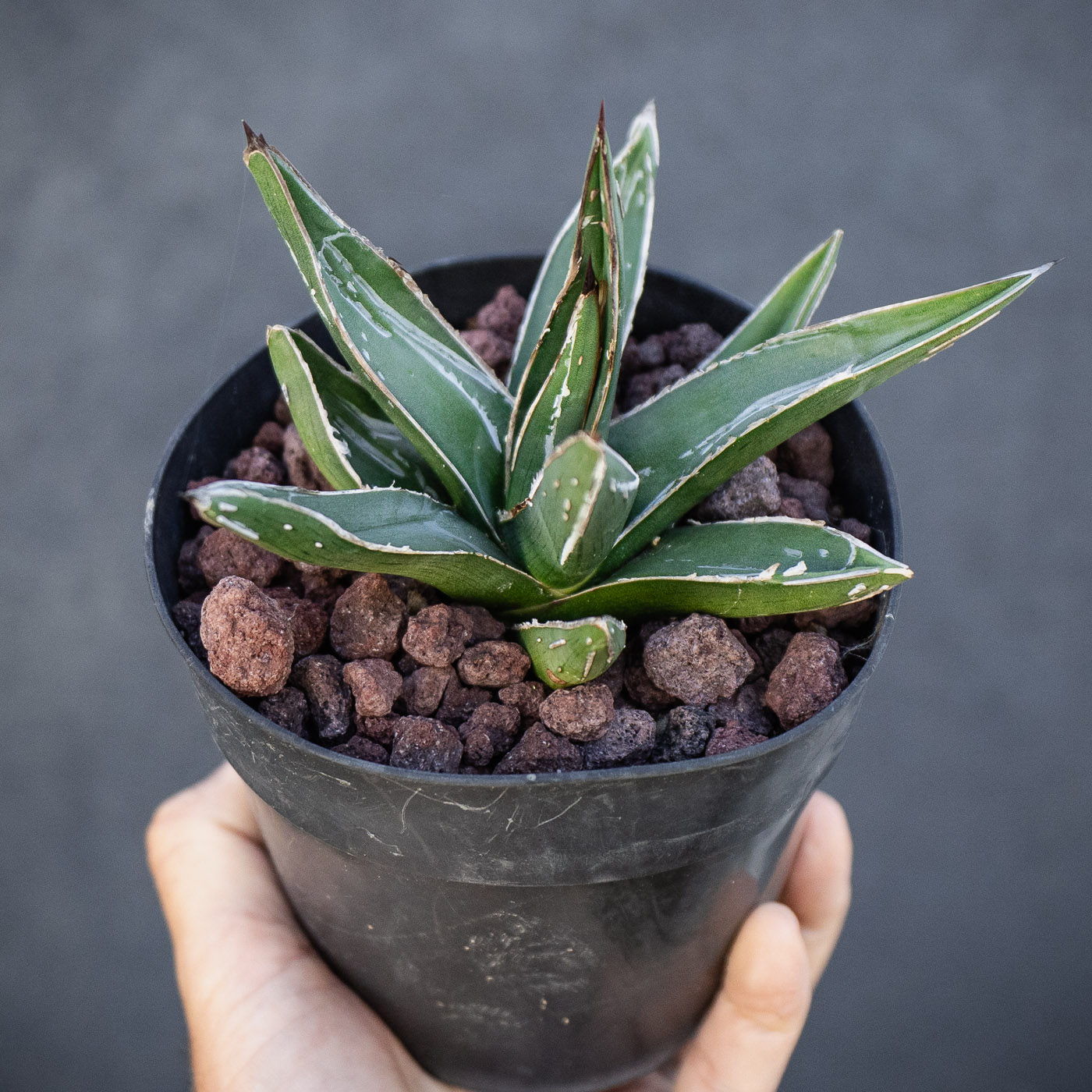
As a high-desert species from the Chihuahuan region, this Agave follows a growth cycle tied to the late summer monsoon rains. It remains largely dormant during the dry winter and early spring, waking up as the temperatures rise and the rains arrive in June and July. It is incredibly slow-growing, taking many years to reach its characteristic globose form with white "bud-print" markings.
In cultivation, it requires conditions that mimic the sharp drainage of the Coahuilan cliffs. It thrives in a mineral-dominant substrate, such as a mix of 80% pumice and 20% organic material, which prevents moisture from lingering around the base of the rosette. While it is quite cold-hardy if kept dry, it is highly susceptible to core rot if exposed to excessive winter moisture. To maintain its tight, symmetrical shape and vivid white markings, it should be grown in very bright light or full sun, with watering focused primarily during the warmest months of the year.
Origin
This species is native to a very limited area in northeastern Mexico, specifically within the state of Coahuila. It is primarily found in the Sierra de la Paila, growing on steep limestone cliffs and rocky slopes at altitudes between 1,200 and 1,800 meters. It is closely related to Agave victoriae-reginae but is distinguished by its larger size, fewer leaves, and more prominent, dark terminal spines. In its native habitat, it endures intense sun and grows in extremely lean, alkaline soils composed mostly of limestone rubble.
Note: Coordinates indicate a general region for educational purposes and are not exact locations. Please do not use them for collection or poaching.