2026/06/19
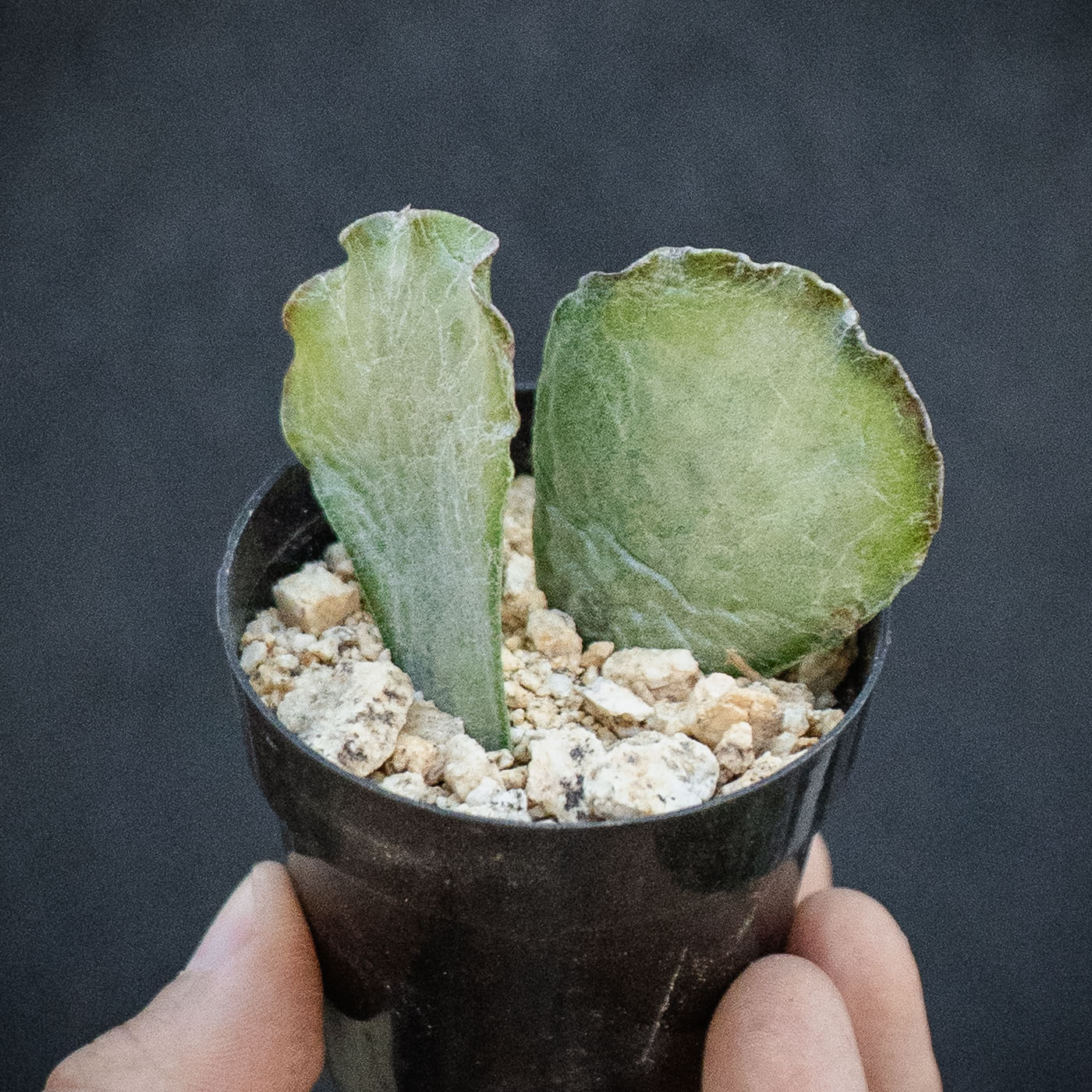
Adromischus sphenophyllus var. undulatus
Acquired3 months ago6/18/2026
Notes
This variety follows a transitional growth strategy, driving its primary root exploration, vegetative expansion, and leaf hydration during the temperate months of autumn and spring. It slows its metabolic processes down significantly during the extreme, stagnant heat of mid-summer and the cold snaps of mid-winter. In late spring or early summer, it pushes up a tall, unbranched, wiry inflorescence bearing tiny, pale green-and-white tubular flowers with pink-tipped lobes. In cultivation, it requires an exceptionally lean, gritty, mineral-dominant substrate (such as 85% to 90% coarse pumice, akadama, and decomposed granite with minimal organic material) to protect its delicate, shallow root system from rot. Watering must be done with restraint, applying moisture thoroughly only when the potting mix is completely bone-dry.
Origin
South Africa. This highly distinct variety is native to the Eastern Cape Province, primarily distributed through the dry river valleys, coastal scrublands, and rocky hillsides of the Albany region. It is typically found growing in well-shaded microhabitats, such as nestled under the protection of larger succulent shrubs or tucked into sandstone rock crevices. The plant forms a compact, slowly sprawling cluster of thick, woody stems. Its most prominent feature is its striking, fan-shaped (wedge-shaped or sphenic) leaves that are exceptionally fleshy and packed tightly along the branches. The glaucous, silvery-green epidermis is coated in a fine, protective waxy bloom and is heavily characterized by highly crispate, deeply undulating or crinkled margins along the leaf apex. Under strong, bright light and dry conditions, this wavy, horny edge flushes with a beautiful crimson to deep purple border.
Note: Coordinates indicate a general region for educational purposes and are not exact locations. Please do not use them for collection or poaching.