2026/06/19
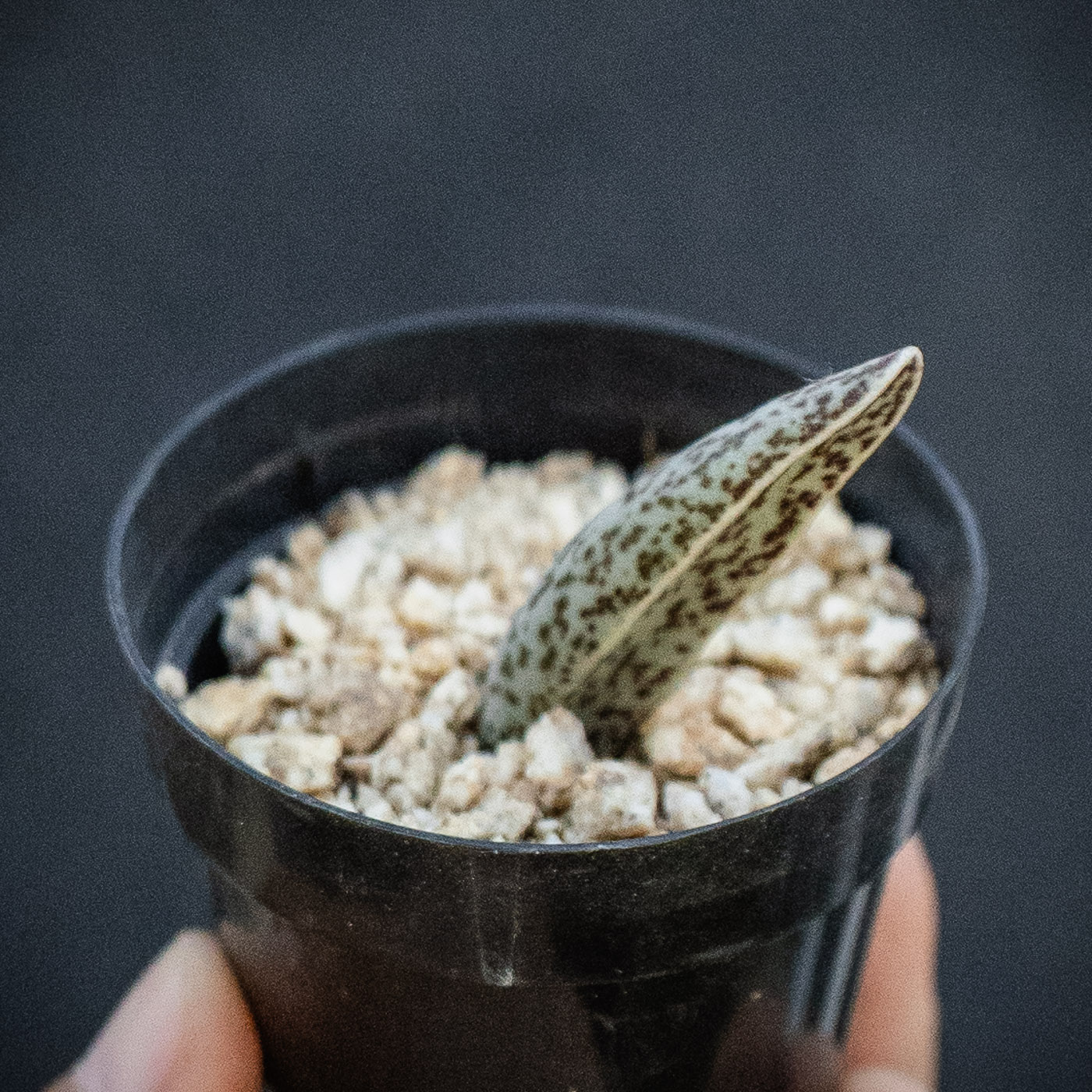
Adromischus marianiae f. Clanwilliam
Acquired3 months ago6/18/2026
Notes
Geared strictly to the winter-rainfall rhythm of the Western Cape, this micro-miniature succulent triggers its primary metabolic activity, root exploration, and leaf turgor recovery during the cool, damp months of autumn and spring. It enters a highly defensive, low-metabolic state during the baking, stagnant heat of mid-summer, relying entirely on the moisture reservoirs held within its densely warty, thickened leaves to withstand prolonged drought. In late spring and summer, it sends up a very tall, thin, simple inflorescence bearing tiny, unornamented green-and-pink tubular flowers. In cultivation, its exceptionally slow growth rate makes it highly sensitive to overwatering and root asphyxiation; it requires an aggressively sharp-draining, mineral-dominant potting substrate (such as 85% to 90% premium pumice, fine granite gravel, and akadama with zero uncomposted organics) and must be watered with an disciplined, highly restrained hand only during mild weather when the medium is completely bone-dry.
Origin
South Africa. This exceptional, highly prized miniature succulent is a localized variant native to the rugged, arid mountain ranges surrounding the town of Clanwilliam within the Western Cape province. Inhabiting the winter-rainfall zone of the northern Cederberg region, these plants grow nestled tightly within the fissures of sheer sandstone cliffs, quartz outcrops, and rocky gravel benches, usually seeking refuge from the intense sun underneath the light canopy of sparse succulent scrub. The Clanwilliam form is highly distinguished by its incredibly textured, sculpted morphology: it produces slow-growing, short stems packed with plump, spindle-shaped (fusiform) to nearly spherical leaves that taper into a sharp, structural apex. The epidermis is an architectural marvel, featuring an intensely blistered, warty, or "brain-like" roughened surface that varies significantly in color—ranging from a pale glaucous-green or chalky silver-grey to a deep, saturated purple or brick-red hue when grown under high-intensity light and mild moisture stress.
Note: Coordinates indicate a general region for educational purposes and are not exact locations. Please do not use them for collection or poaching.