2026/05/22
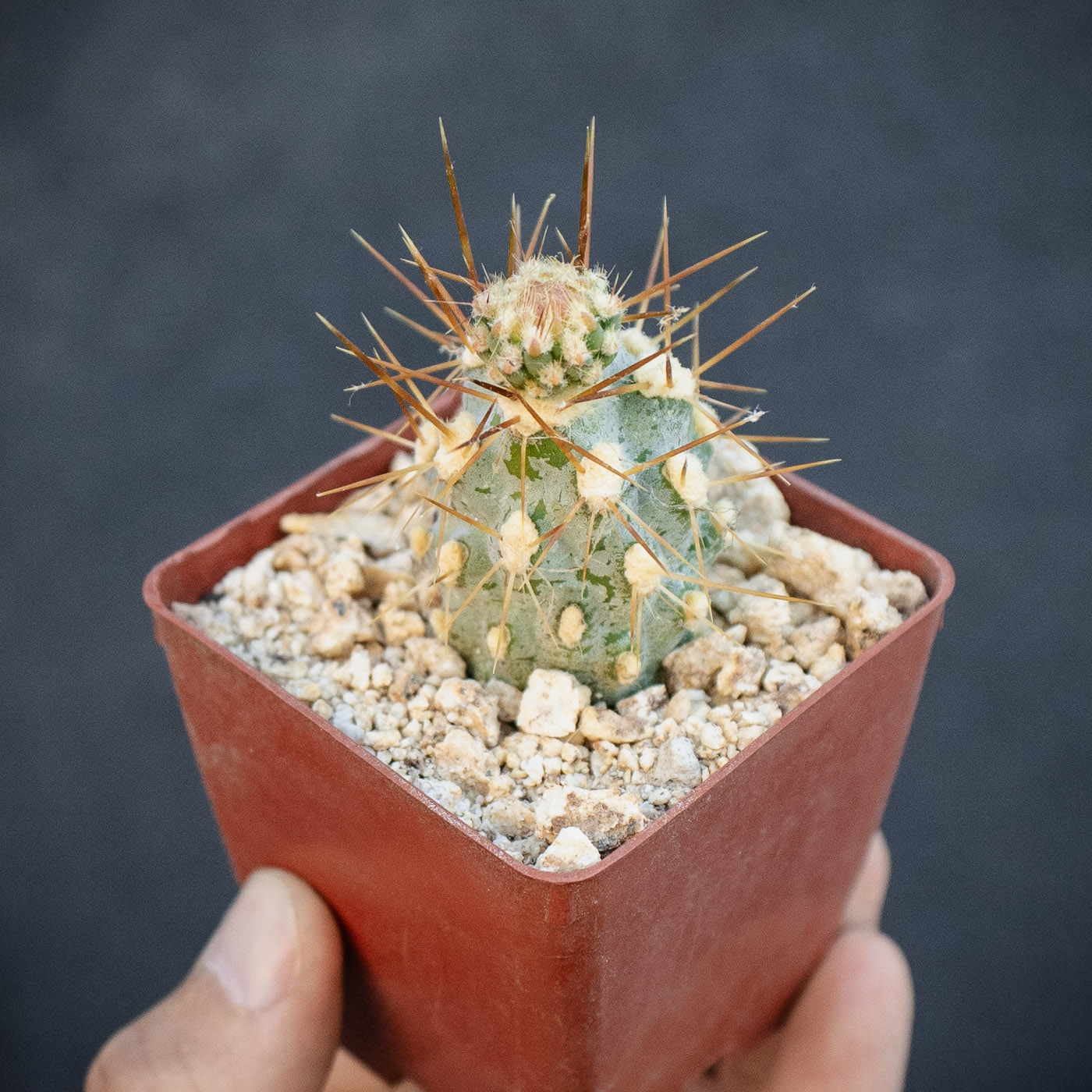
Tephrocactus sphaericus
Acquired4 months ago5/21/2026
Notes
This species is a resilient summer grower, coordinating its main vegetative segment production and core metabolic push with the arrival of warm weather and seasonal mountain rains. It enters a profound, highly cold-tolerant dormancy during the dry winter months. In late spring through early summer, it produces large, vibrant yellow-to-copper-orange flowers directly from the upper areoles of the terminal segments. In cultivation, it is highly prone to fungal rot if grown in stagnant, poorly ventilated conditions; it demands a lean, strictly mineral-dominant substrate (like an 80% pumice and granite mix) and should be watered thoroughly only when the pot is completely dry during the heat of summer, keeping it bone-dry and cool through the winter to promote robust spination and spring budding.
Origin
South America. It has a massive, highly adaptable range along the western side of the Andes, stretching from central and northern Chile (including Tarapacá, Antofagasta, and Atacama) all the way north into Peru (Arequipa, Lima, and Tacna). It populates a broad spectrum of elevations, from coastal marine benches sitting right at sea level up to severe, rocky alpine slopes exceeding 3,500 meters. In its lower coastal range, it thrives on flat, arid plains where it relies on the Camanchaca fog; at higher elevations, it grows completely exposed to harsh sun, strong winds, and extreme diurnal (day-to-night) temperature drops. The plant forms low, sprawling mats of small, easily detached, perfectly globose segments armed with dense, straight, golden-tan to dark brown spines.
Note: Coordinates indicate a general region for educational purposes and are not exact locations. Please do not use them for collection or poaching.