2026/07/04
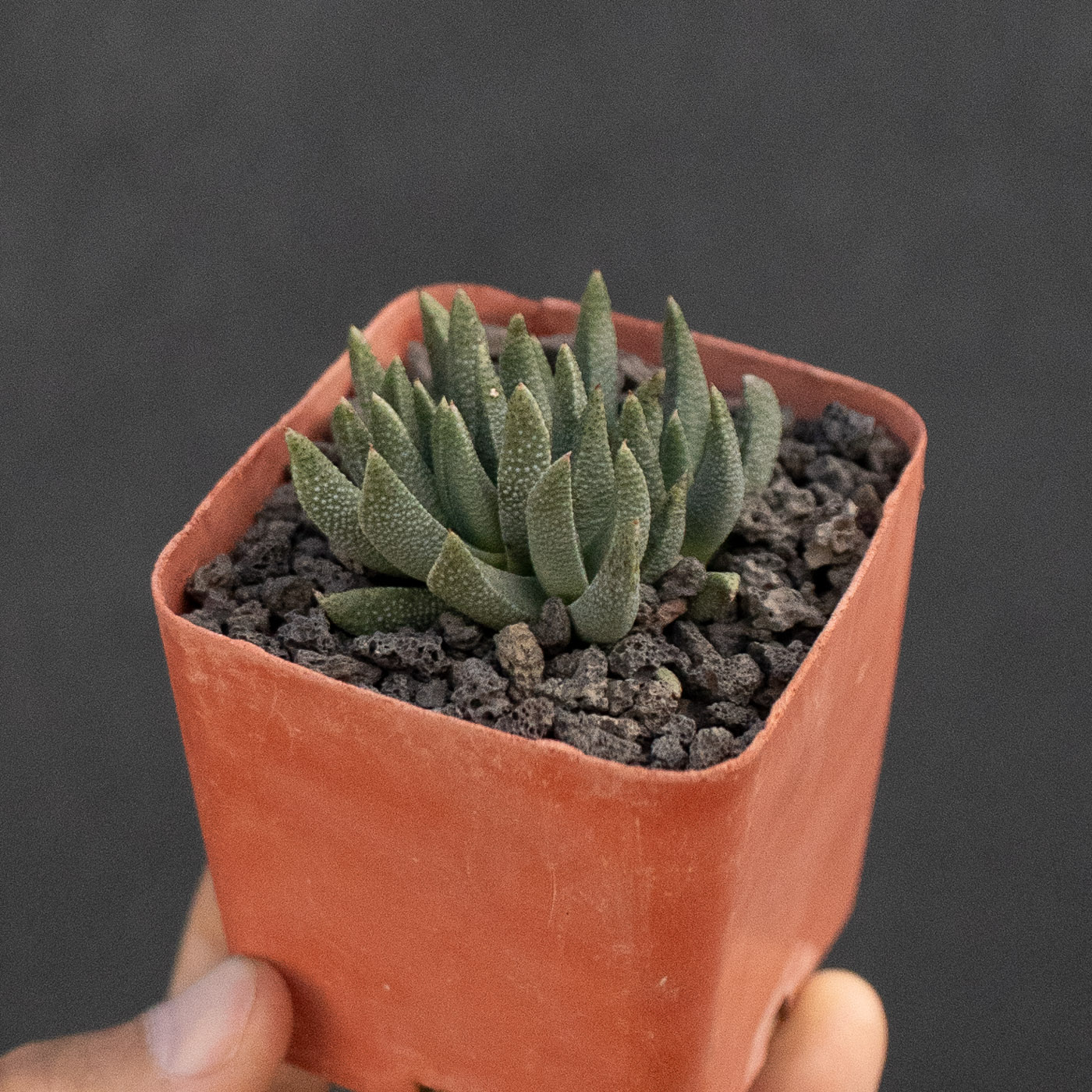
Rabiea difformis
Sowingover 2 years ago1/26/2024
Acquired3 months ago6/28/2026
Notes
Coming from the harsh high plateau where winters are cold and dry with severe frosts and summers bring brief, unpredictable thunderstorms, *Rabiea difformis* acts primarily as an opportunistic shoulder-season and winter-leaning grower. It drives its main leaf development and root extension during the bright, cooler months of autumn and early spring, slowing its growth significantly during the peak heat of summer. In late winter to early spring, it produces large, striking, daisy-like yellow flowers that open fully in the afternoon sun and often close by dusk. In cultivation, it is remarkably frost-hardy if kept dry, but it has a low tolerance for waterlogged soils or stagnant humidity. It requires a sharply draining mineral substrate (such as 75% to 80% volcanic pumice, coarse sand, and decomposed granite) and should be watered thoroughly only when the medium is bone-dry, paired with an extremely light touch during mid-summer.
Origin
South Africa. This resilient, low-growing succulent belongs to the ice plant family (Aizoaceae) and is native to the cold, semi-arid high-altitude regions of the Eastern Cape and Free State provinces. Thriving in the high-elevation grasslands and rocky flats of the Great Karoo, it grows nestled tightly into shale grit, sandstone crevices, and gravelly soils. The name *difformis* highlights its irregularly shaped, variable foliage. The plant forms a dense, low-growing, mat-like cluster of fleshy, boat-shaped leaves that are distinctly three-sided or keel-shaped. The epidermis is a striking dull grey-green or yellowish-green, heavily speckled with tiny, raised translucent dots or dark green warts that help scatter intense sunlight. Over time, it forms thick, woody, tuberous roots capable of storing moisture through prolonged droughts.
Note: Coordinates indicate a general region for educational purposes and are not exact locations. Please do not use them for collection or poaching.