2026/07/04
Acquired3 months ago7/2/2026
Notes
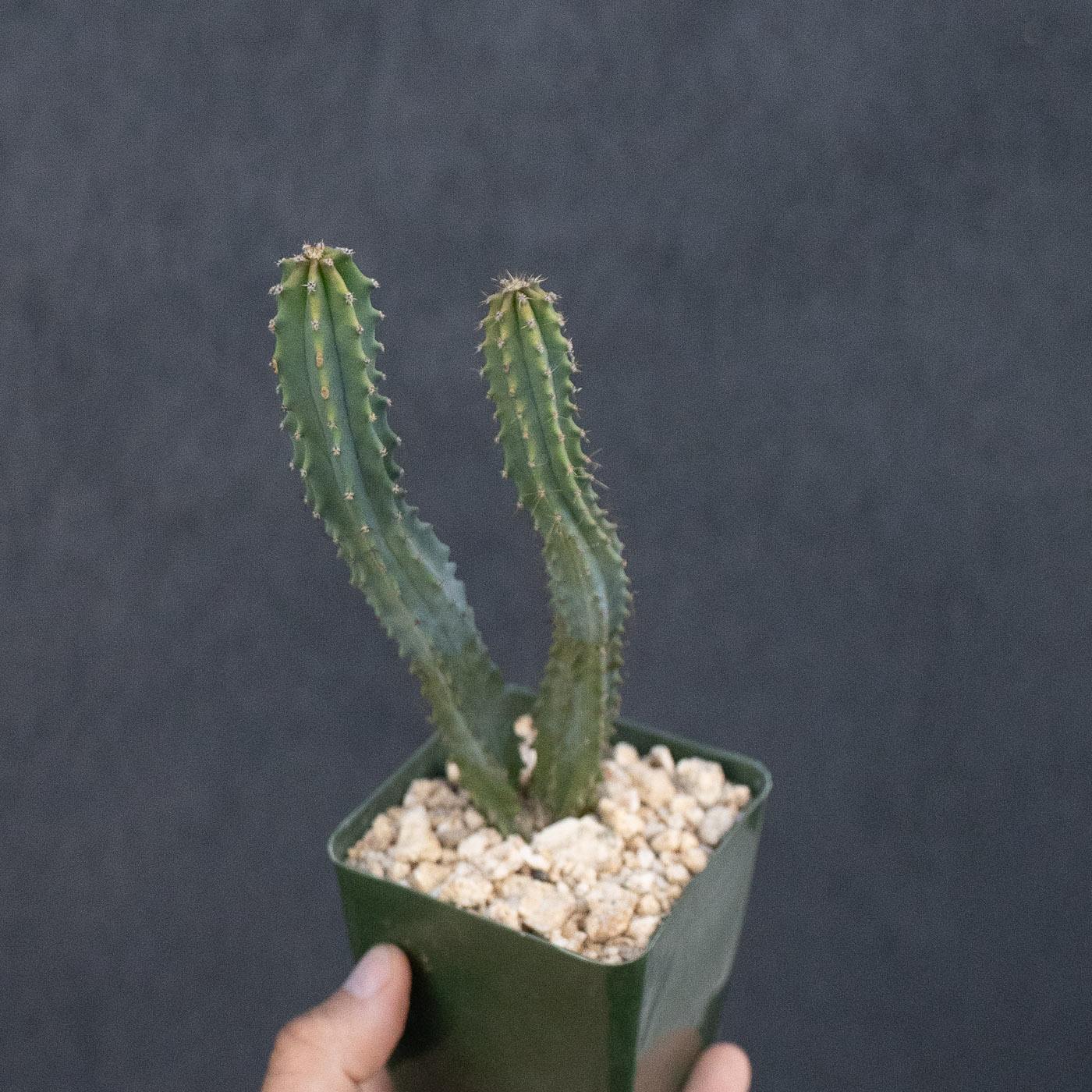
The genus consists of vigorous, rapidly growing summer-active plants that align their main vegetative growth, architectural branching, and root expansion with the warm spring and summer months. From late spring through early summer, they push clusters of very small, diurnal, creamy-white or greenish-yellow flowers from each areole, which rapidly give way to small, globose, edible dark-purple berries that look and taste remarkably like blueberries (known locally as *garambullos* or *cochales*). They are highly cold-sensitive compared to higher-alpine columnar species and must experience a warm, dry, completely frost-free winter dormancy. In cultivation, they possess highly robust, opportunistic root networks that tolerate slightly more organic material and regular summer moisture than hyper-miniature desert genera, making them excellent rootstocks for grafting more delicate, slow-growing species. They thrive in a highly porous, fast-draining medium (such as 65% to 75% volcanic pumice, coarse grit, and well-aerated sandy loam) and demand full, intense solar exposure to maximize their vibrant, powder-blue cuticular color.
Origin
Mexico and Central America. This highly structural genus of semi-hardy columnar cacti is widely distributed throughout the arid valley floors, desert plains, and volcanic matorral regions of central and southern Mexico (such as Oaxaca, Puebla, and San Luis Potosí), with *Myrtillocactus cochal* extending northwest down into the coastal desert chaparral of the Baja California Peninsula. Growing at elevations from sea level up to 2,000 meters, they form massive, highly branched, candelabra-like trees that can easily reach 4 to 5 meters in height. The genus is defined by its clean, smooth, geometric columns that boast 5 to 8 broad, rounded, or strongly glaucous-blue ribs. The stems feature a intense, powder-blue or frosty teal cuticular wax (*pruina*) when young to reflect high solar radiation. Their areoles are spaced widely apart along the rib margins and sprout short, stout, dagger-like or completely black central spines that don't hook. Highly stable mutations are also popular in cultivation, notably the densely undulating crested forms (*Myrtillocactus geometrizans f. crestata*).
Note: Coordinates indicate a general region for educational purposes and are not exact locations. Please do not use them for collection or poaching.