2026/06/26
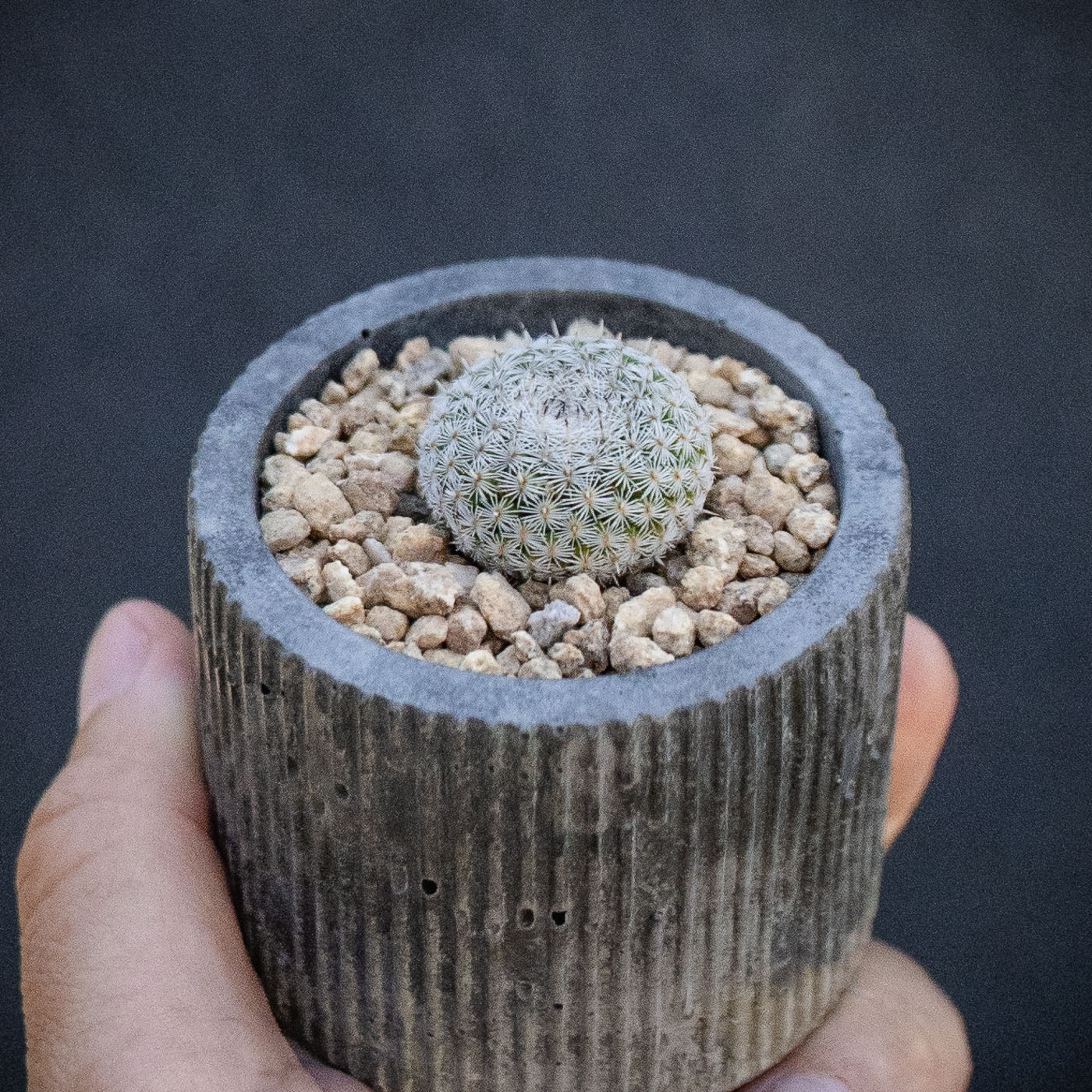
Mammillaria perbella
Acquired3 months ago6/26/2026
PotterPrickly Point
Field Data
Field NumberTL 556
Notes
This alpine variant drives its primary metabolic activity, spine production, and root expansion during the bright, warm months of spring and summer, correlating with the seasonal convective rains that sweep across the Hidalgo canyons. In late spring, it pushes a highly ornamental, neat ring of small, satiny, deep carmine-pink to purplish-red flowers from the woolly axils wrapped tightly around the upper crown of the stem. During the cold winter months, it enters a profound, highly cold-tolerant dormancy, contracting into the substrate as a defense mechanism against freezing alpine drafts. In cultivation, it requires an exceptionally porous, mineral-heavy, alkaline-leaning substrate (such as 80% volcanic pumice, crushed limestone, and coarse grit with near-zero organic matter) and must be watered with a highly disciplined hand only when the potting medium has dried out entirely.
Origin
Mexico. This specialized collection represents a field gathering by German cactus expert Thomas Linzen (TL 556) from El Túnel, located in the high-elevation canyon systems of the Hidalgo state. While taxonomically tracked by Linzen under the name Mammillaria infernillensis, modern consensus aligns this unique, robustly armored form within the broader Mammillaria perbella complex. Growing on steep, sheer limestone cliffs and rugged mineral ledges at high elevations, this variant is beautifully adapted to intense mountain exposure. It features a solitary, globose to short-cylindrical stem that can eventually divide dichotomously with age. The dark green epidermis is completely masked by an impeccably organized, dense matrix of chalky white radial spines, which are strongly contrasted by 2 to 4 very rigid, needle-like, dark reddish-brown to jet-black central spines per areole, giving the plant a strikingly fierce and frosty appearance compared to standard forms.
Note: Coordinates indicate a general region for educational purposes and are not exact locations. Please do not use them for collection or poaching.