2026/07/04
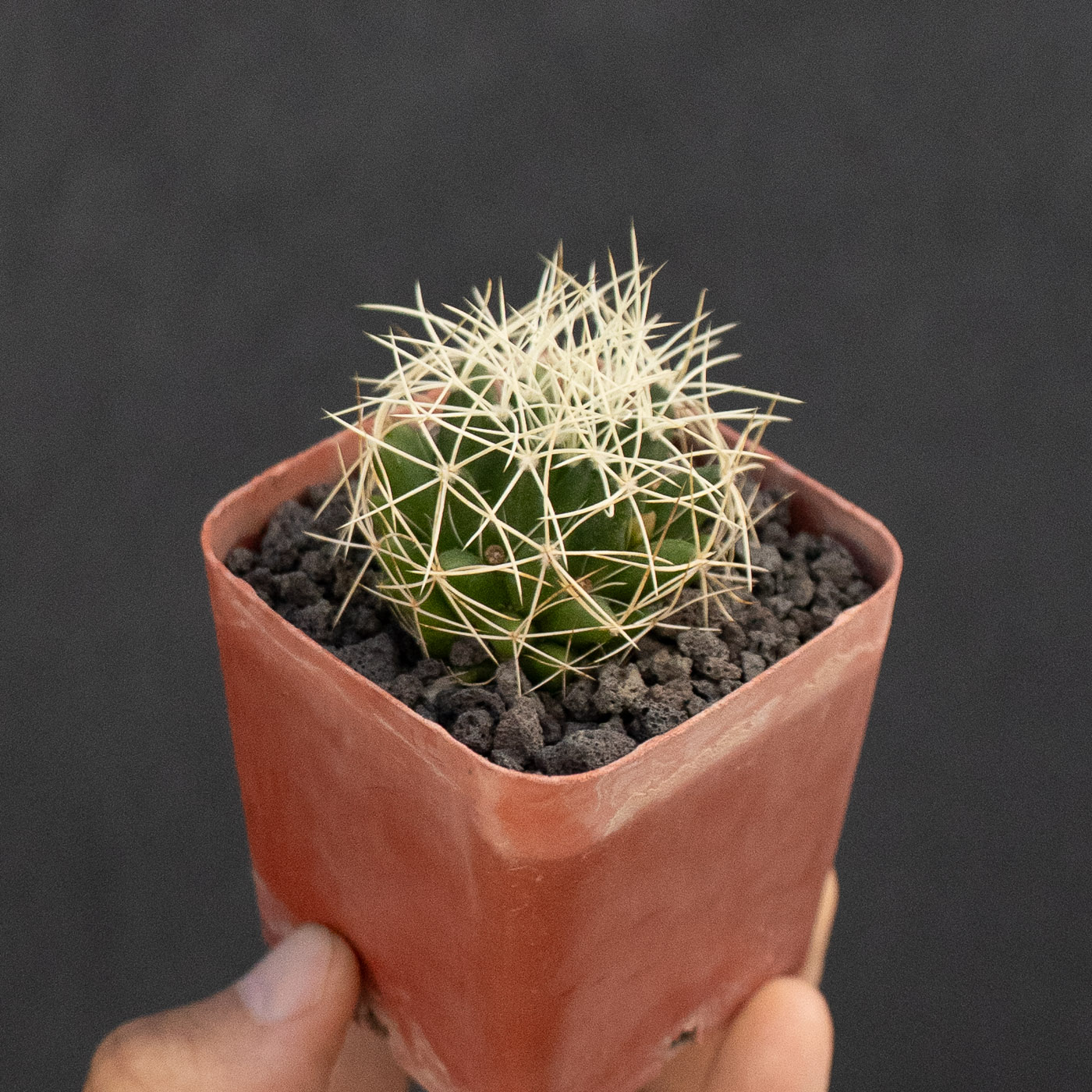
Mammillaria decipiens subs. camptotricha
Bird's Nest Cactus
Sowingover 2 years ago3/29/2024
Acquired3 months ago6/28/2026
Notes
This low-altitude mountain subspecies functions as an opportunistic summer grower, synchronizing its primary root development and stem clumping with the warm, humid weather of late spring and summer. Throughout the active season, it pushes small, delicate, deeply fragrant white flowers from the lower axils of the long tubercles. These flowers are often striped with light green on the outer petals and are followed by small, cylindrical, pale green or pinkish fruits. Unlike many hyper-desert cacti that require pure mineral scree, this subspecies benefits from a slightly richer but still incredibly porous potting mix (such as 60% premium pumice, coarse river sand, and 40% well-aerated organic material) to mimic its shaded habitat floors. It requires regular waterings during the summer heat only after the medium has dried out completely, followed by a dry, cold-protected winter rest.
Origin
Mexico. This unique, heavily tangled dwarf cactus is endemic to the semi-arid, high-altitude regions of central Mexico, primarily concentrated within the state of Querétaro, with notable populations around Cadereyta. Growing at elevations between 1,700 and 2,200 meters, it is typically found growing in the rich leaf litter and gravelly pockets under the protective shade of arid scrub, limestone boulders, and low bushes. The name *camptotricha* means "with curved hairs," which perfectly describes its wild spination. The stems are deep green, globose to obovate, and grow in low, dense clumps that can reach up to 20 cm wide through basal clustering. Rather than neat geometric rows, the epidermis is covered in exceptionally long, slender, cylindrical tubercles. Out of the tiny areoles erupt a distinctive cage of 4 to 8 long, thin, flexible, and twisted radial spines. These yellowish-white or translucent straw-colored spines curve inward and interlace over the plant body, creating a striking, protective appearance that looks remarkably like a small bird's nest.
Note: Coordinates indicate a general region for educational purposes and are not exact locations. Please do not use them for collection or poaching.